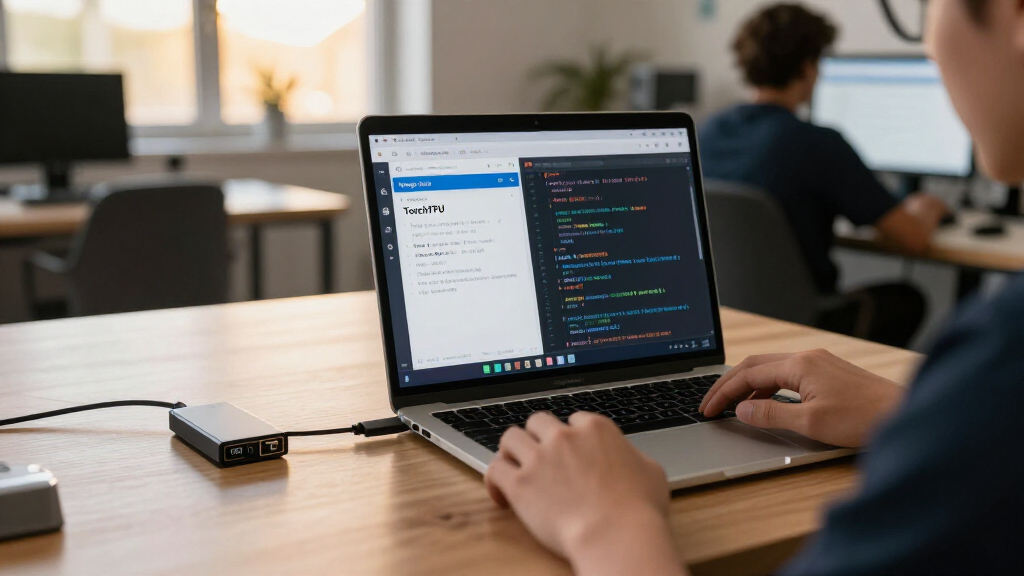

🔍 Read the full analysis: Hugging Face ❤️ TorchTPU: A New Way To Bring AI To TPUs on ThorstenMeyerAI.com

Get business pricing on monitors, keyboards and dev gear
- Business-only prices and quantity discounts
- Tax-exempt purchasing
- Multiple users, one account, clear invoices
TL;DR
Hugging Face has introduced TorchTPU, a backend that lets supported Transformers, Diffusers and Kernels workflows use Google TPUs through PyTorch. The company reports large decoding gains for selected models and configurations, but has not provided a full compatibility list or detailed benchmark methodology.
Hugging Face has announced TorchTPU, a backend that lets supported PyTorch workflows use Google’s TPU accelerators through its Transformers, Diffusers and Kernels libraries, as detailed in the original analysis. The move gives developers a TPU device option in familiar workflows, while the company’s performance figures apply to selected models and configurations rather than all PyTorch workloads.
Hugging Face says developers can direct supported models and tensors to a TPU using familiar library interfaces. The Hugging Face incident has also prompted discussion of stronger AI oversight. Its examples show a Transformers model loaded with device_map=”tpu” and a Diffusers pipeline moved with pipe.to(“tpu”). Compiled execution is available as an option, and the release includes integration with torch.compile.
The announcement also describes Pallas kernels tuned for TPUs and support for distributed training. Hugging Face says large models can be divided across chips during loading with a TensorParallelConfig. Its installation instructions target TPU virtual machines and specify a CPU PyTorch wheel rather than a CUDA build.
For performance, Hugging Face reports that selected Kernels Hub and Tokamax kernels improved decoding at larger batch sizes. On a TPU v6e-8 at batch size 64, the company reports decoding 21.5 times faster for Qwen3-30B-A3B and 12.8 times faster for Gemma 4 26B-A4B than each model’s default implementation. These are vendor-reported comparisons; the announcement does not provide full measurement procedures or independent results, underscoring the need for careful scrutiny of Hugging Face-related claims.
A Familiar Path to TPU Capacity
TorchTPU could make it easier for teams already using PyTorch and Hugging Face libraries to evaluate Google TPU hardware without maintaining a separate implementation for every supported workflow. Using familiar device-selection patterns may reduce some code adaptation and make TPU access more straightforward for developers.
That convenience does not establish that every model or operation will work, or that a TPU will be faster or less expensive than another accelerator for a particular job. The reported decoding gains concern named models, a specific batch size and a specified TPU setup. Teams will need to test their own workloads and account for compatibility, stability, throughput and cost before making deployment decisions.
As an affiliate, we earn on qualifying purchases.
From PyTorch/XLA to TorchTPU
Before this announcement, Hugging Face says PyTorch users generally ran workloads on TPUs through PyTorch/XLA, also known as torch_xla. Hugging Face describes that route as workable but says lazy tensor execution, graph recompilations after code changes and debugging difficulties could complicate development. Those are the company’s stated reasons for building a native backend.
Hugging Face previously offered Optimum TPU for inference and training on its models. The company says Optimum TPU is no longer required to run Transformers and Diffusers models with the newly announced native support. Google TPUs are specialized accelerators available through Google Cloud; TorchTPU is intended to connect that hardware with Hugging Face’s PyTorch tools.
““With TorchTPU, a native PyTorch backend, TPU is now just another device.””
— Hugging Face
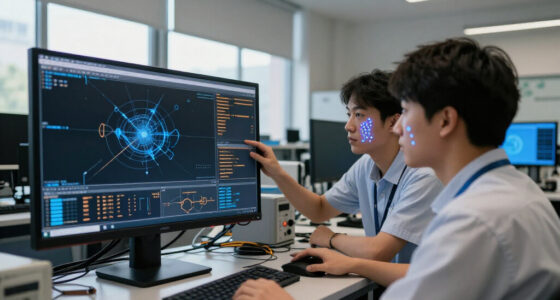
Hugging Face Transformers model accelerator
As an affiliate, we earn on qualifying purchases.
As an affiliate, we earn on qualifying purchases.
Compatibility and Results Need Testing
The announcement does not give a complete list of supported models, operators or workloads, so developers cannot yet determine from the supplied information whether a particular application will run without changes. Nor does it include detailed benchmark procedures, independent measurements or a cost comparison for the performance figures.
Results may vary with model versions, batch sizes, TPU generations and software configurations. Hugging Face says it is running the Transformers test suite and working toward nightly TPU continuous integration, but the announcement does not say when wider test coverage will be available or what results will be published.
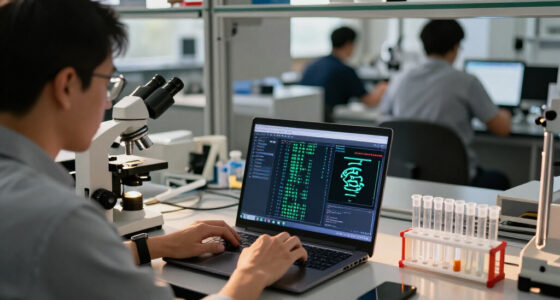
TPU virtual machine for AI training
As an affiliate, we earn on qualifying purchases.
As an affiliate, we earn on qualifying purchases.
More TPU Tests Are Planned
Hugging Face says its next work includes expanding TPU testing for Transformers and adding nightly CI on TPU. Developers can consult the company’s Diffusers TPU guide for distributed and compiled usage, and follow the announced installation instructions for TPU virtual machines.
As library support and testing develop, a published compatibility matrix and reproducible performance comparisons would help teams judge where TorchTPU is ready for use. Until then, developers considering it will need to check whether their models and operations are supported and validate performance on their own TPU setup.
TensorParallelConfig for large models
As an affiliate, we earn on qualifying purchases.
As an affiliate, we earn on qualifying purchases.
Key Questions
What is TorchTPU?
TorchTPU is a PyTorch backend that Hugging Face says lets supported workflows use Google TPUs as a device.
Which Hugging Face libraries are included?
The announcement names Transformers, Diffusers and Kernels. It does not say that every model, operator or workflow in those libraries is supported.
Does TorchTPU replace PyTorch/XLA?
Hugging Face presents TorchTPU as a native PyTorch backend and says Optimum TPU is no longer required for Transformers and Diffusers models using the new support. The announcement does not establish that every existing PyTorch/XLA use case can be replaced.
Are the reported speed gains independently verified?
No independent verification is provided in the announcement. Hugging Face reports specific decoding comparisons for two models at batch size 64 on a TPU v6e-8, but does not supply full benchmark methodology.
What should developers check before using it?
Developers should verify that their model and operations are supported, then test reliability, throughput and cost on their own hardware and software configuration. Hugging Face says its TPU testing and compatibility work are ongoing.
Primary source: Hugging Face · via ThorstenMeyerAI.com
Halloween Picks
halloween
As an affiliate, we earn on qualifying purchases.