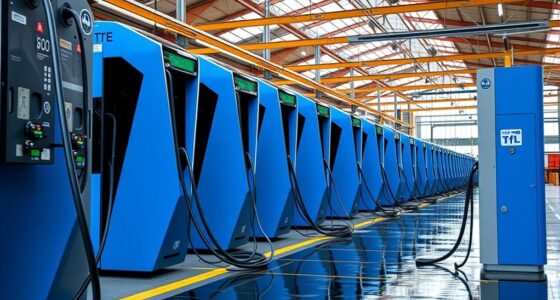
High-power charging at megawatt-scale depots can put significant strain on your local electrical grid, causing voltage fluctuations and overloads if not managed properly. To keep the system stable, utilities are deploying advanced strategies like real-time monitoring, demand response, and energy storage solutions. These measures help balance the increased load and prevent outages. Explore further to understand how these technologies and planning efforts ensure reliable, resilient charging infrastructure for widespread EV adoption.
Key Takeaways
- Megawatt depot trials demonstrate how high-power chargers can cause significant grid load challenges during peak demand.
- Results highlight the need for advanced grid management and energy storage to mitigate voltage fluctuations.
- Strategic charger placement and load staggering effectively reduce stress on local grid infrastructure.
- Integration of renewable energy sources during trials enhances grid stability and reduces reliance on traditional power supplies.
- Findings support infrastructure upgrades and demand response strategies to accommodate high-capacity charging at scale.

High-power charging stations are rapidly transforming the electric vehicle landscape, but their widespread adoption raises important questions about the impact on the electrical grid. As more drivers turn to fast chargers for quick top-ups, you need to contemplate how this surge in demand affects the existing charger infrastructure and overall grid stability. High-power chargers, often delivering several hundred kilowatts, can draw significant power in a short period, challenging the capacity of local grids. This increased load demands careful planning and upgrades to ensure the grid remains reliable and resilient.
High-power chargers challenge grid capacity, requiring strategic planning and upgrades for reliable, resilient electric vehicle infrastructure.
The key issue revolves around how the grid can handle these concentrated bursts of energy without causing instability. If too many high-power chargers operate simultaneously in a region, it could lead to voltage fluctuations, overloads, or even outages. To prevent this, utilities are investing in smarter grid management systems that can monitor and respond to real-time demand. These systems help balance the load, distribute power more effectively, and avoid stressing the infrastructure. In this framework, charger infrastructure becomes critical—it’s not just about installing fast chargers but ensuring they’re integrated into a grid that can support high-capacity loads.
Furthermore, the deployment of high-power chargers must be paired with grid upgrades and advanced energy management solutions. Without them, the risk of destabilizing the grid increases, especially during peak usage times. Utilities are exploring various strategies, such as energy storage systems, demand response programs, and local generation, to buffer the strain caused by high-power charging. These measures help maintain grid stability, ensuring that the infrastructure can accommodate the growing number of electric vehicles without compromising service quality.
You should also recognize that the location and density of fast-charging stations influence grid impact. Strategically placing chargers and staggering their usage can mitigate stress on the grid. Additionally, integrating renewable energy sources into the charger infrastructure can lessen the burden on conventional power plants, making the system more sustainable and resilient. The goal is to create a seamless charging experience that doesn’t compromise grid stability or overburden existing infrastructure. Understanding grid capacity and planning accordingly are essential steps toward sustainable electric vehicle infrastructure development.

EVIQO Level 2 EV Charger J1772 48A – Hardwired 240V Wall Charging Station
- Hardwired Installation: Requires licensed electrician for setup
- 48A Power Output: Delivers up to 48A on 240V circuit
- Adjustable Power Settings: Set to 50A with DIP switches
As an affiliate, we earn on qualifying purchases.
As an affiliate, we earn on qualifying purchases.
Frequently Asked Questions
How Do High‑Power Chargers Affect Local Electricity Rates?
High-power chargers can raise local electricity rates because increased urban congestion from more EV charging demands additional grid capacity. As consumer behavior shifts toward frequent, high‑power charging, utilities may need to invest in infrastructure upgrades, which can be passed on through higher rates. You might notice these changes especially during peak times when demand spikes, making it important to contemplate how urban congestion and your charging habits influence overall costs.
What Are the Long-Term Grid Stability Implications?
Long-term, high-power charging can challenge grid resilience if demand management isn’t optimized. You might see increased strain during peak hours, risking instability. To maintain stability, grid operators need to implement demand response strategies and enhance infrastructure. Proper planning and real-time management help balance load, ensuring reliable power supply as high-power EV charging becomes more widespread. This approach supports a resilient grid capable of accommodating future energy demands.
How Do Infrastructure Costs Compare to Traditional Charging?
Your infrastructure costs for high-power charging are vastly higher than traditional charging, making the investment seem astronomical. The cost comparison reveals that deploying high-capacity stations demands considerably more infrastructure investment—upgrading power grids, installing advanced equipment, and ensuring reliability. While these costs are steep initially, they’re essential for supporting rapid charging needs. Over time, the benefits of faster charging could outweigh the hefty upfront expenses, transforming the EV charging landscape dramatically.
Are Renewable Energy Sources Feasible for High‑Power Charging?
Renewable energy sources are feasible for high-power charging, especially with renewable integration and energy storage solutions. You can leverage solar or wind power to supply charging stations, reducing reliance on fossil fuels. Energy storage systems help manage fluctuating renewable generation, ensuring consistent power delivery. While initial investments may be higher, long-term benefits include lower operating costs and a greener footprint, making renewable-powered high‑power charging increasingly practical.
What Are the Safety Concerns for High‑Power Charging Stations?
You should be aware of safety concerns like fire hazards, which can occur from overheating or electrical faults. Ensuring equipment durability is vital to prevent malfunctions that could lead to accidents. Regular maintenance and robust design help mitigate these risks. Stay vigilant about proper safety protocols, and make sure your station features advanced safety systems to protect users and equipment during high‑power charging sessions.

YONZEE Wall-Mounted EV Charger Protection Box – Weatherproof Charging Station Cover Case for Electric Vehicle Home Chargers, Compatible with Tesla, Standard Most EV Chargers
- Weatherproof Protection: Blocks rain, snow, frost, sunlight, dust
- Universal Compatibility: Fits Tesla and most EV chargers
- Durable Construction: Impact-resistant and temperature-resistant
As an affiliate, we earn on qualifying purchases.
As an affiliate, we earn on qualifying purchases.
Conclusion
Just as Icarus soared toward the sun with wings of wax, high-power charging reveals both great potential and risks for our grids. These trials show that with careful planning, you can harness this energy boom without risking meltdown. Remember, the future of EVs is bright, but it’s up to us to keep the grid balanced—like a tightrope walker, poised and steady. Embrace the challenge, and you’ll guarantee a sustainable, electrified horizon.

Power System SCADA and Smart Grids
As an affiliate, we earn on qualifying purchases.
As an affiliate, we earn on qualifying purchases.

The Electric Vehicle Charging Infrastructure Handbook: Planning Through Management in the United States (Green Energy and Technology)
As an affiliate, we earn on qualifying purchases.
As an affiliate, we earn on qualifying purchases.