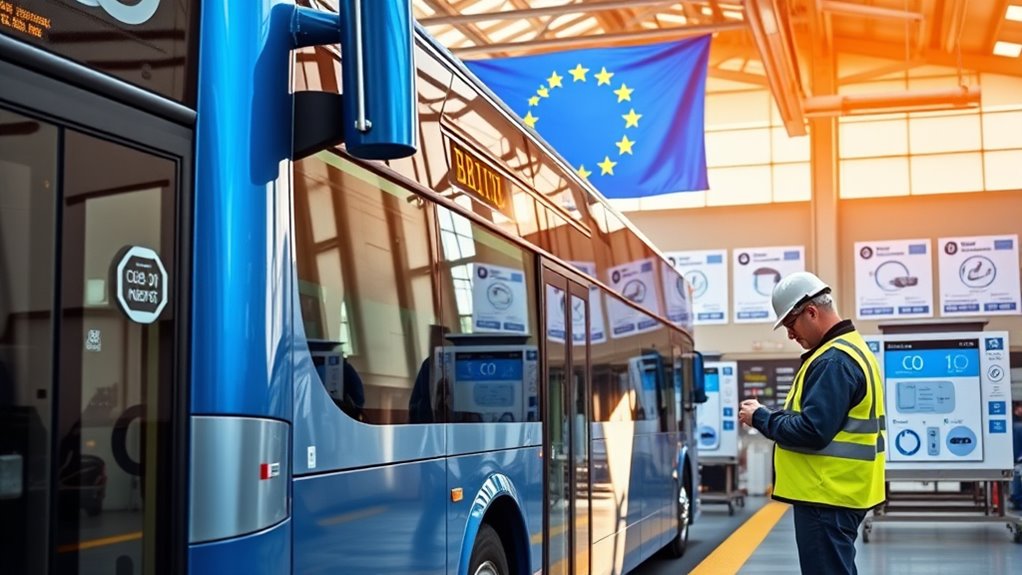

The EU’s new CO₂ standards for heavy-duty vehicles mean you’ll need to upgrade or replace older diesel buses to meet stricter emission targets. There’s a clear push toward electric buses, which offer lower emissions and long-term savings on fuel and maintenance. Staying compliant may also require investing in charging infrastructure and new technologies. If you want to understand how these regulations will shape your fleet decisions and future opportunities, keep exploring the details.

Get business pricing on monitors, keyboards and dev gear
- Business-only prices and quantity discounts
- Tax-exempt purchasing
- Multiple users, one account, clear invoices
Key Takeaways
- EU standards set emission reduction targets, encouraging bus operators to replace older diesel buses with cleaner, especially electric, models.
- Regulations prioritize electrification, supporting zero-emission buses to meet compliance and benefit from incentives.
- Operators must plan upgrades and infrastructure investments to adhere to upcoming deadlines and emission benchmarks.
- Transitioning to electric buses reduces fuel, maintenance costs, and helps cities improve air quality and meet climate goals.
- Staying informed on regulations ensures proactive fleet management, compliance, and competitive advantage in sustainable transportation.
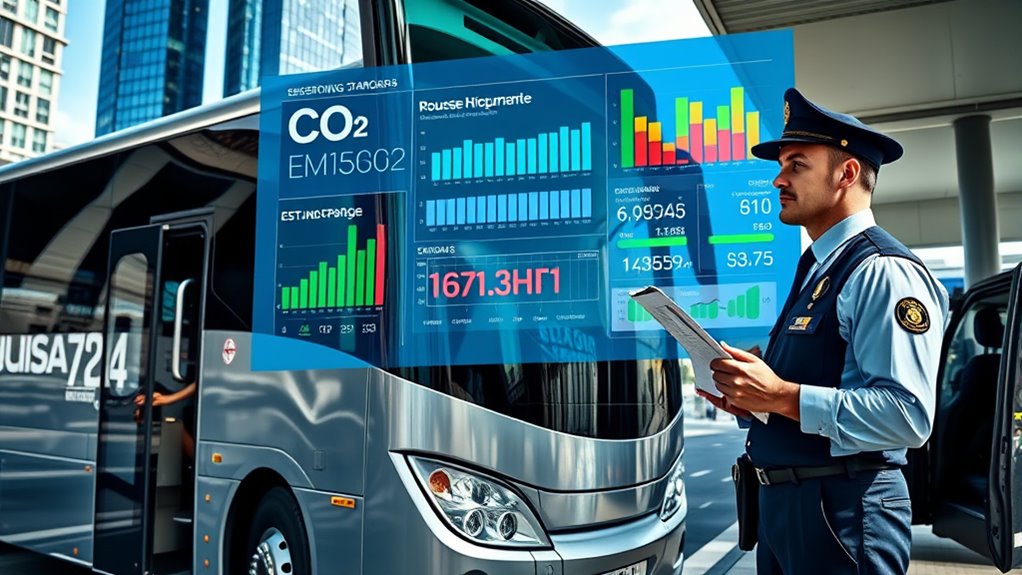
The European Union has introduced new CO₂ standards for heavy-duty vehicles, specifically targeting bus operators to reduce emissions and combat climate change. These regulations are designed to push you toward cleaner, more sustainable transportation options, with a significant emphasis on electric buses. As a bus operator, you’ll need to understand how these standards impact your fleet choices and operational strategies. The core idea behind the emission regulations is to cut down the amount of CO₂ your vehicles emit, making public transportation more environmentally friendly and aligning with broader EU climate goals.
EU introduces stricter CO₂ standards for buses to promote cleaner, electric transportation and meet climate goals.
One of the most noticeable changes is the push toward electrification. The standards favor electric buses because they produce zero tailpipe emissions, helping you meet the new rules more easily. Shifting to electric buses isn’t just about compliance; it’s also about future-proofing your operations. Electric buses tend to have lower fuel and maintenance costs, which can improve your long-term profitability. The EU’s standards set specific targets for emissions reductions, gradually tightening over the next decade, so you’ll need to plan your fleet updates accordingly. Investing in electric buses now can position you ahead of the curve, making your service more attractive to environmentally conscious passengers and government incentives.
The emission regulations also specify performance benchmarks that your current fleet must meet or exceed. Older diesel buses may no longer qualify under stricter standards, prompting you to consider replacements or upgrades. These rules are not just about compliance—they’re about leading the shift toward sustainable urban mobility. You’ll likely face increased pressure to adopt cleaner technologies, which could involve integrating electric buses into your fleet, upgrading charging infrastructure, or exploring alternative fuels. The regulations aim to reduce the carbon footprint of heavy-duty vehicles, ultimately helping cities meet their air quality goals while offering passengers greener travel options.
To navigate these changes effectively, you should stay informed about upcoming deadlines and incentives provided by the EU and national governments. Planning your fleet expansion with electric buses in mind can ease compliance burdens and offer operational benefits. Additionally, understanding the importance of cybersecurity vulnerabilities and implementing strong security measures for your fleet’s digital infrastructure can prevent disruptions and safeguard your operations. These standards are ultimately designed to encourage innovation and cleaner transportation practices, so embracing electric buses isn’t just about meeting regulations — it’s about leading the future of sustainable public transit. By adopting electric buses and aligning with emission regulations, you not only contribute to the fight against climate change but also position your operations for success in a rapidly evolving transportation landscape.
electric bus for commercial fleet
As an affiliate, we earn on qualifying purchases.
As an affiliate, we earn on qualifying purchases.
Frequently Asked Questions
How Will These Standards Affect Bus Ticket Prices?
These standards will likely increase ticket pricing because bus operators may pass on higher costs of compliant vehicles and greener technologies to consumers. As a result, you might see slightly higher fares, but the impact on your wallet should be manageable, considering the long-term benefits of cleaner transportation. Overall, the consumer impact could be minimal initially, but it’s designed to promote more sustainable and eco-friendly travel options.
Are There Exemptions for Certain Types of Bus Operators?
Yes, there are exemptions for certain bus operators. You might qualify for exemption criteria if you’re a small operator, which often includes those with limited fleet sizes or low annual mileage. These small operator exemptions aim to ease the compliance burden for smaller businesses, so it is crucial to review specific thresholds and criteria. If you meet these, you could be exempt from some or all of the standards, reducing your regulatory obligations.
What Technical Improvements Are Required to Meet Standards?
Meeting standards is like climbing a mountain—you’ll need technical improvements to reach the summit. You must upgrade your engines for better efficiency and adopt advanced emission reduction technologies, such as hybrid systems or cleaner fuels. These improvements help lower CO₂ emissions, ensuring compliance. Focus on optimizing engine performance and integrating innovative solutions, so your fleet becomes more eco-friendly and future-proof, while also reducing operational costs.
How Will Compliance Deadlines Impact Fleet Upgrades?
Compliance deadlines will push you to prioritize fleet modernization, ensuring your buses meet emissions reduction targets. You’ll need to plan upgrades carefully to avoid penalties, and this may accelerate your replacement cycle. Staying ahead of deadlines means investing in cleaner technologies now, which ultimately helps reduce your fleet’s emissions. By acting proactively, you’ll minimize disruptions and demonstrate your commitment to sustainable transport, aligning with new regulations efficiently.
What Support or Incentives Are Available for Bus Operators?
You won’t believe the support available! Financial incentives are here to make your shift easier, helping you cover costs of cleaner vehicles. Plus, training programs are offered to boost your team’s skills in managing eco-friendly buses. These resources are designed to make your fleet upgrades smoother and more affordable, so you can meet standards confidently while saving money and reducing emissions. Don’t miss out on these game-changing opportunities!
As an affiliate, we earn on qualifying purchases.
Conclusion
By understanding these EU CO₂ standards, you’re stepping into a future where your bus fleet can be greener and more efficient. Embracing these changes might seem intimidating, but it’s your chance to lead the charge in cutting emissions and saving costs. Remember, staying ahead isn’t just smart—it’s essential in a world racing toward sustainability. So, gear up and turn these regulations into your superpower for a cleaner, brighter tomorrow!
heavy-duty vehicle emission standards compliance kit
As an affiliate, we earn on qualifying purchases.
As an affiliate, we earn on qualifying purchases.
As an affiliate, we earn on qualifying purchases.
Fall Picks
fall essentials
As an affiliate, we earn on qualifying purchases.