
📊 Full opportunity report: Optimize Food Safety Operations With Innovative Computer Vision Tools on IdeaNavigator AI — validation score, market gap, and execution plan.
TL;DR
A new computer vision-based inspection system is being tested in restaurant kitchens to improve food safety monitoring. It captures photos during morning walk-throughs, flags violations, and generates verifiable reports. The technology aims to replace subjective checklists with objective, timestamped data.
An AI-powered computer vision system is being tested to verify food safety compliance during kitchen walk-throughs in restaurant groups. The technology aims to transform subjective checklists into objective, verifiable data, potentially improving food safety standards and operational efficiency.
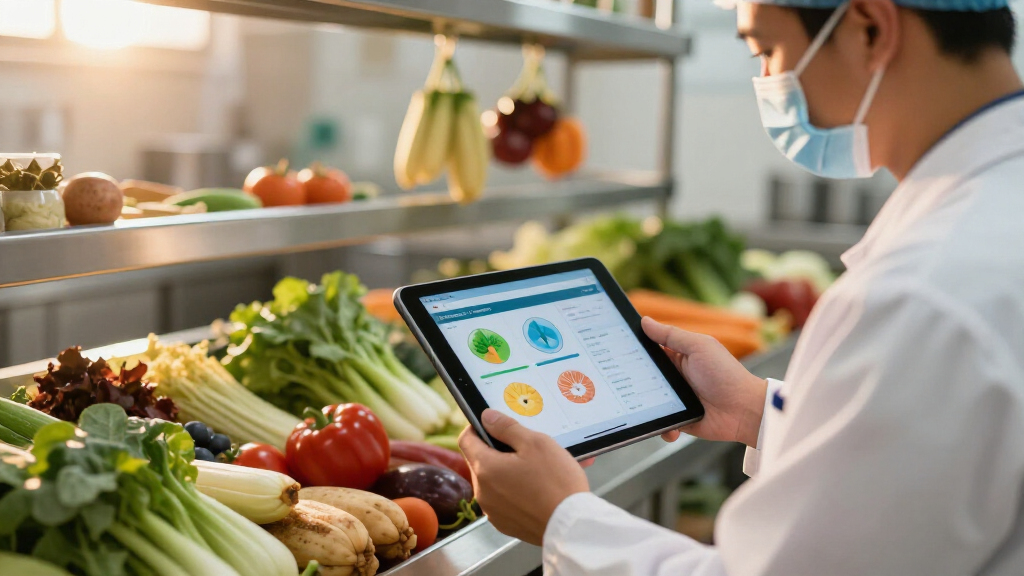
The new system uses existing smartphone cameras to capture images during morning kitchen inspections. A machine learning model analyzes these photos to identify violations such as uncovered containers, propped cooler doors, or missing date labels.
According to sources familiar with the project, the system generates timestamped photo reports for each location, highlighting violations with severity ratings and tracking trends across multiple sites. The initial testing involves five restaurant locations over a two-week period, comparing AI findings against reports from a hired health-inspection consultant.
The proposed business model includes a per-location monthly subscription, with a group dashboard providing oversight and trend analysis. The approach leverages existing hardware, requiring no new equipment, making it accessible for restaurant chains seeking to improve compliance without significant capital investment.
Optimize Food Safety Operations With Innovative Computer Vision Tools
Smartphone photos, machine-learning analysis and timestamped evidence could turn routine kitchen walk-throughs into consistent, verifiable compliance records—without requiring new inspection hardware.
From morning walk-through to an auditable report
The proposed workflow layers automated analysis onto inspections staff already perform. Images become structured evidence that managers can review by location, severity and trend.
Walk through
Staff complete the normal morning kitchen check.
Capture
Existing smartphone cameras document key areas.
Analyze
A vision model examines images for visible violations.
Prioritize
Potential issues receive timestamps and severity ratings.
Track
Reports reveal recurring risks across locations.
Visible risks become searchable operational data
The system is designed to identify observable conditions in inspection photos—not invisible hazards or every requirement within a health code.
Uncovered containers
Flags exposed food or containers that appear to be missing protective covers.
Propped cooler doors
Highlights visible door-position issues that may increase temperature risk.
Missing date labels
Identifies products that appear unlabeled or lack visible date information.
Verifiable evidence
Links each finding to a photo, place and time rather than a checked box alone.
Multi-site trends
Allows restaurant groups to compare recurring findings across locations.
Severity ratings
Helps teams prioritize urgent corrections and distinguish them from lower-level issues.
Checklist judgment versus computer-vision evidence
Computer vision can strengthen routine compliance monitoring, but it is currently positioned as a supplement to human judgment and official inspections.
| Capability | Manual checklist | Vision-enabled workflow | Current confidence |
|---|---|---|---|
| Objective visual record | ~ Depends on staff | ✓ Built into process | Strong concept |
| Timestamped evidence | ~ Often limited | ✓ Automatic report data | Expected feature |
| Consistent multi-site review | ~ Reviewer-dependent | ✓ Central dashboard | Pilot validation needed |
| Works in ambiguous conditions | ✓ Human context | ~ Model may struggle | Uncertain |
| Official regulatory authority | ~ Only authorized inspectors | ✗ Not established | Not confirmed |
| Additional camera hardware | ✓ None | ✓ None proposed | Existing phones |
High operational promise, pending real-world proof
The strongest near-term opportunity is better documentation and faster oversight. Accuracy, workflow fit and regulatory acceptance remain the decisive adoption gates.
Relative value potential
Diverse environments
Lighting, layouts, image angles and visually ambiguous cases may affect model performance.
Workflow integration
Staff training and inspection discipline will influence data quality and operational value.
Regulatory acceptance
The system has not been established as a replacement for authorized health inspections.
The path from pilot signal to scalable platform
Commercial expansion depends on evidence that automated findings align with expert inspection results and produce useful corrective actions.
Collect evidence
Run the system for two weeks across five restaurant locations.
Compare findings
Measure AI flags against the consultant’s inspection reports.
Improve the model
Address false positives, missed risks and varied kitchen conditions.
Expand oversight
Offer per-location subscriptions with group dashboards and trend analysis.
The technology is intended to supplement—not immediately replace—traditional health inspections. Wider availability may follow within a year if pilot accuracy, operational fit and regulatory discussions are favorable.
Potential Impact on Food Safety and Operational Transparency
This technology could significantly improve the accuracy and reliability of food safety inspections by replacing subjective checklist ticking with objective, timestamped photographic evidence. It offers restaurant operators a tool to proactively identify violations, reduce human error, and demonstrate compliance more transparently. If successful, this could lead to higher food safety standards, fewer violations, and enhanced consumer trust in restaurant brands.
smartphone camera inspection tools for restaurants
As an affiliate, we earn on qualifying purchases.
As an affiliate, we earn on qualifying purchases.
Growing Adoption of AI in Restaurant Operations
Food safety inspections traditionally rely on manual checklists completed by staff or inspectors, which can be subjective and prone to oversight. Recent advances in computer vision have enabled AI systems to analyze images for compliance violations reliably. The current trial builds on prior developments where AI has been used for quality control in manufacturing and other industries, now extending into food safety management within restaurants.
The initiative aligns with broader trends toward digitization and automation in hospitality, aiming to streamline operations and improve compliance monitoring without additional hardware costs. The concept has gained interest among restaurant groups seeking scalable solutions to meet strict health regulations.
“The vision-model kitchen walk-through inspector can reliably flag violations using photos taken during routine checks, turning subjective observations into verifiable data.”
— an anonymous researcher
food safety compliance inspection software
As an affiliate, we earn on qualifying purchases.
As an affiliate, we earn on qualifying purchases.
Uncertainties About System Accuracy and Adoption
It is not yet clear how accurately the AI model will perform across diverse kitchen environments or how it will handle ambiguous cases. The trial results are still pending, and wider adoption depends on validation against official health inspections and regulatory acceptance.
Further, questions remain about integration with existing operational workflows and staff training requirements, which could influence the system’s effectiveness and scalability.
computer vision kitchen inspection system
As an affiliate, we earn on qualifying purchases.
As an affiliate, we earn on qualifying purchases.
Next Steps Include Broader Testing and Validation
Following the initial two-week pilot, the restaurant group plans to analyze the AI system’s flagged violations against health inspector reports to assess accuracy. If results are promising, the company intends to expand testing to more locations and refine the model. Simultaneously, discussions with regulatory bodies may be needed to formalize the system’s role in official inspections.
Long-term, the goal is to develop a fully integrated platform that continuously monitors food safety compliance and provides actionable insights, potentially transforming industry standards.
As an affiliate, we earn on qualifying purchases.
Key Questions
How does the computer vision system work during kitchen inspections?
The system uses photos taken during routine walk-throughs, which are analyzed by a machine learning model to identify violations such as uncovered food, improper storage, or missing labels. It then creates a report with severity ratings and timestamps.
What are the benefits of using AI for food safety inspections?
AI can provide more consistent, objective assessments, reduce human error, and generate verifiable records of compliance. It also offers a scalable way to monitor multiple locations efficiently.
Are there any limitations or risks associated with this technology?
Potential limitations include the system’s accuracy across different kitchen setups and lighting conditions. Validation results are still pending, and regulatory acceptance is yet to be confirmed.
Will this replace traditional health inspections?
Not immediately. The system is intended to supplement, not replace, official inspections, providing additional data to improve ongoing compliance and transparency.
When will this technology become widely available?
Wider adoption depends on successful pilot results and regulatory approval, which could take several months. If validated, it may be offered commercially within the next year.
Source: IdeaNavigator AI