Trolleybuses require overhead wires and catenary lines, leading to high upfront infrastructure costs and limited route flexibility, since changing routes can be costly and complex. In contrast, battery electric buses need charging stations but can operate on any route without fixed infrastructure, offering greater flexibility. As battery tech improves, BEBs become even more adaptable. Exploring these differences further will help you understand which option best fits different transit needs.
Key Takeaways
- Trolleybuses require fixed overhead wire infrastructure, limiting route flexibility once installed.
- Battery electric buses (BEBs) operate independently of overhead wires, offering high route adaptability.
- Infrastructure costs for trolleybuses are high upfront, due to installation of wires; BEBs need charging stations, which are generally less invasive.
- Trolleybuses enable continuous operation without recharging stops, whereas BEBs depend on battery range and recharging time.
- Technological advances in batteries are increasing BEB flexibility and reducing infrastructure dependency over time.
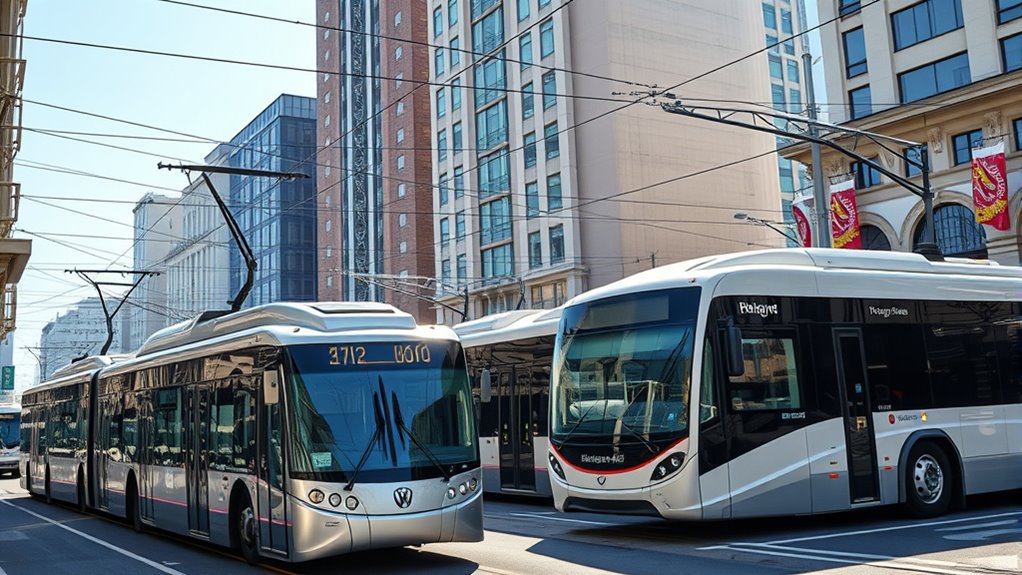
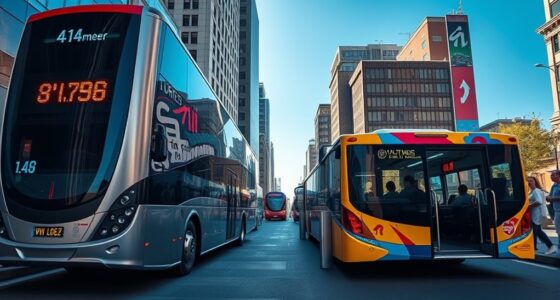
Have you ever wondered which electric bus system is better for urban transit—trolleybuses or battery electric buses? The answer largely depends on how each option handles charging infrastructure and route flexibility. Trolleybuses rely on overhead wires, which means they need a network of overhead catenary lines installed along their routes. This infrastructure investment can be costly upfront but offers a consistent power source, reducing the need for frequent stops to recharge. Because trolleybuses draw electricity directly from these wires, they can operate continuously on designated routes without worrying about battery range limitations. This setup is particularly advantageous in densely populated city centers where high-frequency service is essential. However, the reliance on overhead wires limits route flexibility; once the wires are installed, altering routes requires significant infrastructure work. If your city’s transit network demands adaptable routing or frequent detours, trolleybuses might feel restrictive, as extending or modifying routes involves considerable planning and investment.
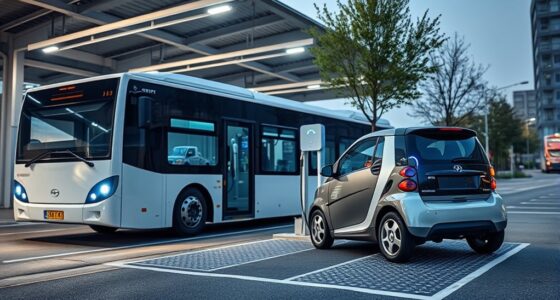
On the other hand, battery electric buses (BEBs) shine in terms of route flexibility. Without the need for overhead wiring, they can operate on any route, making them ideal for cities that need adaptable transit solutions or are considering route expansions. Their main challenge lies in the charging infrastructure—BEBs require charging stations at depots or along routes, and their operational range depends on battery capacity. Fast-charging technology has improved remarkably, allowing buses to recharge quickly at designated points, minimizing downtime. This means you can plan routes with more freedom, switching between different corridors without worrying about overhead wires or fixed infrastructure. Still, the need for charging stations and the current limits of battery technology mean that route planning must account for recharging times and battery management to avoid disruptions. As battery technology advances, expect these vehicles to offer even greater flexibility with longer ranges and faster charging. Additionally, integrating natural materials like linen and reclaimed wood in transit facilities can create a more welcoming environment for passengers.
In essence, choosing between trolleybuses and battery electric buses hinges on your city’s priorities. If your goal is a reliable, high-capacity service with minimal charging stops and a dense route network, trolleybuses offer proven performance, albeit at the cost of route flexibility. If you prioritize adaptable routes, rapid deployment, and infrastructure that’s easier to modify, battery electric buses provide a versatile solution, especially as charging technology continues to improve. Your decision should weigh the initial infrastructure investments against long-term operational needs, considering how route flexibility and charging options align with your transit goals.

The 2027-2032 World Outlook for Electric Bus Charging Stations
As an affiliate, we earn on qualifying purchases.
As an affiliate, we earn on qualifying purchases.
Frequently Asked Questions
What Are the Long-Term Maintenance Costs for Trolleybuses Versus Battery Buses?
You’ll find that trolleybuses generally have higher long-term maintenance costs due to their extensive infrastructure and component durability needs, like overhead wires and substations. Battery electric buses tend to have lower operational expenses because they require less infrastructure and have fewer moving parts, reducing frequent repairs. Over time, battery replacement costs can add up, but overall, battery buses often offer more predictable and potentially lower maintenance expenses compared to trolleybuses.
How Do Urban Landscapes Influence Trolleybus and Battery Bus Deployment?
Imagine you’re planning a city with high urban density and a complex road network. Trolleybuses thrive here, as their overhead wires suit narrow streets and frequent stops. Conversely, battery buses excel in sprawling areas where flexible routes matter, avoiding extensive infrastructure. Urban landscape shapes deployment; dense areas favor trolley systems, while open, varied terrains benefit from battery buses’ adaptability. Your choice depends on city layout and mobility needs.
What Are the Environmental Impacts of Manufacturing Trolleybus Infrastructure?
Manufacturing trolleybus infrastructure involves significant environmental impacts, mainly due to manufacturing emissions from producing materials like steel, copper, and insulation. When you consider material sourcing, it’s clear that extracting and processing these resources can cause habitat disruption and pollution. While trolleybus systems reduce emissions during operation, their infrastructure’s environmental footprint starts with these manufacturing emissions, emphasizing the importance of sustainable sourcing and manufacturing practices to minimize environmental harm.
Can Battery Electric Buses Operate Effectively in Remote or Off-Grid Areas?
You can definitely operate battery electric buses effectively in remote or off-grid areas. While some might think limited infrastructure is a challenge, utilizing renewable energy sources like solar or wind can provide grid independence. This setup reduces reliance on traditional power grids and enables buses to recharge using local, clean energy. With proper planning, battery technology allows for flexible deployment, making electric buses a practical, eco-friendly solution for even the most isolated regions.
How Do Passenger Comfort and Ride Quality Compare Between the Two Systems?
You’ll find that passenger comfort and ride quality are quite comparable between trolleybuses and battery electric buses. Both systems offer smooth acceleration and quiet operation, enhancing the riding experience. However, trolleybuses may provide slightly more consistent ride quality on dedicated routes with stable infrastructure, while battery electric buses can sometimes experience minor vibrations or noise depending on road conditions. Overall, both options prioritize passenger comfort, making your ride pleasant and quiet.
Motorized School Bus for Wooden Track – Yellow Schoolbus Themed Battery Operated – Includes Wooden Bus Stop Sign – Electric Powered Engine Toy for Wood Track for Kids
MOTORIZED SCHOOL BUS WITH LIGHTS AND SOUND – Motorized school bus for wooden track, great for any wooden…
As an affiliate, we earn on qualifying purchases.
As an affiliate, we earn on qualifying purchases.
Conclusion
Just like Icarus once soared toward the sun, your choice between trolleybuses and battery electric buses depends on how high you aim. Trolleybuses offer a reliable, fixed infrastructure, much like a sturdy nest, while battery buses promise freedom and flexibility, akin to wings that can take flight anywhere. Consider your city’s unique landscape and future vision—whether you prefer the steady course or the open sky. Your journey toward sustainable transit begins with making the right move.
overhead trolleybus wires
As an affiliate, we earn on qualifying purchases.
As an affiliate, we earn on qualifying purchases.

BESTEK Multi Ports USB Car Charger, Fast Charge 125W 14A Quick Charge 3.0 & USB-C PD Car Charger Adapter with Smart Identification for Cell Phones, Tablets and Other USB Devices
【Upgraded 125W 6-Ports Car Charger】BETSEK's upgraded car charger can meet your charging needs for multiple devices. This charger…
As an affiliate, we earn on qualifying purchases.
As an affiliate, we earn on qualifying purchases.