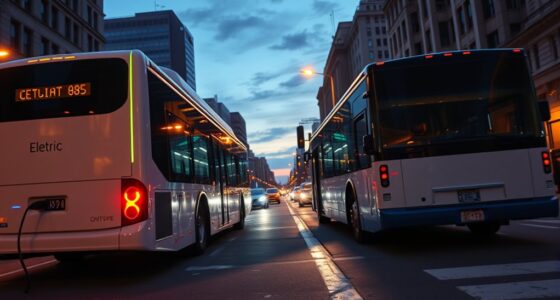
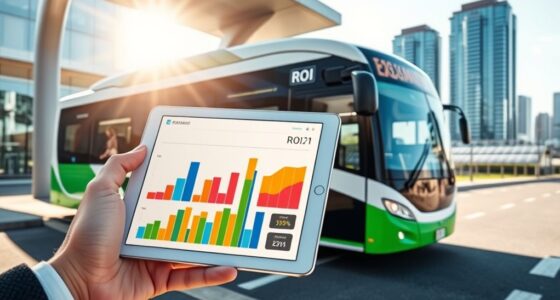
Rising carbon taxes put financial pressure on traditional diesel buses, encouraging you to switch to cleaner options like electric buses. These taxes make older, less efficient fleets more costly to operate, pushing agencies to adopt newer, eco-friendly vehicles to reduce expenses and stay compliant. Incentives such as grants and rebates make electric buses more accessible, accelerating the shift. If you want to explore how these policies shape fleet choices further, there’s more to contemplate.
Key Takeaways
- Carbon taxes increase operating costs for diesel buses, incentivizing agencies to consider cleaner alternatives like electric buses.
- Higher fuel expenses due to carbon taxes make electric buses more financially attractive with available incentives and rebates.
- Stricter fuel efficiency standards driven by carbon taxes discourage continued use of older, less efficient diesel buses.
- Carbon taxes promote fleet modernization by encouraging adoption of zero-emission electric buses to reduce regulatory compliance costs.
- Overall, carbon taxes accelerate the transition toward sustainable, cost-effective, and regulatory-compliant bus fleets.
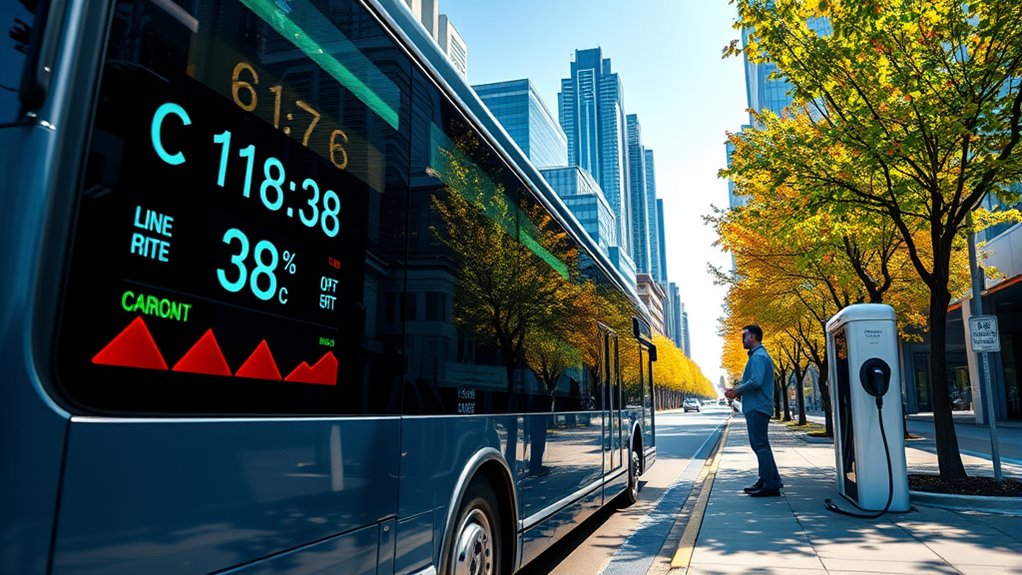
Carbon taxes are increasingly influencing how transit agencies and bus operators make fleet decisions. As governments implement policies to reduce greenhouse gas emissions, these taxes add financial pressure to traditional diesel-powered buses. You now have to weigh the long-term costs and benefits of switching to cleaner technologies, especially as electric bus incentives become more attractive. Many agencies are recognizing that investing in electric buses isn’t just environmentally responsible but also economically advantageous in the face of rising fuel costs and carbon taxes. These incentives can significantly offset the upfront costs of electric buses, making them a more viable option. When contemplating fleet upgrades, you’re likely to explore programs that offer rebates, grants, or favorable financing to support electric vehicle adoption. This shift aligns with fuel efficiency standards that are tightening worldwide, pushing manufacturers to produce cleaner, more efficient vehicles. You might find that newer buses are designed to meet or exceed these standards, helping your agency stay compliant while reducing operational costs. Moreover, the growing emphasis on sustainable transportation is encouraging agencies to prioritize eco-friendly fleet choices.
Fuel efficiency standards are now a key factor in your decision-making process. They directly influence the types of buses you choose and how you plan your fleet’s future. As these standards become more stringent, older diesel buses, which typically have lower fuel efficiency and higher emissions, become less attractive options. You’re encouraged to consider electric buses because they emit no tailpipe pollutants and often outperform traditional buses in fuel efficiency. The combination of carbon taxes and evolving standards creates a compelling case for early adoption of electric buses, allowing you to lock in benefits before regulations become more restrictive or costs increase further. Furthermore, the potential for reduced maintenance costs with electric buses adds to their appeal, as they have fewer moving parts and require less routine servicing. This can lead to significant savings over the lifetime of the vehicle, helping your agency stay within budget despite the added financial pressures of carbon taxes.
In the end, your fleet decisions are increasingly shaped by the financial and regulatory landscape driven by carbon taxes and efficiency standards. You’re not just choosing the most economical or reliable buses anymore—you’re aligning with policies that prioritize sustainability and compliance. Electric bus incentives, coupled with stricter fuel efficiency standards, serve as catalysts for you to accelerate your transition to cleaner, more efficient fleet options. As a result, your agency can reduce its carbon footprint, lower operating costs, and demonstrate a commitment to environmental responsibility—all while traversing the evolving landscape of transportation regulations.
Top picks for "impact carbon fleet"
Open Amazon search results for this keyword.
As an affiliate, we earn on qualifying purchases.
Frequently Asked Questions
How Do Carbon Taxes Influence Long-Term Bus Fleet Planning?
Carbon taxes push you to prioritize fleet modernization by encouraging the adoption of cleaner, more efficient buses. They influence your long-term planning by making you consider maintenance costs of older vehicles versus new, eco-friendly options. You’ll likely shift investments toward sustainable technologies, reducing emissions and operational costs over time. This proactive approach helps you stay compliant, improves your fleet’s environmental performance, and guarantees your maintenance planning aligns with evolving regulations and market expectations.
What Are Alternative Strategies for Reducing Emissions Besides Carbon Taxes?
Like Odysseus steering treacherous waters, you can steer your fleet toward sustainability by embracing renewable incentives and fleet modernization. Investing in electric or hybrid buses reduces emissions without relying solely on carbon taxes. You can also upgrade existing vehicles, adopt cleaner fuels, and collaborate with government programs for funding. These strategies help you meet environmental goals, improve air quality, and future-proof your transportation operations effectively.
How Do Different Regions Vary in Their Bus Fleet Response to Carbon Taxes?
You’ll notice that regional policies markedly influence your bus fleet’s response to carbon taxes. In some areas, strict regulations push you to modernize your fleet with cleaner, more efficient buses. Elsewhere, lenient policies slow adoption. Your decision-making depends on local incentives, infrastructure, and government support. By aligning fleet modernization efforts with regional policy frameworks, you can effectively reduce emissions and comply with carbon tax requirements, regardless of where you operate.
What Are the Economic Impacts of Carbon Taxes on Bus Operators?
You’ll find that carbon taxes increase your fuel costs, making operating diesel buses more expensive. This often leads to higher maintenance expenses since cleaner fuels or electric buses may require different upkeep. As a bus operator, you might need to adjust your budget and fleet choices to offset these costs. While some see it as a challenge, others view it as an opportunity to invest in greener, more cost-effective transportation options in the long run.
How Do Carbon Taxes Affect the Adoption of Electric Versus Hybrid Buses?
Imagine you’re choosing a bus fleet upgrade; carbon taxes make electric buses more attractive. For example, a transit agency might prioritize electric over hybrid buses because advances in battery technology reduce costs, and government incentives lower initial investment. These factors encourage quicker adoption of electric buses, as they become more cost-effective and environmentally friendly. Consequently, carbon taxes push you toward cleaner options, accelerating the shift from hybrid to fully electric fleets.
Conclusion
As you consider the shift toward greener transportation, remember that carbon taxes act as a catalyst for change—turning the wheels of innovation and sustainability. They push you to rethink bus fleet decisions, encouraging cleaner, more efficient options. Like a compass guiding your choices, these taxes steer your strategies toward a sustainable future. Embrace this challenge, for in the battle against climate change, your decisions become the spark that ignites lasting impact.