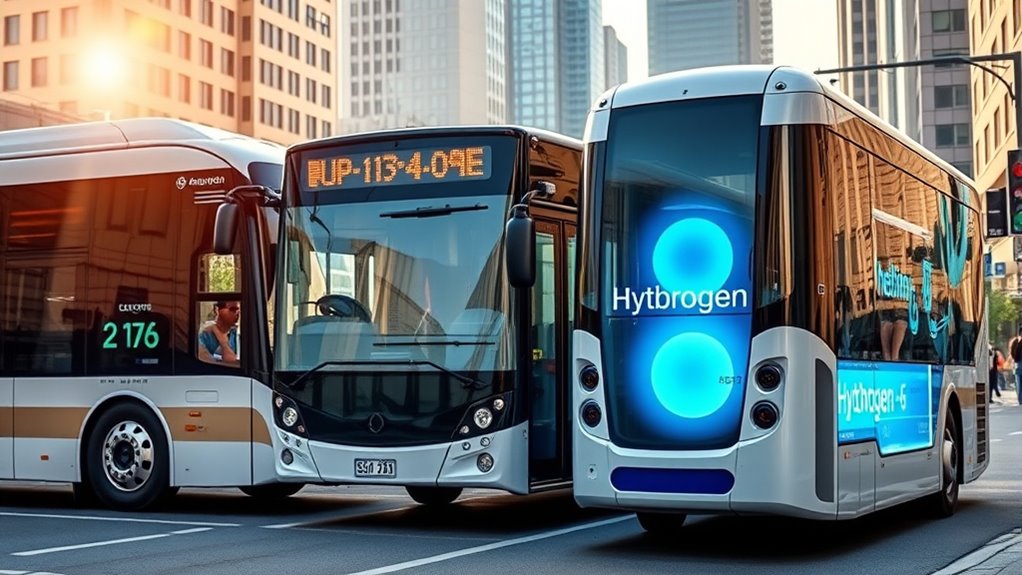

Over a bus’s lifecycle, electricity tends to be the cheapest fuel due to low costs and high efficiency, especially with stable rates. Hydrogen can be cost-effective if infrastructure is expanding, but fuel and fueling station costs fluctuate. Diesel remains reliable with predictable prices but can become more expensive over time due to regulations. To understand how these factors influence total costs and which option fits your needs better, explore further details below.
Key Takeaways
- Electricity generally offers the lowest ongoing fuel costs due to favorable prices and high energy efficiency.
- Hydrogen fuel costs depend on infrastructure development, fuel prices, and can be variable over the bus lifecycle.
- Diesel fuel costs are relatively stable but tend to be higher than electricity, influencing total lifecycle expenses.
- Infrastructure investments impact long-term costs, with electric buses requiring charging stations and hydrogen needing fueling stations.
- Overall lifecycle costs are influenced by fuel prices, infrastructure investments, and operational efficiencies of each fuel type.

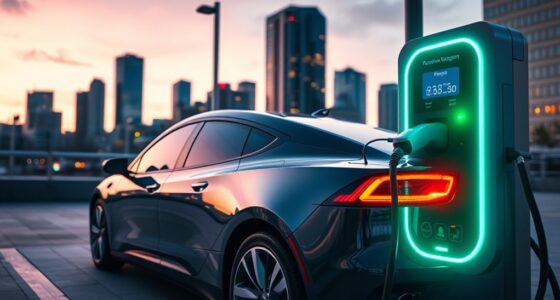
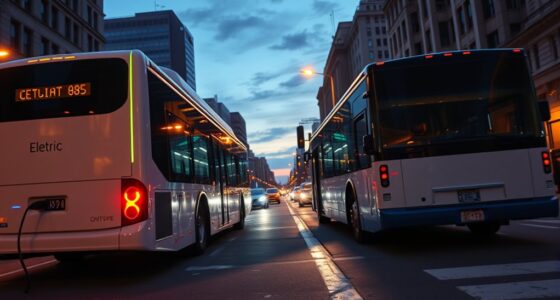
When comparing fuel costs, understanding the differences between electricity, hydrogen, and diesel is essential for making informed decisions. Your choice impacts not just upfront expenses but also long-term operational costs, maintenance, and infrastructure requirements. For electric buses, a key factor is the charging infrastructure. You need reliable, widespread charging stations to ensure buses stay operational throughout their routes. The availability and cost of these stations can profoundly influence your overall expenses. Electric buses tend to have higher fuel efficiency, meaning they require less energy to travel the same distance compared to diesel or hydrogen options. This efficiency helps reduce ongoing fuel costs, especially when energy prices are favorable. However, the initial investment in charging stations can be substantial, and charging times may affect scheduling if fast chargers aren’t available. Additionally, the reliability of charging infrastructure is crucial for maintaining operational schedules and minimizing disruptions. Hydrogen buses offer a different set of considerations. Their fuel efficiency can be comparable to electric buses, but the real challenge lies in hydrogen’s infrastructure. The current hydrogen fueling network is limited, which can increase costs for fueling and maintenance, especially if you operate in areas with sparse stations. Building or expanding hydrogen fueling stations involves considerable capital, but once in place, refueling is quick—often comparable to diesel—making operational downtime minimal. While hydrogen fuel can be cost-effective in some markets, the overall lifecycle costs depend heavily on infrastructure development and fuel prices, which tend to fluctuate. Diesel buses, on the other hand, benefit from a well-established and extensive fueling infrastructure. You’re likely familiar with the availability of diesel stations, which makes refueling straightforward and quick, minimizing downtime. Diesel fuel prices are relatively stable but tend to be higher than electricity in many regions, especially with environmental regulations tightening. Diesel engines also tend to have lower upfront costs and are familiar to maintenance crews. However, diesel’s fuel efficiency varies with engine design and load, and the cost of fuel can rise over time, impacting the total lifecycle expense. Ultimately, your decision hinges on balancing infrastructure costs, fuel efficiency, and operational needs. Electric buses excel in fuel efficiency and lower ongoing fuel costs but require substantial investment in charging infrastructure. Hydrogen offers quick refueling and decent fuel efficiency but is limited by infrastructure development. Diesel remains reliable with mature infrastructure but faces increasing environmental and fuel cost pressures. Carefully analyze your route patterns, energy prices, and infrastructure investments to determine which option minimizes your overall lifecycle costs.

The 2027-2032 World Outlook for Electric Bus Charging Stations
As an affiliate, we earn on qualifying purchases.
As an affiliate, we earn on qualifying purchases.
Frequently Asked Questions
How Do Maintenance Costs Compare Across Different Bus Fuel Types?
You’ll find that maintenance expenses vary with bus fuel types. Electric buses tend to have lower maintenance costs because their components are more durable and fewer moving parts need servicing. Hydrogen buses may have higher maintenance expenses due to complex fuel cell systems, while diesel buses often require more frequent repairs because of engine wear. Overall, component durability and system simplicity influence how much you spend on upkeep over the bus’s life.
What Are the Environmental Impacts Beyond Fuel Costs?
You should consider that electric buses produce lower lifecycle emissions, reducing your overall carbon footprint. Hydrogen buses can have higher resource depletion if produced from non-renewable sources, impacting sustainability. Diesel buses emit more pollutants and contribute profoundly to air quality issues. Beyond fuel costs, switching to cleaner options helps lower your environmental impact, preserves resources, and promotes healthier communities. Making eco-friendly choices benefits both the planet and your operational reputation.
How Does Fuel Availability Vary Regionally for Each Type?
Think of regional infrastructure as a map guiding your fuel choices. Electricity is widespread where grids are robust, but limited in remote areas. Hydrogen relies on specialized fuel distribution networks, often concentrated in certain regions, making availability uneven. Diesel remains the most accessible due to established fuel distribution systems worldwide. Your region’s infrastructure determines which fuel source is practical, impacting operational efficiency and fueling costs across your bus fleet.
What Are the Safety Considerations for Hydrogen Buses?
You need to prioritize safety protocols when operating hydrogen buses, especially around hydrogen storage. Hydrogen is flammable, so ensure tanks are properly maintained, leak detectors are installed, and emergency procedures are in place. Regular inspections prevent leaks and accidents. Training staff on handling hydrogen safely is vital. By following these safety considerations, you can minimize risks and guarantee safe, reliable operation of hydrogen buses.
How Do Government Incentives Influence Overall Costs?
Government incentives act like a boost of wind beneath your wings, lowering overall costs. Policy subsidies encourage adoption, making hydrogen buses more affordable upfront. They also foster market stability by reducing financial risks, encouraging manufacturers and operators to invest confidently. These incentives help bridge the gap between technology costs and market readiness, ultimately making sustainable options like hydrogen buses more accessible and economically viable for you in the long run.

Horizon Fuel Cell Technologies Solar Hydrogen Education Kit
Horizon puts renewable energy technology into the hands of our future scientists
As an affiliate, we earn on qualifying purchases.
As an affiliate, we earn on qualifying purchases.
Conclusion
While some might think hydrogen’s higher upfront costs outweigh the savings, remember that fuel expenses over a bus’s lifetime tell a different story. Electricity often proves cheapest, and hydrogen’s potential for cleaner energy makes it worth considering. Don’t dismiss alternative fuels too quickly—investing now could mean lower operating costs and a greener future. So, weigh the long-term benefits carefully; the right choice could transform your fleet’s efficiency and sustainability.

ANCEL HD100 Heavy Duty Truck Scanner with DPF Regen for Cummins & CAT Engines, Bluetooth Diesel Diagnostic Tool with All-System Scan, HDOBD & OBD2 Code Reader for Semi Trucks, Lifetime Free Updates
【SMALL TOOL, BIG DIESEL POWER – BLUETOOTH DPF & FULL-SYSTEM DIAGNOSTICS】The ANCEL HD100 packs the capability of a…
As an affiliate, we earn on qualifying purchases.
As an affiliate, we earn on qualifying purchases.

Gasoline & Diesel Fuel Transfer Tank Monitor | Wireless, 4G LTE Connectivity | Solar Charging | No Recurring Fees
NO RECURRING FEES, ALL CELLULAR SERVICE INCLUDED – Enjoy hassle-free fuel and diesel tank monitoring with no monthly…
As an affiliate, we earn on qualifying purchases.
As an affiliate, we earn on qualifying purchases.