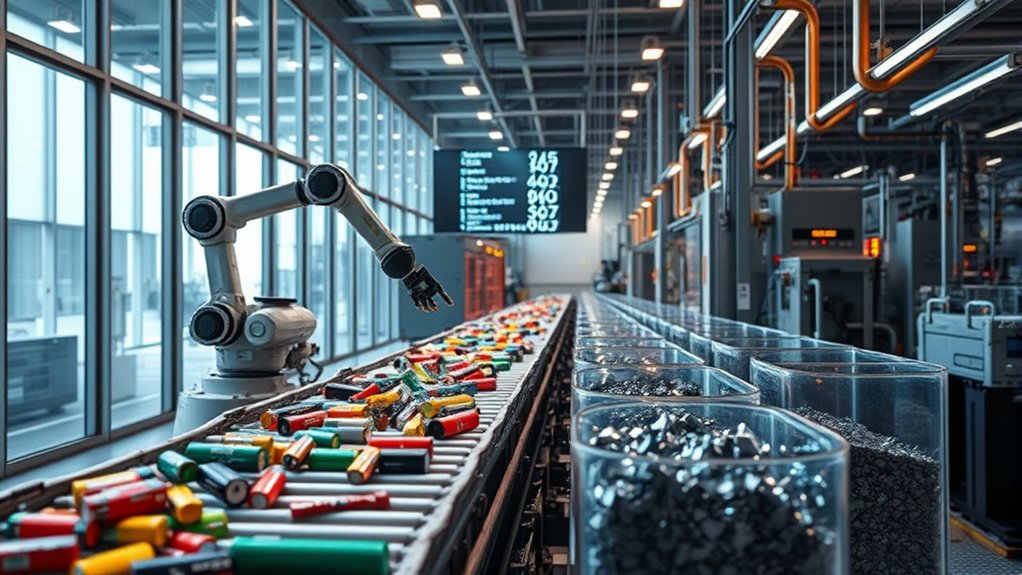

To design for a circular economy in battery recycling, focus on creating batteries that are easier to disassemble and reuse, minimizing waste. Implement efficient material recovery techniques to extract valuable elements like lithium and cobalt, reducing the need for raw mining. Use modular designs that support second-life applications and develop smarter collection systems for proper end-of-life handling. By adopting these innovations, you can help promote sustainability—keep exploring to discover even more ways to close the loop in battery use.
Key Takeaways
- Designing batteries for easy disassembly to facilitate efficient recycling and component reuse.
- Implementing modular designs that support second life applications and extend battery lifespan.
- Developing advanced collection and sorting systems to maximize resource recovery at end-of-life.
- Innovating material recovery technologies to extract valuable elements like lithium and cobalt more sustainably.
- Promoting circular economy principles by integrating reuse, recycling, and material regeneration into battery lifecycle management.
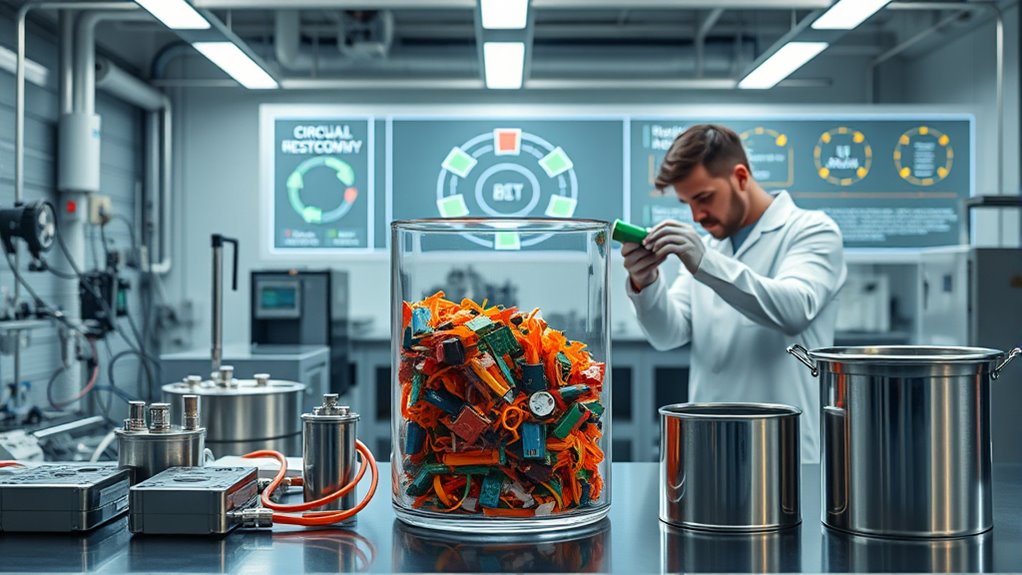
As the demand for batteries continues to soar, innovative recycling technologies are emerging to address the environmental challenges of battery disposal. These advancements aren’t just about reducing waste; they’re shaping a circular economy where batteries are reused, remanufactured, and repurposed to maximize their value. One of the most promising strategies involves second life applications, where used batteries are repurposed for less demanding energy storage tasks. Instead of immediately scrapping a battery once it drops below ideal performance for a vehicle or device, you can give it a second life by deploying it in stationary energy storage systems. This approach extends the battery’s usefulness, reduces the need for raw material extraction, and cuts down on waste. It’s a win-win that aligns with sustainable development goals.
Second life battery applications extend usefulness, reduce waste, and support a sustainable circular economy.
In addition to prolonging battery life through second life applications, material recovery plays an essential role in these innovative recycling processes. When batteries reach the end of their second life, advanced recycling technologies focus on efficiently extracting valuable materials like lithium, cobalt, nickel, and manganese. These materials are then refined and reintroduced into the manufacturing cycle, closing the loop and minimizing reliance on virgin resources. The key here is designing batteries and recycling systems with material recovery in mind. For example, modular designs make it easier to disassemble batteries, recover materials with minimal waste, and reuse components. This not only conserves resources but also reduces environmental impact by limiting the need for environmentally damaging mining activities.
You’re at the forefront of this shift when you support or adopt these new recycling innovations. By choosing products designed for easy disassembly and reuse, you help promote second life applications and more effective material recovery. When batteries are designed with the end in mind, they become part of a sustainable, circular system where materials are continually reused rather than discarded. These innovations also involve smarter collection and sorting systems that ensure batteries are properly processed, preventing hazardous waste and maximizing resource recovery. As technology advances, you’ll see even more efficient methods for reclaiming materials and repurposing batteries, transforming waste into valuable resources.
Ultimately, these innovations in battery recycling empower you to participate actively in building a sustainable future. They make it possible to reduce environmental harm, conserve natural resources, and foster a resilient supply chain. By supporting these efforts, you contribute to a circular economy that values reuse and responsible stewardship of our planet’s finite resources. The future of battery recycling isn’t just about disposal—it’s about designing smarter, cleaner systems that keep batteries in use longer and recover their materials effectively, ensuring a healthier environment for generations to come.

Kaisi Professional Electronics Opening Pry Tool Repair Kit with Metal Spudger Non-Abrasive Nylon Spudgers and Anti-Static Tweezers for Cellphone iPhone Laptops Tablets and More, 20 Piece
Kaisi 20 pcs opening pry tools kit for smart phone,laptop,computer tablet,electronics, apple watch, iPad, iPod, Macbook, computer, LCD…
As an affiliate, we earn on qualifying purchases.
As an affiliate, we earn on qualifying purchases.
Frequently Asked Questions
How Do Recycling Innovations Impact Battery Safety Standards?
Recycling innovations improve battery safety standards by enhancing chemical stability and hazard mitigation. You’ll find that safer recycling processes reduce the risk of fires and leaks, ensuring batteries remain stable during disassembly. These innovations also help prevent hazardous exposure, making handling and recycling safer for workers and the environment. As a result, safety standards evolve to incorporate new materials and methods that prioritize chemical stability and minimize hazards throughout the battery’s lifecycle.
What Are the Economic Benefits of Circular Battery Design?
They say “a penny saved is a penny earned,” and circular battery design proves it true. You’ll enjoy cost savings by reducing raw material expenses and waste disposal costs. Plus, it opens doors for market expansion, attracting eco-conscious consumers and new business opportunities. Embracing circular design boosts your competitiveness, guarantees sustainability, and ultimately maximizes profits. You turn innovation into economic growth, making your business both greener and more profitable.
How Do Recycling Methods Adapt to Different Battery Chemistries?
You adapt recycling methods based on battery chemistry by tailoring processes to extract valuable materials efficiently. For lithium-ion batteries, you focus on recovering lithium, cobalt, and nickel through hydrometallurgical or pyrometallurgical recycling. For newer chemistries like solid-state or sodium-ion, you modify techniques to handle different electrode compositions. This recycling adaptation guarantees maximum material recovery, minimizes environmental impact, and supports a sustainable circular economy for diverse battery chemistries.
What Role Do Consumers Play in Battery Circular Economy Efforts?
Think of yourself as the key to a sustainable future; your actions can light the way. Your consumer awareness directly influences recycling participation, turning discarded batteries into valuable resources. By properly disposing of batteries and supporting recycling programs, you help close the loop in the circular economy. Every small effort you make fuels innovation and reduces waste, proving that collective responsibility transforms individual actions into global change.
How Are Regulatory Policies Evolving to Support Recycling Innovations?
Regulatory policies are evolving through policy shifts that prioritize sustainability and recycling. These changes include stricter mandates on battery disposal and incentives for innovation, encouraging companies to develop advanced recycling technologies. As someone involved in this sector, you’ll find these policies create a supportive environment for innovation incentives, making it easier to implement circular economy practices. Staying updated on policy shifts helps you leverage new regulations to advance sustainable battery recycling solutions.

Energizer Ultimate Lithium AA Batteries Pack, 1.5V AA Batteries, 24 Count
Energizer Double A Lithium batteries are the world's longest lasting AA batteries.
As an affiliate, we earn on qualifying purchases.
As an affiliate, we earn on qualifying purchases.
Conclusion
By embracing these innovative recycling methods, you’re helping to create a sustainable future. Designing batteries for reuse and recovery keeps valuable materials in circulation, reducing waste and environmental impact. Remember, “A chain is only as strong as its weakest link”—so, your efforts in supporting circular economy practices make a real difference. Together, we can turn today’s discarded batteries into tomorrow’s valuable resources, proving that small actions can lead to big change.

FLASLD Large Fireproof Lipo Bag for 200Ah Lithium Battery Storage and Charging, 22 x 9 x 9.5in E-bike Battery Bag Waterproof Box for Documents and Valuables
🔥【Why do you need lipo battery bag】- Do you know the potential dangers of lipo batteries? Once the…
As an affiliate, we earn on qualifying purchases.
As an affiliate, we earn on qualifying purchases.
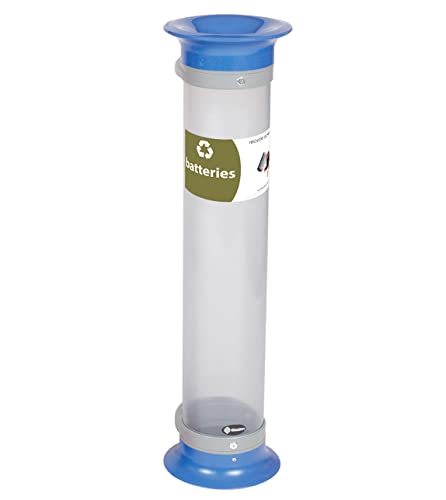
Glasdon C-Thru 15Q Battery Recycling Tube (Blue) – Battery Disposal Bin – Compact 15Q Transparent Battery Collection Tube (Recycle Across America Decal)
Transparent 15-quart polycarbonate recycling collection tube perfect for small waste deposits such as batteries
As an affiliate, we earn on qualifying purchases.
As an affiliate, we earn on qualifying purchases.