
🔍 Read the full analysis: Bangladesh’s Garment Wages Take Center Stage As Protests Continue on ThorstenMeyerAI.com

Get business pricing on monitors, keyboards and dev gear
- Business-only prices and quantity discounts
- Tax-exempt purchasing
- Multiple users, one account, clear invoices
TL;DR
Bangladesh appointed a six-member board on Nov. 1 to set a new minimum wage for garment workers, as protests disrupted 529 factories, according to the factory owners’ association. Workers are demanding 30,000 taka a month, compared with the current minimum of 12,500 taka; the board has not announced a meeting date or timetable for a decision.
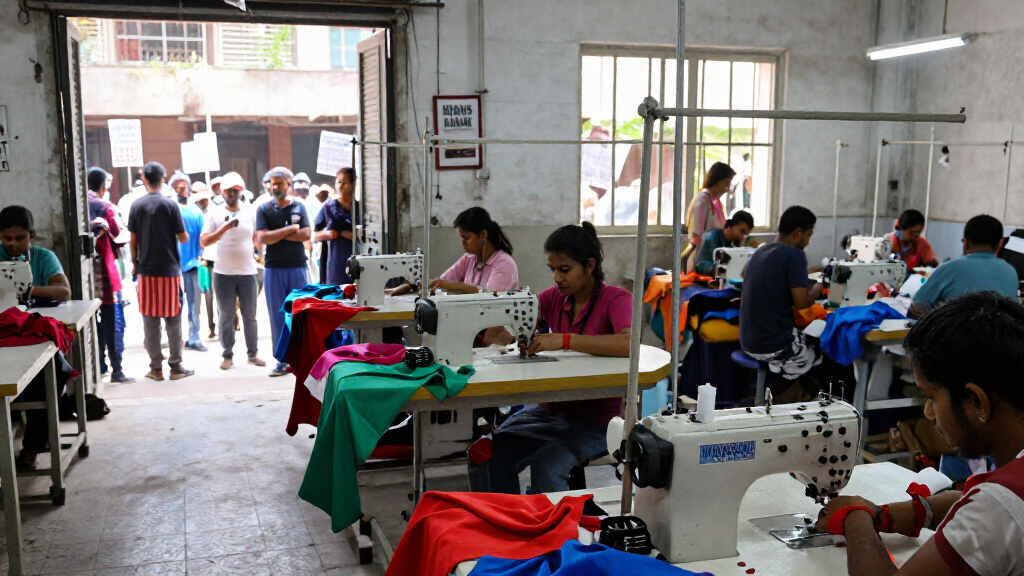
Bangladesh appointed a six-member board to set garment workers’ minimum wages on Nov. 1, as protests over pay disrupted 529 factories, according to a count by the Bangladesh Garment Manufacturers and Exporters Association (BGMEA). Workers are demanding 30,000 taka a month, more than twice the current 12,500-taka minimum, and factories reopened the following day amid concerns about further unrest.
The BGMEA’s situation report covered 2,134 factories across five industrial regions and counted 987,190 workers leaving their workplaces on Nov. 1. The Daily Star reported the figures from the association. The largest number of affected workplaces was in Gazipur and Mymensingh, where 276 of 836 factories were disrupted and 645,360 workers left. In Savar, Ashulia and Jirani, 185 of 441 factories were disrupted, with 290,205 workers leaving. Disruptions were also reported at 68 factories in Dhaka’s Mirpur area. None were reported in the association’s counts for Narayanganj or Chattogram.
The count describes factories where operations were disrupted after workers walked out, not factories shut by their owners. Reuters reported road blockades in Dhaka and Gazipur on Sunday, and said police used tear gas and water cannon after bricks were thrown. A police vehicle and a police box were set alight, and Border Guard Bangladesh personnel were deployed. Reuters and Al Jazeera reported that clashes in the Ashulia area the previous day injured several people, including police officers.
The Labour Ministry issued notifications under the Bangladesh Labour Act, as amended in 2026. The board includes a chair, an independent member, two employer representatives and two worker representatives, The Daily Star reported. Labour and Employment Minister Ariful Haque Choudhury said the appointments followed discussions with worker representatives and industry leaders. Reuters reported that he urged workers to return and warned prolonged disruptions could delay export shipments and payments from foreign buyers. Factories reopened on Nov. 2, though owners remained concerned about further protests.
Wage Talks and Export Risks
The dispute affects workers’ household finances and an export industry that connects factories across Bangladesh to overseas retailers. Workers say the current minimum does not cover basic costs; their demand would more than double the existing floor. The size of the walkout, as reported by BGMEA, also shows how a wage dispute can interrupt production across several manufacturing regions.
Any prolonged stoppage could put shipment schedules and payments at risk. The minister warned of those potential consequences, while the reopening of factories on Monday offered some immediate relief. It does not settle the wage dispute: the board still has to deliberate, and neither its timetable nor the result is known.
Responsibility for the wage outcome also extends beyond the government and factory owners. Reuters reported that an economist and industry participants pointed to international buyers’ pricing practices as part of the pressure on suppliers. A 2016 International Labour Organization survey cited in the source material found that 17% of surveyed Bangladeshi suppliers said their customers were willing to reflect minimum-wage increases in the prices they paid. That survey is historical and does not establish how buyers are responding in 2026, but it illustrates a long-running concern in wage negotiations.
Popular right now

Sony BRAVIA XR8B 65-Inch 4K OLED Google TV (K-65XR8B)

Ninja Foodi Dual Zone Smart XL Air Fryer, 10 Qt, 6-in-1, Black (DZ550)

De'Longhi Rivelia Fully Automatic Espresso Machine with Milk Frother, White
As an affiliate, we earn on qualifying purchases.
How the Wage Review Began
The current garment minimum wage of 12,500 taka a month has applied since December 2023. A 2026 amendment to the Labour Act shortened the interval between minimum-wage reviews from five years to three, The Daily Star reported, making a review due. The new board was named while protests were continuing, following weeks of worker actions.
The Daily Star reported that workers had blocked roads since mid-October. On Oct. 31, about 30 factories around Ashulia declared holidays, according to Ashulia Industrial Police superintendent Mohammad Mominul Islam Bhuiyan, as cited by Reuters and Al Jazeera. Protests escalated the next day, when the BGMEA counted disruptions across the industrial areas it surveyed.
Workers’ demand is 30,000 taka monthly, which Reuters put at about US$243 to $245. The board is chaired by Sheikh Ashfaqur Rahman. Its other members are University of Dhaka professor Mosleh Uddin Ahmed; employer representatives Asif Ayub and ABM Shamsuddin; and worker representatives Anwar Hossain and Babul Akhter, according to The Daily Star and Reuters.
““After paying rent, there is very little left for food, our children’s education and other essential expenses.””
— Garment worker Mahin Hossain, speaking to Reuters
Board Timetable Still Undisclosed
The ministry’s notifications did not specify when the board would hold its first meeting or when it would announce a new wage structure, The Daily Star reported. No public deadline for a decision was provided in the source material. It is also not yet clear whether the board will recommend a figure close to workers’ demand, how employers will respond, or whether further protests will affect factory operations.
The figures on Sunday’s disruptions came from BGMEA, the industry’s owners’ association, and describe the factories and workers included in its report. The available reporting does not independently establish the total number of workers who joined protests beyond those counts. Factories reopened Monday, but that does not confirm that the dispute has been resolved.
Wage Board Must Set Its Schedule
The board is expected to consult its members and work toward a revised minimum wage, but the date of its first meeting and the timetable for any announcement remain unreported. Its members represent workers, employers and an independent academic perspective, with the chair tasked with working out a minimum wage in consultation with them.
In the meantime, the immediate indicators to watch are whether factories continue operating and whether workers resume or expand walkouts. Any wage recommendation will have to address workers’ demand and employers’ objections, while the government has warned that longer disruption could delay shipments and payments. No final wage figure or agreement has been announced.
Key Questions
What are Bangladesh garment workers demanding?
Workers are demanding a minimum wage of 30,000 taka a month. Reuters estimated that at about US$243 to $245.
What is the current garment minimum wage?
The current minimum is 12,500 taka a month. It has applied since December 2023, according to the source material.
How many factories were affected by the Nov. 1 protests?
The BGMEA counted 529 disrupted factories among 2,134 factories covered by its report across five industrial regions. It also reported that 987,190 workers left their workplaces that day.
When will the new wage be announced?
No announcement date or board meeting schedule was included in the ministry notifications, according to The Daily Star. A decision timetable has not been reported.
Were factories still closed on Nov. 2?
Reuters reported that factories reopened on Nov. 2. Owners remained concerned about further unrest, so the reopening did not mean the wage dispute had been settled.
Source: ThorstenMeyerAI.com