
🔍 Read the full analysis: 10 Home Theater Projectors For Cinema-Style Viewing In 2027 on ThorstenMeyerAI.com

Get business pricing on monitors, keyboards and dev gear
- Business-only prices and quantity discounts
- Tax-exempt purchasing
- Multiple users, one account, clear invoices
TL;DR
ThorstenMeyerAI.com presents 10 projector picks for cinema-style viewing, with the Epson Home Cinema LS11000 named its best overall option for dedicated media rooms. The source emphasizes that room lighting, native resolution, smart features and light-source longevity matter more than headline specifications alone; it does not provide a complete, verifiable specification or price list for all 10 models.
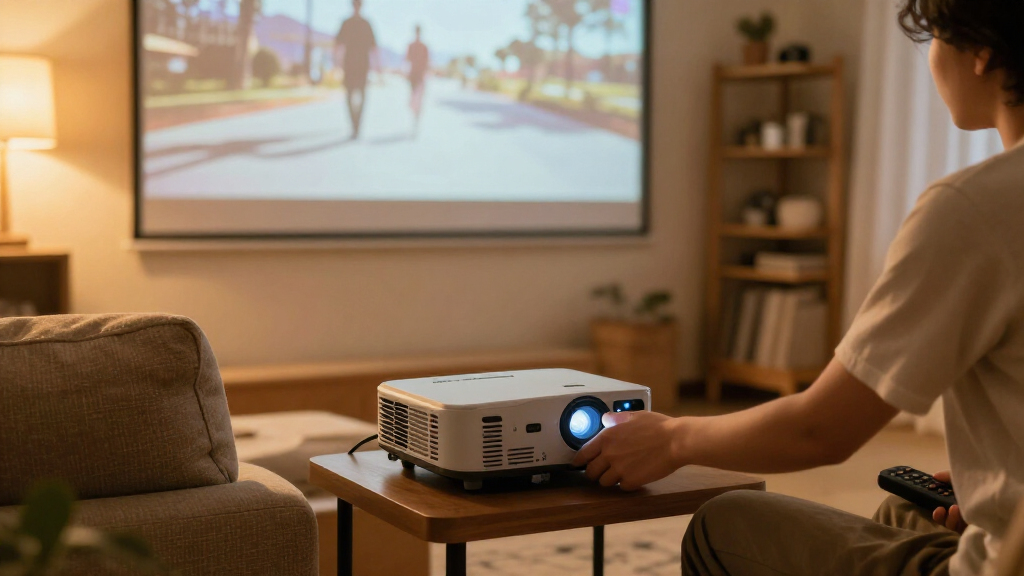
ThorstenMeyerAI.com has published a 10-projector buyer’s guide for cinema-style home viewing, naming the Epson Home Cinema LS11000 its best overall choice for a dedicated media room. The guide argues that shoppers should choose based on room lighting, resolution needs and setup preferences—not the “4K” label or brightness figure alone. Its supplied material does not include a full model-by-model specification and pricing table, so several comparisons cannot be independently checked from the information available.
The guide’s clearest recommendation is the Epson LS11000, which it describes as a laser projector with “4K PRO-UHD” clarity suited to a dedicated viewing space. It says laser light sources can reduce lamp-replacement needs and maintain brightness over extended use. Those are source claims; the material does not include independent test results or a direct comparison of measured brightness and image quality.
For a lower-cost, connected option, the article names the NexAurea Smart Projector, describing it as native 1080p and equipped with Wi-Fi 6. It also highlights the Optoma UHZ36 for rooms with uncontrolled daylight, saying models above 2,000 ANSI lumens are better suited to that use. The text cites HAPPRUN and Aurzen models for integrated streaming apps, and the X9 Pro for Wi-Fi 6 and Bluetooth 5.4; the supplied excerpt does not give full model names, prices or test conditions for each.
The guide’s selection method says it considered image quality, usability and value, including resolution, light source, contrast, HDR, setup features and connectivity. However, the material does not list the ten picks in a complete ranked lineup. It also names the Epson Home Cinema 980 as a lamp-based example, but does not provide enough detail to compare its total ownership cost with the laser models.
The 10 picks
- 1
 Epson Home Cinema LS11000 4K PRO-UHD Laser ProjectorView on Amazon →
- 2
 Optoma UHZ36 4K UHD Laser HDR Home Theater Projector – BlackView on Amazon →
- 3
 Epson Home Cinema 980 3-Chip 3LCD 1080p Movie ProjectorView on Amazon →
- 4
 X9 Pro Smart Projector with VIDAA OS, 1080p Native Resolution, 4K Decoding, H…View on Amazon →
- 5
 HAPPRUN 1500 ANSI Lumens 4K Decoding Projector with Official Google TVView on Amazon →
- 6
 HAPPRUN Native 1080P Bluetooth Projector with Official Licensed Google TVView on Amazon →
- 7
 NexAurea Smart Projector with Native 1080p, 4K Decoding, Wi-Fi 6, Bluetooth 5…View on Amazon →
- 8
 Smart Outdoor Projector with 4K Support, WiFi & Bluetooth, Dual Speakers, Aut…View on Amazon →
- 9
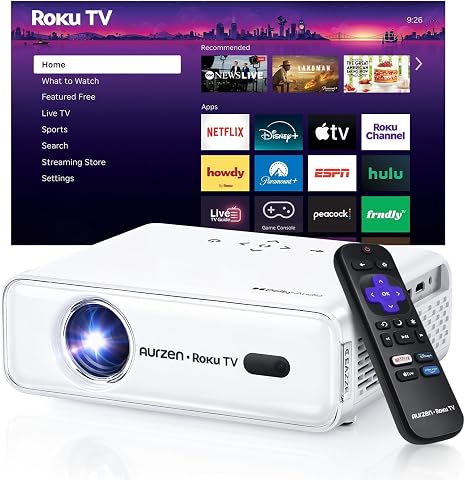 Aurzen Roku TV Smart Projector with Wifi and Bluetooth, Roku Streaming Experi…View on Amazon →
- 10
 HAPPRUN Native 1080P Bluetooth ProjectorView on Amazon →
Room Conditions Shape the Choice
The guide’s practical point is that projector performance depends on the room as much as the device. A unit with strong resolution can still produce a washed-out picture in daylight, while a bright model may not deliver the deep blacks a viewer wants in a dark, dedicated theater. Matching brightness to ambient light is therefore central to the purchase decision.
Its resolution advice also addresses a common source of confusion: a projector may accept a 4K input without displaying a native 4K image. Buyers comparing prices should distinguish native resolution from signal compatibility, then weigh that difference against screen size and the content they actually watch. The source offers a framework, but not enough test data to establish that any named model is best for every buyer.
Popular right now

Sony 65 Inch BRAVIA 5 Mini LED 4K HDR Smart Google TV (K-65XR50)

De'Longhi Classic Signature Espresso Machine with Adjustable Milk Frother

KitchenAid Artisan 5-Quart Tilt-Head Stand Mixer, Almond Cream
As an affiliate, we earn on qualifying purchases.
How the Guide Compares Projectors
The source groups the main tradeoffs around laser, LED and lamp-based light sources. It says lasers generally offer long operating life and more consistent brightness, LEDs can suit darker rooms where peak brightness is less important, and traditional lamps can cost less upfront but may need replacement. These descriptions are broad buying guidance, not model-specific measurements supplied in the excerpt.
It also recommends checking streaming and connection options. Built-in smart platforms can reduce the need for a separate streaming stick, while physical HDMI connections can provide a more dependable link to other equipment. The source mentions Wi-Fi 6, Bluetooth 5.4 and HDMI 2.1 as relevant considerations, but does not confirm that every named projector supports each standard.
“The main tradeoff you will face is between raw brightness and color accuracy.”
— ThorstenMeyerAI.com buyer’s guide
Missing Prices and Test Details
The supplied source text does not show all 10 projector names, a complete ranking, current prices or a publication date. It also does not provide controlled measurements, testing methodology, screen size, viewing distance or room conditions for its recommendations. That limits readers’ ability to compare the picks or assess claims about brightness, color accuracy and long-term performance.
Product specifications and availability can change, and the guide’s wording does not establish whether cited figures come from manufacturers, independent testing or editorial estimates. Shoppers should verify current specifications—especially native resolution, ANSI lumens, ports and warranty—with the manufacturer and check independent reviews before buying.
Verify Models Before Buying
The next step for readers is to compare the full model lineup against their room and budget, then confirm current specifications and availability. A useful shortlist should state each projector’s price, native resolution, measured brightness, light-source rating and smart platform, alongside the conditions under which image quality was evaluated.
Until those details are available, the guide supports a general buying approach rather than a fully auditable ranking. Buyers should also check return policies and, where possible, view a projector in conditions similar to their own room.
Key Questions
Which projector does the guide recommend overall?
ThorstenMeyerAI.com names the Epson Home Cinema LS11000 as its best overall choice, particularly for dedicated media rooms. The supplied text does not include independent test results to verify that ranking.
Does 4K support mean a projector displays native 4K?
No. The guide notes that some projectors can accept or decode a 4K signal but display it at a lower native resolution. Check the projector’s native panel resolution before comparing it with native 4K models.
What brightness should I look for in a room with daylight?
The source says projectors above 2,000 ANSI lumens, including the Optoma UHZ36 as cited, are more suitable for uncontrolled daylight. Actual results depend on screen size, room lighting and screen characteristics.
Are laser projectors always the better value?
Not necessarily. The guide says lasers can reduce maintenance and retain brightness over time, while lamp models may cost less upfront. The better value depends on purchase price, use hours, lamp replacement costs and the buyer’s priorities.
Source: ThorstenMeyerAI.com