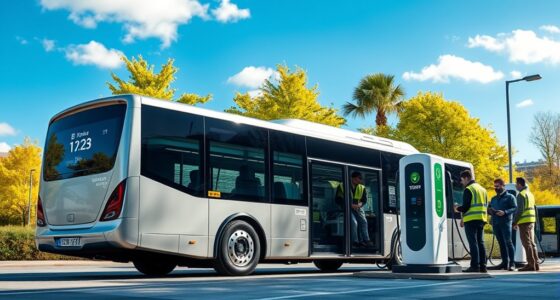

To maintain your electric bus’s climate control system, regularly inspect filters, fans, and refrigerant levels to prevent blockages and leaks. Keep an eye on system performance using diagnostic tools to spot issues early and avoid costly repairs. Proper maintenance guarantees the HVAC runs efficiently, reducing battery drain and improving passenger comfort. If you stay proactive, you’ll maximize your bus’s lifespan and performance, and there’s more to discover about keeping your HVAC in top shape.
Key Takeaways
- Conduct regular inspections of filters, fans, and ductwork to prevent blockages and ensure efficient airflow.
- Monitor refrigerant levels and check for leaks to maintain cooling efficiency and passenger comfort.
- Use diagnostic tools to track HVAC performance in real-time and detect issues early.
- Perform routine maintenance on compressors, thermostats, and vents for precise temperature control.
- Keep interior air quality high by cleaning or replacing filters and preventing mold or odor buildup.
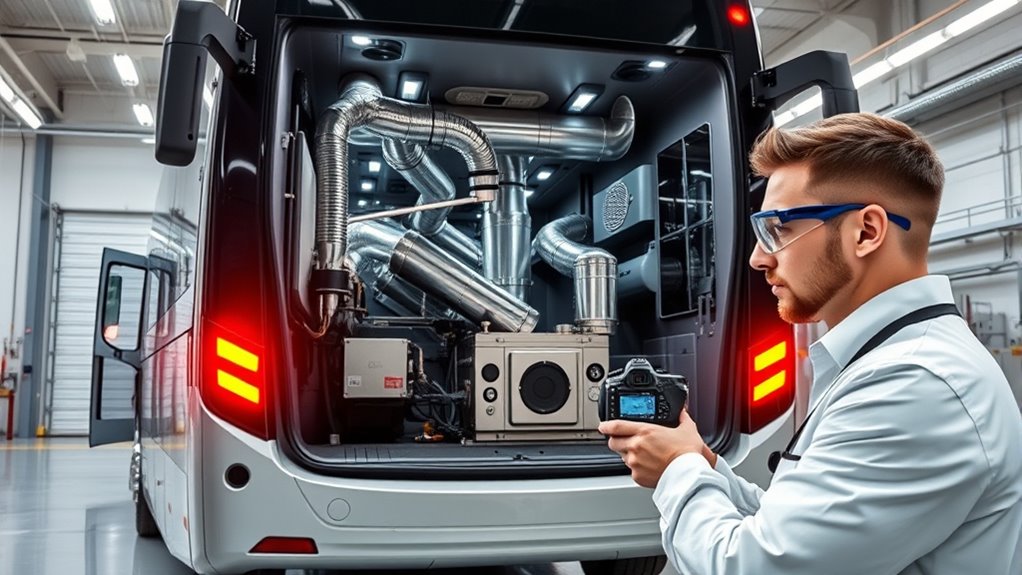
Electric buses rely heavily on efficient HVAC systems to guarantee passenger comfort and vehicle performance. When you prioritize maintaining these systems, you directly impact the bus’s overall efficiency and the satisfaction of your passengers. One key aspect to focus on is battery efficiency. Since HVAC components draw power from the bus’s battery pack, an optimized system ensures minimal energy wastage. Properly functioning HVAC units reduce unnecessary strain on the battery, extending its lifespan and maximizing range. Regular inspections of filters, fans, and ductwork can prevent blockages or malfunctions that force the system to work harder, which in turn drains more battery power. When the HVAC system runs smoothly, it consumes less energy, helping you maintain better battery efficiency and ensuring the bus can operate longer between charges. Vetted maintenance practices are also crucial for ensuring the longevity and reliability of HVAC components, preventing unexpected breakdowns and costly repairs.
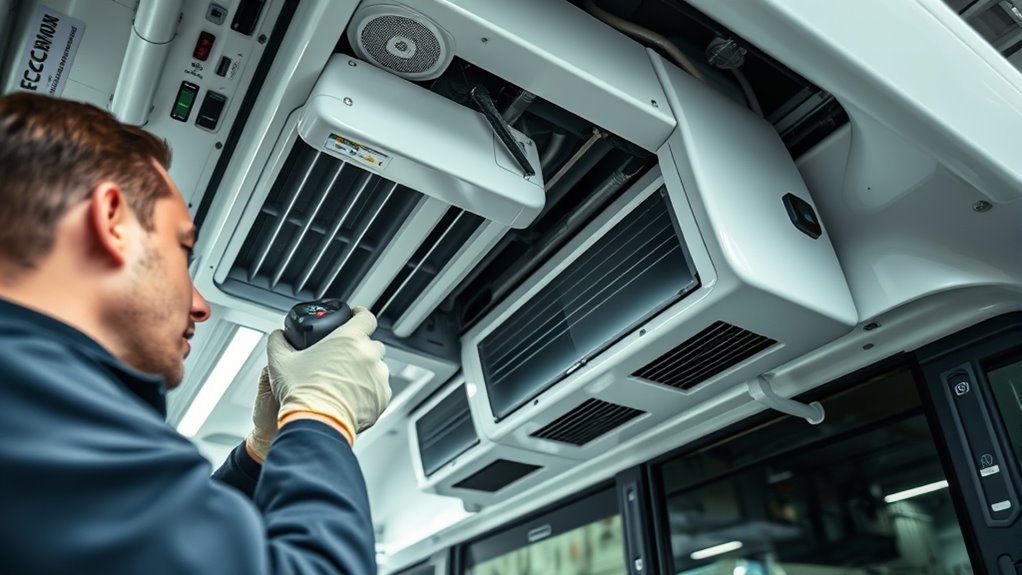
Passenger comfort is equally essential. An effective HVAC system keeps the interior climate stable, regardless of outside weather conditions. This means you need to pay attention to both heating and cooling capabilities, especially in extreme climates. Regular maintenance of components like compressors, thermostats, and vents ensures that temperature control remains precise and responsive. Properly calibrated systems prevent uneven heating or cooling, which can cause discomfort and dissatisfaction among passengers. When you keep the HVAC system in top shape, you also reduce noise levels and improve air quality, further enhancing passenger experience. Comfortable passengers are more likely to have a positive perception of public transit, encouraging higher ridership and community trust.
Moreover, you should routinely check refrigerant levels and ensure there are no leaks, as these issues can impair the system’s efficiency and compromise passenger comfort. A well-maintained HVAC system also prevents foul odors and mold buildup, which can quickly deteriorate the interior environment. Keeping filters clean and replacing them as needed is a simple yet fundamental step in this process. Additionally, integrating diagnostic tools allows you to monitor system performance in real time, catching potential problems early before they escalate into costly repairs or operational downtime. By staying proactive, you ensure that your electric bus remains reliable and comfortable, aligning with sustainability goals and customer expectations.

Universal ECM Motor Tester for HVAC, Advanced Diagnostic Tool for Electronically Commutated Motors, Compatible with GE, Emerson, Regal Rexnord, Genteq, York, Carrier, Trane, Lennox
【INSTANT GO/NO-GO DIAGNOSIS】 – Stop the guesswork in seconds! No complicated screens or data to interpret. Just connect…
As an affiliate, we earn on qualifying purchases.
As an affiliate, we earn on qualifying purchases.
Frequently Asked Questions
How Often Should HVAC Systems on Electric Buses Be Inspected?
You should inspect your electric bus’s HVAC system at least twice a year. During these inspections, focus on HVAC system calibration to guarantee peak performance and refrigerant leak detection to prevent inefficiencies. Regular checks help identify issues early, extending system life and maintaining passenger comfort. Don’t forget to schedule more frequent inspections if the bus operates in extreme weather conditions or if you notice any performance problems.
What Are Common Signs of HVAC System Failure in Electric Buses?
You’ll notice signs of HVAC system failure in electric buses through sensor malfunctions, which cause inconsistent temperature control, and airflow restrictions, leading to weak or uneven air distribution. If you feel warm spots, strange noises, or a lack of airflow despite the system running, these are clear indicators. Regular inspections help catch these issues early, preventing further damage and ensuring the system operates efficiently when you need it most.
Are There Eco-Friendly Refrigerants Suitable for Electric Bus HVACS?
Did you know that eco-friendly refrigerants now account for over 50% of the market? You can opt for refrigerant alternatives like R-1234yf or R-1234ze, which are designed for eco friendly cooling. These refrigerants reduce global warming potential and are suitable for electric bus HVAC systems. Switching to these options helps you maintain efficient climate control while minimizing environmental impact.
How Can I Optimize HVAC Efficiency During Peak Usage?
To maximize HVAC efficiency during peak usage, you should implement energy-saving strategies like setting ideal temperature levels and utilizing smart controls. Regularly monitor system performance to identify any inefficiencies and perform timely maintenance. Consider upgrading components to more efficient models and guarantee proper insulation. These steps help reduce energy consumption, extend system lifespan, and maintain comfort for passengers, all while supporting eco-friendly operations.
What Maintenance Tips Extend the Lifespan of Electric Bus HVAC Units?
To extend your electric bus HVAC unit’s lifespan, focus on regular filter maintenance to prevent airflow issues and keep the system running smoothly. Additionally, monitor battery health, as it impacts HVAC efficiency and overall system performance. Schedule routine inspections, clean filters often, and replace them when necessary. Keeping your battery in good condition guarantees longer-lasting HVAC performance, reducing costly repairs and downtime, ultimately enhancing your bus’s reliability.

Robinair FLCK-1 Filter Conversion Kit for Promax Recovery and Recycling Units, 2 Piece Set
Replaces the obsolete swivel fitting (p/n MF1275) used on earlier Promax units
As an affiliate, we earn on qualifying purchases.
As an affiliate, we earn on qualifying purchases.
Conclusion
By giving your electric bus’s HVAC system the care it warrants, you’re not just maintaining a machine — you’re nurturing the heartbeat of your fleet. Think of it as tending a delicate garden; regular upkeep ensures it blossoms with efficiency and comfort. When you prioritize HVAC care, you’re fueling a journey where passengers stay cool and your bus runs smoothly, turning every ride into a seamless voyage through climate control’s gentle embrace.

Fieldpiece – DR58 Heated Diode Refrigerant Leak Detector – Ultra-Sensitive Leak Sniffer with Large, Backlite LCD Screen – Lightweight HVAC Tool
Detects Micro Leaks Fast: Ultra-sensitive heated diode finds <0.03 oz/yr leaks, 20x more sensitive than bubbles.
As an affiliate, we earn on qualifying purchases.
As an affiliate, we earn on qualifying purchases.

MZB 13.2 Gallon Ultra Quiet Air Compressor 115PSI Steel Tanks 70dB Noise Level Oil Free Air Compressor
Powerful & Reliable Performance Delivers MAX 115PSI working pressure for demanding tasks Features durable steel tanks for long-lasting…
As an affiliate, we earn on qualifying purchases.
As an affiliate, we earn on qualifying purchases.