
Scheduling preventive maintenance for your EV means setting regular check-ups and part replacements based on time or mileage, helping prevent unexpected failures. Predictive maintenance, on the other hand, uses real-time data from sensors to forecast issues before they happen, saving costs and reducing downtime. While preventive is easier to plan, predictive provides more personalized care for your vehicle’s health. Understanding the differences can help you choose the best approach to keep your EV running smoothly—keep exploring to learn more.
Key Takeaways
- Preventive maintenance relies on fixed schedules, while predictive maintenance uses real-time data to determine optimal timing.
- Scheduling preventive maintenance is straightforward and easier to plan financially, unlike the dynamic nature of predictive maintenance.
- Predictive maintenance can reduce unnecessary repairs by addressing issues based on actual vehicle condition rather than set intervals.
- Implementing predictive maintenance requires sensors and analytics, involving higher initial costs but offering long-term savings.
- Both strategies aim to maximize EV performance and longevity, but their scheduling approaches differ significantly.

Have you ever wondered how to keep your electric vehicle running smoothly? Proper maintenance is key to ensuring your EV stays in top shape, and choosing the right approach can make a big difference. Preventive maintenance involves scheduled check-ups and part replacements based on time intervals or mileage, helping you catch issues before they become serious. On the other hand, predictive maintenance uses real-time data and advanced diagnostics to forecast when specific components might fail, allowing you to address problems just in time. Both strategies aim to maximize your vehicle’s performance, but understanding their differences can help you extend battery longevity and cost efficiency.
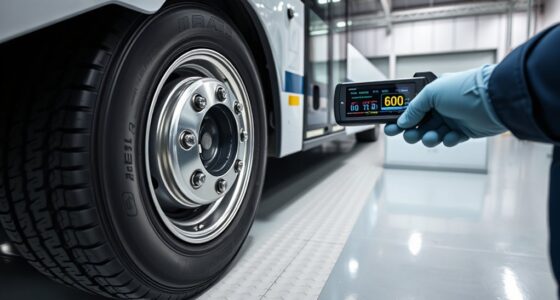
Preventive maintenance is straightforward—you follow a set schedule, replacing parts such as brake pads, tires, or coolant fluids regularly. This method can prevent unexpected breakdowns, but it may lead to unnecessary repairs or replacements if parts are still in good condition. It also tends to be more costly over time because you’re performing maintenance regardless of actual need. However, it’s effective for maintaining overall vehicle health and can be easier to plan financially. For EV owners, adhering to preventive schedules ensures that critical elements like the battery system are checked periodically, extending its lifespan and avoiding costly repairs down the line.
Regular preventive maintenance helps keep your EV in top shape and extends battery life.
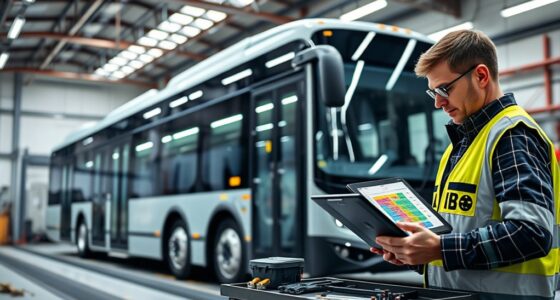
Predictive maintenance, in contrast, leverages sensors, telematics, and data analytics to monitor your EV’s systems continuously. It assesses the condition of components in real time, predicting failures before they happen. This approach allows you to perform maintenance only when necessary, markedly improving cost efficiency by reducing unnecessary parts replacements. For example, by analyzing battery performance data, you can identify early signs of degradation and address them before performance drops sharply. This targeted approach not only saves money but also promotes better battery longevity, as you avoid over-maintaining or prematurely replacing parts.
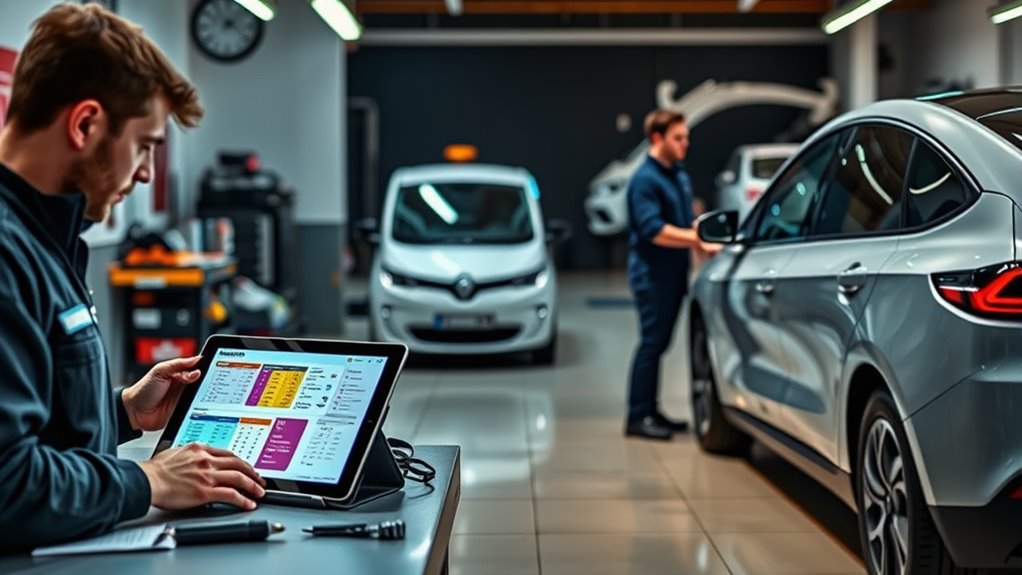
While predictive maintenance might require an initial investment in diagnostic tools or subscriptions to monitoring services, it can save you money in the long run. It minimizes downtime and prevents severe failures, which are often more expensive to repair. Additionally, by focusing on data-driven insights, you can better plan your maintenance schedule around your driving habits and vehicle usage, making the process more efficient. Incorporating advanced robotics and automation technologies can further enhance maintenance accuracy and efficiency, especially in service centers handling multiple EVs. For EV owners, this means fewer trips to the mechanic, fewer surprises, and an overall better experience with your vehicle’s reliability. Whether you choose preventive or predictive maintenance, understanding your EV’s needs and leveraging the right strategy will help you keep your vehicle performing at its best and extend its lifespan.
Top picks for "maintenance schedul preventive"
Open Amazon search results for this keyword.
As an affiliate, we earn on qualifying purchases.
Frequently Asked Questions
How Do Maintenance Costs Compare Between Preventive and Predictive Strategies?
You’ll find that predictive maintenance often results in lower overall costs compared to preventive strategies. With a thorough expense analysis, you see that predictive methods target repairs only when needed, reducing unnecessary expenses. While preventive maintenance involves scheduled checks that may lead to over-maintenance, predictive maintenance minimizes downtime and parts replacement, saving you money in the long run. This cost comparison highlights predictive maintenance as a more efficient approach for managing EVS upkeep.
What Are the Environmental Impacts of Each Maintenance Approach?
Think of preventive maintenance as planting seeds, while predictive maintenance acts like nurturing a thriving garden. With preventive, you may waste resources on unnecessary parts, increasing waste and emissions. Predictive strategies optimize battery recycling, reducing environmental impact, and lower emissions by catching issues early. By choosing predictive maintenance, you’re not just maintaining vehicles; you’re actively helping the planet breathe easier through smarter, environmentally-conscious choices.
How Does Maintenance Scheduling Affect Electric Vehicle Resale Value?
Your maintenance scheduling directly impacts your electric vehicle’s resale value by affecting battery longevity and resale depreciation. Regular, well-planned preventive maintenance helps preserve battery health, reducing depreciation, and boosts buyer confidence. On the other hand, predictive maintenance can catch issues early, extending vehicle lifespan and maintaining higher resale value. Consistently scheduled maintenance shows responsible ownership, making your EV more attractive to future buyers and potentially increasing its resale price.
Are There Specific EV Models Better Suited for Predictive Maintenance?
Some EV models are better suited for predictive maintenance because they feature advanced battery diagnostics and sensor integration. These vehicles continuously monitor battery health and other components, allowing you to detect issues early. Models from brands like Tesla and Chevrolet often have sophisticated sensor systems that facilitate predictive maintenance. By choosing these EVs, you can improve maintenance accuracy, reduce downtime, and extend vehicle lifespan, ultimately saving you money and enhancing reliability.
What Training Is Required for Technicians to Implement Predictive Maintenance?
Think of your technicians as detectives uncovering hidden clues in equipment data. To implement predictive maintenance, you’ll need technician certification in predictive analytics training, equipping them to interpret sensor data and identify potential issues early. This specialized training transforms maintenance from a reactive chore into a proactive strategy, enabling your team to anticipate failures before they happen. By investing in these skills, you guarantee your EV systems stay healthy and reliable.
Conclusion
Choosing between scheduling preventive maintenance and adopting predictive maintenance is like steering a road trip—you want to stay ahead of surprises. Preventive keeps your EV running smoothly, like clockwork, but predictive takes it further by catching issues early, saving you time and money. Both methods have their place, so consider your driving habits and budget. By finding the right balance, you’ll keep your EV humming along, like a well-tuned engine on a steady, reliable journey.