
🔍 Read the full analysis: 10 Network Attached Storage Devices For Everyday Home And Business Use on ThorstenMeyerAI.com

Get business pricing on monitors, keyboards and dev gear
- Business-only prices and quantity discounts
- Tax-exempt purchasing
- Multiple users, one account, clear invoices
TL;DR
A buyer’s guide from ThorstenMeyerAI.com compares 10 network attached storage devices for households and businesses, ranking the Synology DS225+ as its best overall balance. The lineup ranges from simple one-bay units to rackmount systems; drive inclusion, storage redundancy and setup demands vary, and a NAS alone is not a complete backup plan.
ThorstenMeyerAI.com has ranked 10 network attached storage (NAS) devices for everyday home and business use, in its original analysis, naming the Synology DS225+ its best overall balance for buyers seeking a flexible two-bay system. The guide also highlights simpler one-bay options and larger rackmount units, while cautioning that bay count, drive inclusion and setup requirements determine whether a model fits a particular storage and recovery plan.
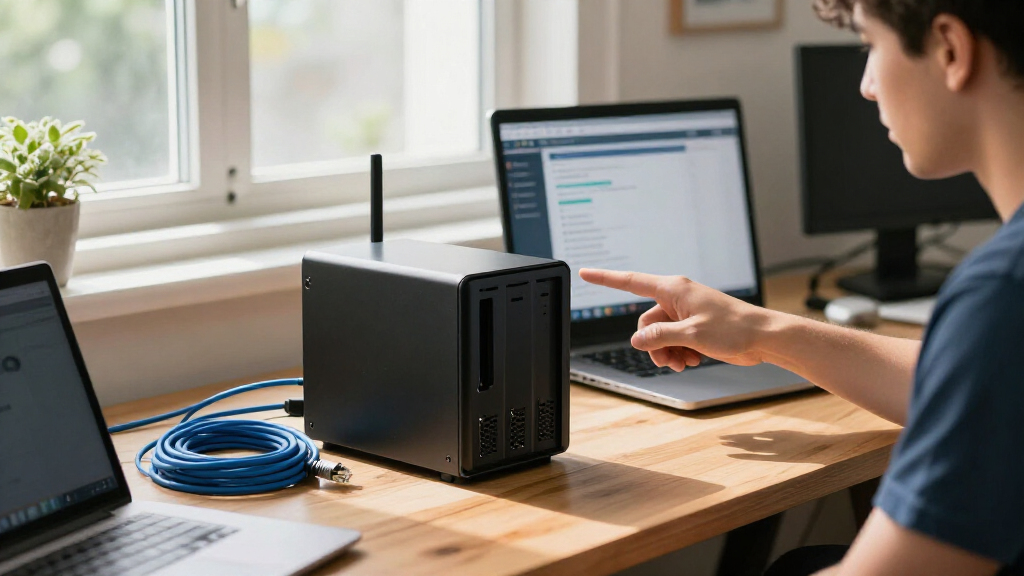
The guide describes NAS as a way for multiple devices to reach shared files and backups over a network. Its ranking weighs intended use, bay count, capacity choices and setup complexity rather than treating the highest-capacity system as the best choice for every buyer. It places the DS225+ ahead of more specialized options for its balance of flexibility and manageable home setup. For another overview, see this NAS roundup for home and small business.
The other named recommendations address different needs. The UGREEN NASync DXP2800 is presented as a capable personal-storage option, while the QNAP TS-864eU-8G-US is aimed at rack-based deployments needing more bays. The source also identifies the BUFFALO TeraStation 5420RN as a fit for rack environments and larger storage plans, rather than casual household backups. Developers comparing options can also consult this NAS guide for developers.
For simpler installations, the guide discusses the BUFFALO LinkStation 210 units and Synology DS124. It also names the Synology DS223j among diskless systems, alongside the DS225+ and DXP2800. The source says configurations differ: some systems are sold without drives, leaving buyers to select and install disks, while bundled-drive models reduce that work. It does not supply prices, drive configurations or a full specification table in the material provided.
The 10 picks
- 1
 QNAP TS-864eU-8G-US 8-Bay Short-Depth Rackmount NAS, DisklessView on Amazon →
- 2
 UGREEN NAS DXP4800 Pro 4-Bay Desktop NAS with Intel Core i3-1315U, 8GB DDR5,…View on Amazon →
- 3
 UGREEN NAS DXP2800 2-Bay for Advanced Home Users, Remote Workers & CreatorsView on Amazon →
- 4
 Synology DS225+ 2-Bay Diskless NASView on Amazon →
- 5
 UGREEN NAS DH2300 2-Bay Desktop NASync, Support Capacity 64TB (Diskless), Rem…View on Amazon →
- 6
 BUFFALO TeraStation 5420RN 4-Bay Rackmount NAS, 32 TB with Four 8 TB DrivesView on Amazon →
- 7
 Synology DiskStation DS223j 2-Bay NAS Enclosure (Diskless)View on Amazon →
- 8
 BUFFALO LinkStation 210 4TB 1-Bay Network Attached StorageView on Amazon →
- 9
 Synology DS124 1-Bay Diskless NAS for Backup, File Sharing, and Home Surveill…View on Amazon →
- 10BUFFALO LinkStation 210 2TB 1-Bay NAS Network Attached StorageView on Amazon →
Choosing Storage That Can Recover
The comparison matters because NAS purchases affect more than how much space a household or office gets. Bay count influences growth and drive-failure options, and a diskless enclosure requires additional drive purchases. Matching the device to the user’s actual workload can also limit unnecessary complexity: a rackmount model may suit an organization with dedicated infrastructure but be excessive for a household storing photos and documents.
The source stresses that redundancy is not the same as backup. Mirroring across two drives can keep data available after one drive fails, but it does not restore files deleted by mistake or protect against theft, fire or other events affecting the whole system. Buyers still need another copy, such as a separate device or remote storage, and should check that files can be restored.
Popular right now

Vitamix 5200 Blender with 64 oz Container, Black

Breville BES870BSXL Barista Express Espresso Machine, Black Sesame

De'Longhi Stilosa Compact Manual Espresso Machine with Milk Frother
As an affiliate, we earn on qualifying purchases.
How the Ten Models Differ
The guide groups the options by intended setting and complexity. One-bay models prioritize simplicity, but a single drive cannot provide internal drive redundancy. Two-bay systems offer more choices, including mirroring, with reduced usable capacity when drives are configured that way. Four- and eight-bay systems provide room for larger storage plans, but bring greater setup and maintenance demands.
The ranking is framed as a buyer-oriented assessment, not a controlled performance test. ThorstenMeyerAI.com says it considered shared files, computer and phone backups, media libraries and business storage, along with capacity flexibility and drive inclusion. The supplied material gives no test results or detailed model-by-model measurements, so the rankings should be read as editorial recommendations rather than a verified performance benchmark.
“The DS225+ is the strongest all-rounder in this lineup.”
— ThorstenMeyerAI.com
Prices and Model Details Not Supplied
The supplied source material does not include a publication date, prices, exact drive bundles, detailed hardware specifications or test methods for each product. It also does not provide a complete model-by-model breakdown of all 10 devices, so only the models named in the material can be described here. Availability, current configurations and compatibility may vary; buyers should check manufacturer information before purchasing.
The source’s rankings are recommendations, not guarantees that a device will meet a particular user’s capacity, network-speed or recovery needs. It does not identify specific drive-failure rates or compare measured performance across the lineup. The best fit therefore remains dependent on a buyer’s workload, budget, existing network and willingness to manage storage.
Check Drives and Recovery Plans
Before choosing a model, buyers should estimate present storage use and likely growth, then compare the total cost of the enclosure and compatible drives. They should confirm whether the product is sold diskless or with storage, review the manufacturer’s drive guidance and account for installation and data-transfer time. Small businesses should also plan user accounts, access permissions and routine maintenance.
After setup, the next step is to create a separate backup copy and test a file restore rather than relying on the NAS alone. No follow-up testing or product updates are specified in the supplied source, so changes to pricing, availability and configurations remain to be checked with manufacturers and sellers.
Key Questions
Which NAS does the guide rank highest overall?
ThorstenMeyerAI.com names the Synology DS225+ as its best overall balance, citing its two-bay format and flexibility for home use.
Does a one-bay NAS provide drive redundancy?
No. The source says a single-drive system cannot provide internal drive redundancy, so a drive failure can make stored data unavailable. A separate backup is still needed.
Is mirroring the same as backing up files?
No. Mirroring can help maintain availability after one drive fails, but it does not protect against deletion, malware, theft or damage to the whole NAS. Keep another copy on a separate device or at a remote location.
What should buyers check when comparing diskless and bundled systems?
Compare the full setup: drive cost, capacity, compatibility and installation effort, not just the enclosure price. A diskless system provides drive choice but requires separate disks; a bundled model includes drives, though its capacity may not suit every need.
Source: ThorstenMeyerAI.com