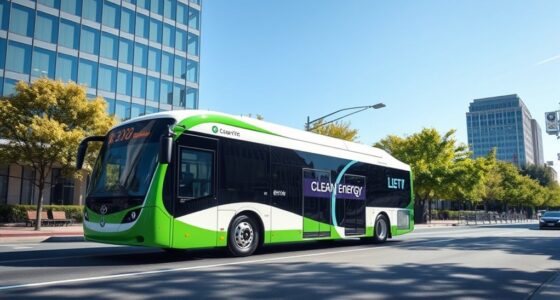
Electric buses are essential for your city’s efforts to reach net-zero goals by reducing carbon emissions from transit. They rely on advanced batteries with higher energy density, longer range, and faster charging, making operations more efficient. Building a robust charging infrastructure that leverages renewable energy supports sustainability. Collaborating with technology providers and utility companies guarantees scalability. Keep exploring how these innovations can accelerate your shift to cleaner, more sustainable transportation systems.
Key Takeaways
- Electric buses significantly reduce urban transportation carbon emissions, supporting net-zero and carbon neutrality objectives.
- Advancements in battery technology enhance range, charging speed, and lifespan, making electric buses more sustainable.
- Developing extensive charging infrastructure and renewable energy-powered charging stations is essential for net-zero integration.
- Coordinated planning among transit agencies, utilities, and policymakers ensures scalable and efficient deployment of electric buses.
- Energy management systems and grid integration optimize electricity use, aligning electric bus strategies with overall carbon neutrality goals.

Electric buses are becoming a essential component of global efforts to achieve carbon neutrality. As cities and governments push for cleaner transportation options, the focus on optimizing battery technology and establishing robust charging infrastructure becomes more critical than ever. You’ll find that advancements in battery technology have significantly improved the range, efficiency, and lifespan of electric buses. Modern lithium-ion batteries now offer higher energy densities and faster charging times, making electric buses more practical for daily operations. These improvements mean you can operate buses longer between charges and reduce downtime, which is indispensable for maintaining reliable transit services. Furthermore, ongoing research into solid-state batteries promises even greater safety, energy capacity, and faster recharge capabilities, further supporting large-scale adoption.
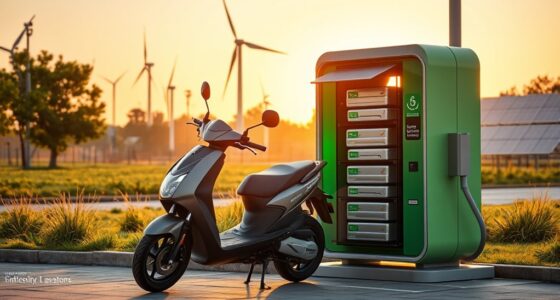
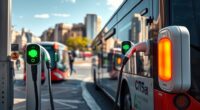
Alongside battery advancements, developing extensive and accessible charging infrastructure is essential. You need a network of strategically placed charging stations to guarantee your electric buses can recharge quickly and efficiently during breaks or overnight. Fast chargers, capable of delivering high power in a short period, allow your fleet to stay on schedule without long delays. This infrastructure investment not only supports operational efficiency but also reassures the public and stakeholders that electric buses can meet the demands of urban transit. As you plan for widespread deployment, integrating charging stations into existing transit hubs and along key routes becomes indispensable. It’s also necessary to consider grid capacity and energy management systems that can handle increased electricity demands without strain, ensuring sustainability and cost-effectiveness. Additionally, advancements in battery technology continue to make electric buses more viable for large-scale deployment, supporting the transition to cleaner transportation systems.
Implementing these technologies and infrastructure requires careful planning and coordination. You need to work with technology providers, city planners, and utility companies to develop standards and protocols for charging. This collaboration helps optimize energy use, reduce costs, and prevent bottlenecks in charging schedules. Additionally, investing in renewable energy sources to power these charging stations aligns with your broader goal of reducing carbon emissions. When your electric buses are charged with clean energy, you effectively lower your transportation sector’s carbon footprint, moving closer to your net-zero targets.
Top picks for "electric carbon neutrality"
Open Amazon search results for this keyword.
As an affiliate, we earn on qualifying purchases.
Frequently Asked Questions
What Are the Main Barriers to Widespread Electric Bus Adoption?
The main barriers to widespread electric bus adoption include limited charging infrastructure, which makes it hard to guarantee buses stay operational, and challenges with fleet integration, as you need to coordinate schedules, maintenance, and training. Additionally, high upfront costs and concerns about battery life can slow down adoption. Overcoming these barriers requires investing in charging stations and developing strategies to smoothly replace traditional buses with electric ones.
How Do Electric Buses Compare in Lifetime Costs Versus Traditional Buses?
Comparing costs, electric buses typically cost more upfront but offer lower lifetime costs. You’ll see savings through reduced fuel expenses and maintenance, thanks to fewer moving parts. The total cost over the vehicle’s lifetime often favors electric buses, especially with incentives. So, while initial investment may seem steep, maintenance savings and fuel efficiency make electric buses a more economical, eco-friendly option in the long run.
What Policies Incentivize Electric Bus Deployment in Urban Areas?
You can benefit from policies like tax incentives and infrastructure grants that encourage electric bus deployment in urban areas. Tax incentives reduce your upfront costs, making electric buses more affordable, while infrastructure grants help you develop charging stations easily. These policies motivate transit agencies to adopt cleaner transportation options, accelerate your progression to sustainability, and support your city’s efforts to meet net-zero goals through increased electric bus usage.
How Does Battery Recycling Impact the Environmental Benefits of Electric Buses?
Battery recycling may seem like a minor detail, but it greatly enhances the environmental benefits of electric buses. By focusing on battery material recycling, you reduce the need for new resource extraction, which cuts down environmental impact. This process helps prevent hazardous waste, promotes sustainability, and ensures that the shift to electric buses truly supports your net-zero goals. Recycling turns end-of-life batteries into valuable resources, making your transportation eco-friendly and responsible.
What Technological Advancements Are Expected to Improve Electric Bus Efficiency?
You can expect advancements like wireless charging and solid-state batteries to boost electric bus efficiency. Wireless charging allows buses to recharge seamlessly during routes, reducing downtime. Solid-state batteries offer higher energy density, faster charging, and improved safety compared to traditional lithium-ion batteries. These innovations will extend range, decrease charging times, and make electric buses more cost-effective, helping you meet sustainability targets more efficiently and reliably.
Conclusion
By embracing electric buses, you’re steering toward a cleaner, greener future. These vehicles act as the heartbeat of carbon neutrality strategies, transforming urban landscapes one ride at a time. As you align your efforts with net-zero goals, remember that every electric mile is a step closer to a sustainable world. Together, you can turn the road to zero emissions into a journey of hope, where progress flows like a steady, unstoppable river.