
Electric vehicles generally use between 0.15 and 0.2 kWh per passenger-kilometer, making them more energy-efficient than diesel cars, which typically consume around 0.2 to 0.3 kWh per passenger-kilometer. The efficiency of EVs improves further when powered by renewable energy, reducing their overall impact. Grid efficiency also plays a role in energy use. To understand these differences and their implications better, keep exploring how various factors influence EV sustainability.
Key Takeaways
- EVs typically consume around 0.15 kWh or less per passenger-kilometer, whereas diesel vehicles use about 0.2 to 0.3 kWh.
- Electric motor efficiency and renewable energy integration reduce EV energy use compared to diesel.
- Diesel vehicles directly burn fuel, leading to higher energy consumption per passenger-kilometer.
- Grid efficiency impacts EV energy consumption, with more efficient grids lowering kWh per passenger-kilometer.
- When powered mainly by renewables, EVs’ energy use can be less than half that of diesel vehicles.
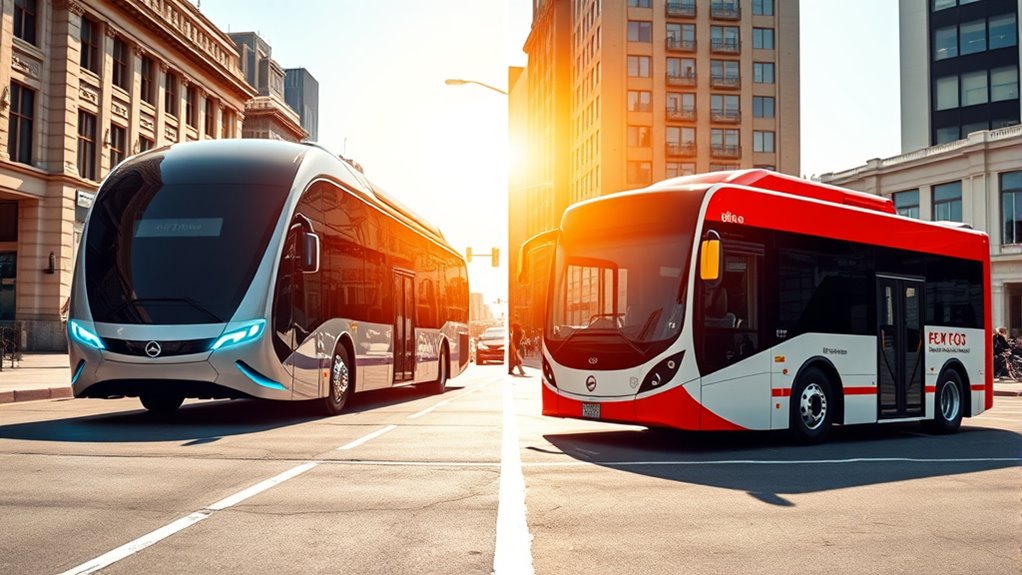
Have you ever wondered how electric and diesel vehicles compare in energy efficiency? When you look at the energy used per passenger-kilometer, you’re really examining how effectively each type of vehicle transports people relative to the energy consumed. Electric vehicles (EVs) tend to be more efficient, partly because they leverage the advantages of renewable energy sources and benefit from higher grid efficiency. Unlike diesel engines, which burn fuel directly, EVs convert electricity from the grid into motion with fewer losses, making them generally more energy-efficient on a per-passenger basis.
Electric vehicles are more efficient per passenger-kilometer, thanks to renewable energy use and higher grid efficiency.
Renewable energy plays an essential role here. As the electricity grid incorporates more solar, wind, and hydropower, the overall environmental impact of charging EVs diminishes. When your EV is powered primarily by renewable energy, the energy used per passenger-kilometer drops markedly, sometimes to less than half of what a diesel vehicle consumes. This shift means that even if the electricity grid isn’t perfectly efficient, the cleaner energy sources reduce the carbon footprint and improve the vehicle’s overall energy profile. In contrast, diesel vehicles rely solely on fossil fuels, which are less efficient to burn and produce higher emissions per unit of energy.
Grid efficiency also influences the energy consumption of electric vehicles. A more efficient grid minimizes energy losses during transmission and distribution, ensuring that a higher percentage of generated electricity reaches your vehicle. This efficiency translates into lower energy use per passenger-kilometer, especially when combined with the high efficiency of electric motors. Conversely, if the grid is less efficient, more energy is lost along the way, slightly increasing the energy cost of charging EVs. Still, even with some losses, EVs often outperform diesel vehicles because of their inherent efficiency advantages.
Additionally, advancements in smart grid technologies can further optimize energy flow, reducing waste and enhancing overall efficiency. When you compare the two, diesel vehicles typically consume more energy per passenger-kilometer — often around 0.2 to 0.3 kWh equivalent — depending on the vehicle and conditions. Electric vehicles can use as little as 0.15 kWh per passenger-kilometer or less, especially when powered by renewable energy and when the grid operates efficiently. This means that, in many cases, EVs provide a more sustainable transportation option, reducing not just emissions but also the total energy input needed for the same distance.

Emporia Vue 3 Home Energy Monitor – Smart Home Automation Module and Real Time Electricity Usage Monitor, Power Consumption Meter, Solar and Net Metering for UL Certified Safe Energy Monitoring
SAFETY YOU CAN TRUST WITH UL CERTIFICATION: With Emporia Energy, your home energy monitoring is safe, reliable, and…
As an affiliate, we earn on qualifying purchases.
As an affiliate, we earn on qualifying purchases.
Frequently Asked Questions
How Does Vehicle Maintenance Impact Energy Efficiency Differences?
Maintenance impacts energy efficiency differences by affecting vehicle longevity and operational costs. When you keep electric vehicles well-maintained, they tend to run more efficiently, using less energy over time. Conversely, poorly maintained diesel vehicles may consume more fuel and require costly repairs, reducing their efficiency. Proper maintenance costs can extend vehicle lifespan, ensuring consistent energy performance, and ultimately, you save money while minimizing environmental impact.
What Role Do Passenger Load Factors Play in Energy Use?
Passenger load factors directly influence energy use, as higher passenger density and load optimization mean more efficient trips. When you maximize passenger density, you’re reducing energy per passenger-kilometer, making electric and diesel vehicles more efficient. Conversely, low load factors increase energy consumption per passenger. Focus on load optimization to improve overall energy efficiency, ensuring each trip carries as many passengers as possible, ultimately lowering energy use per person.
How Do Regional Electricity Sources Affect Electric Vehicle Efficiency?
You’ll find that regional electricity sources substantially impact electric vehicle efficiency. When renewable integration is high, the grid decarbonization process means cleaner energy, reducing emissions associated with EVs. However, in regions relying on fossil fuels, EVs may have a higher carbon footprint. Understanding these regional differences helps you gauge how green your EV’s energy use really is, emphasizing the importance of shifting to cleaner, renewable energy sources for peak efficiency.
What Are the Lifecycle Energy Costs of Electric Versus Diesel Vehicles?
Have you considered the true costs of your vehicle choices? Electric vehicles often have higher upfront energy costs due to battery manufacturing, but they save energy over time, especially with cleaner electricity sources. Diesel vehicles rely heavily on fuel production, which adds to their lifecycle energy costs. Ultimately, electric cars tend to be more energy-efficient over their lifespan, reducing overall environmental impact despite initial energy investments.
How Does Driving Behavior Influence Energy Consumption per Passenger-Kilometer?
Your driving habits and route selection greatly influence your energy consumption per passenger-kilometer. Smooth acceleration and braking reduce energy use, while aggressive driving increases it. Choosing efficient routes with less traffic and fewer stops helps conserve energy, whether you’re driving electric or diesel. By driving more gently and planning your trips wisely, you can lower your overall energy costs and improve efficiency for each passenger-kilometer traveled.

Build a solar-powered EV charger: A step-by-step guide to harnessing rooftop solar panels for charging your electric vehicle at home
As an affiliate, we earn on qualifying purchases.
As an affiliate, we earn on qualifying purchases.
Conclusion
Think of electric and diesel transport as two different streams rushing toward the same ocean. Electric vehicles flow with a gentler, more sustainable current, using fewer kWh per passenger-kilometer, while diesel streams are noisier and more draining. By choosing electric, you’re steering your journey into cleaner waters, reducing your energy footprint. Every ride with electric power is like planting a seed for a greener future—simple, yet powerful in shaping the world you leave behind.
Emporia Vue 3 Home Energy Monitor – Smart Home Automation Module and Real Time Electricity Usage Monitor, Power Consumption Meter, Solar and Net Metering for UL Certified Safe Energy Monitoring
SAFETY YOU CAN TRUST WITH UL CERTIFICATION: With Emporia Energy, your home energy monitoring is safe, reliable, and…
As an affiliate, we earn on qualifying purchases.
As an affiliate, we earn on qualifying purchases.
Miller Electric – 043125 Package Calculator
Miller electric 043125 Package, Miller Calculator pack
As an affiliate, we earn on qualifying purchases.
As an affiliate, we earn on qualifying purchases.