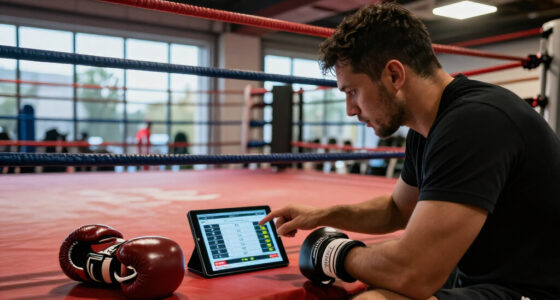
🔍 Read the full analysis: 10 Best Capture Cards For Gaming And Streaming In 2027 on ThorstenMeyerAI.com

Get business pricing on monitors, keyboards and dev gear
- Business-only prices and quantity discounts
- Tax-exempt purchasing
- Multiple users, one account, clear invoices
TL;DR
A ThorstenMeyerAI.com buying guide compares 10 capture cards for gaming and streaming, ranking the Elgato 4K S first for console-focused setups. It distinguishes capture resolution from input and passthrough specifications, which can differ even on products marketed with 4K support.
ThorstenMeyerAI.com has published a 2027 guide to 10 capture cards for gaming and streaming, naming the Elgato 4K S its top pick for console-focused setups. The ranking compares products by their stated capture capabilities, passthrough, portability and loop-out features—a distinction that matters because accepting a 4K signal does not necessarily mean recording it in 4K, much like the distinctions between graphics cards discussed in this graphics card guide.
The 10 picks
- 1
 Elgato 4K S Capture Card for PS5, Xbox Series X/S, and Switch 2View on Amazon →
- 2
 Elgato Game Capture Neo Portable USB Capture Card, 4K60 HDR PassthroughView on Amazon →
- 3
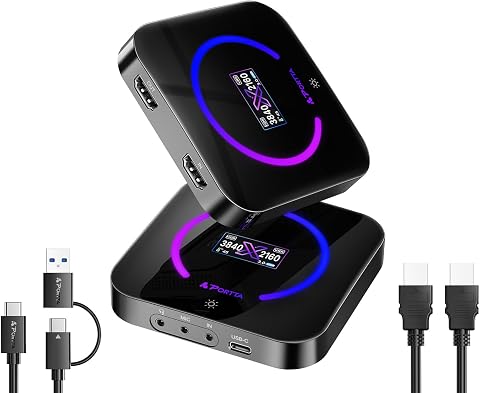 Portta DX20R HDMI Video Capture Card, Stream & Record in 4K 60Hz with Ultra-L…View on Amazon →
- 4
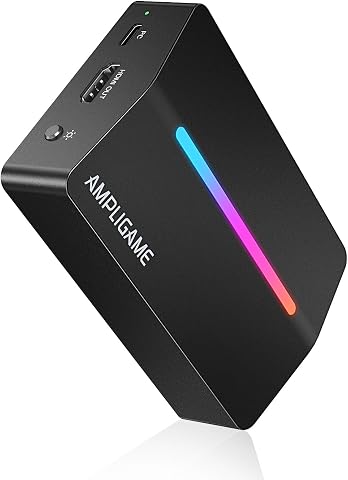 Fifine AmpliGame V3 Video Capture CardView on Amazon →
- 5
 4K HDMI Video Capture Card with Loop-Out, 1080P 60FPS USB 3.0 Streaming Devic…View on Amazon →
- 6
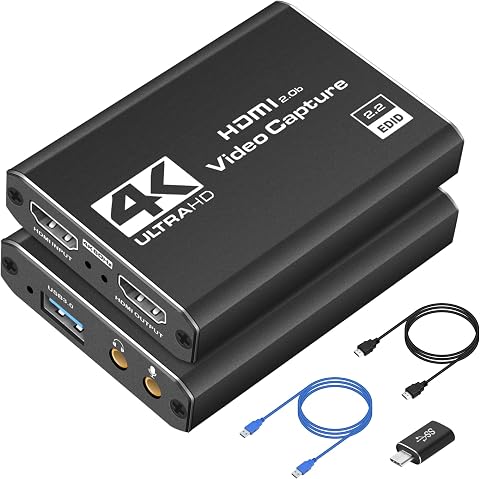 4K HDMI to USB 3.0 Video Capture Card (1080P 60FPS)View on Amazon →
- 7
 UGREEN HDMI to USB 3.0 Video Capture Card, 4K Input, 2K at 30Hz and 1080p at…View on Amazon →
- 8
 USB 3.0 HDMI Video Capture Card, 4K Input, 1080p 60FPS CaptureView on Amazon →
- 9
 4K HDMI Capture Card with 1080p 60fps RecordingView on Amazon →
- 10
 Dobestyou V316 4K HDMI Capture Card with USB 3.0View on Amazon →
Elgato 4K S leads the console picks
The guide ranks the Elgato 4K S first, describing it as a premium option for users of the PS5, Xbox Series X/S and Switch 2. It does not provide a full specification table in the supplied material, so buyers should check the product’s current supported capture modes and system requirements against their equipment before ordering.
The other named standouts serve different needs. The Elgato Game Capture Neo is positioned for portable setups and is described as offering 4K60 HDR passthrough. The PORTTA DX20R is highlighted for 4K 60Hz capture and high-refresh-rate passthrough, although the guide does not specify every resolution-and-refresh-rate combination supported.
Popular right now

Ninja Creami Scoop & Swirl Ice Cream Maker – Bone & Champagne (Amazon Exclusive)

Bose QuietComfort Ultra Wireless Noise Cancelling Earbuds, 2nd Gen, with 20W 2-Port Wall Charger

Dyson Airwrap i.d. Multi-Styler with Bluetooth Connectivity
As an affiliate, we earn on qualifying purchases.
Four more cards for distinct setups
The list also includes the Fifine AmpliGame V3, recommended as an alternative with a gaming-focused identity, and the 4K HDMI Video Capture Card with Loop-Out, for setups that need to send video to a separate display while recording. Three other entries—the UGREEN, Dobestyou and a generic HDMI-to-USB capture card—are described as USB 3.0 options with overlapping headline claims. The material supplied does not give exact model names or full specifications for these products.
The source identifies 10 picks in its title, but the supplied product information names only eight entries or product categories, counting the generic HDMI-to-USB option. It does not identify the remaining two selections. Readers should consult the 2026 capture card guide for context and the original guide for the complete list rather than treating this account as a verified inventory of all 10 cards.
Three budget-friendly USB categories
The remaining categories in the guide’s comparison are described as USB 3.0 capture devices with relatively similar headline specifications. The source material does not give their product names, prices or individual performance claims, so no product-specific conclusion can be drawn from it. It advises comparing exact input, recording and loop-out capabilities rather than relying on a 4K label.
Across the listed options, the guide says some USB models accept 4K input but record at 1080p 60fps. That may suit someone producing a 1080p stream, but it is not equivalent to 4K recording. The guide’s selection method gives more weight to a clear use case and specified signal path than to the largest resolution number in a product description.
Match the Card to Your Signal Path
The guide’s main practical point is that input, capture and passthrough describe different stages of a video setup. Input is the signal the card can accept; capture is the feed sent to a computer for recording or streaming; passthrough is what reaches a connected display. A card may accept 4K video while sending a 1080p recording feed to the computer.
That difference affects both picture quality and gameplay. People recording for a 1080p stream may not need 4K capture, while creators who require 4K files should verify the capture specification itself. Players using a separate television or monitor should also check passthrough resolution, refresh rate and HDR support—not just the recording mode.
Loop-out may matter more than a higher input figure for console users who want to play on a separate screen as the computer records. Portable USB devices can be more convenient for travel or a minimal desk, but their compact form does not establish how well they fit a permanent streaming setup. The best choice depends on the full chain of console or camera, card, computer and display.
How the Guide Compares Capture Cards
The source says its ranking weighs stated resolution and frame rate, connection style, named platform support, portability, HDR passthrough and loop-out. It favors cards with a defined use case over models whose descriptions offer few distinctions beyond broad USB 3.0 or 4K claims. The guide characterizes its rankings as a buying comparison, not as a lab-tested benchmark.
It also advises checking the host computer’s ports, operating-system requirements and software recognition. A hub, cable, busy port or recording-software setup may affect performance, so the card alone may not explain a problem in the signal chain. The supplied material does not provide independent test results, prices, warranty terms or a date for when each specification was checked.
“The Elgato 4K S leads for console-focused setups.”
— ThorstenMeyerAI.com guide
Specifications and Two Picks Unlisted
The source material does not identify two of the 10 promised picks and gives limited model-level specifications for several entries. It also does not state prices, full supported resolution and refresh-rate combinations, system requirements, or independent test results. The cited capabilities and recommendations should be treated as the guide’s descriptions, not as independently verified product testing.
Compatibility and performance can depend on the exact console or camera, computer, cable, port and software. The guide does not establish that every card works with every operating system or that a stated input, capture and passthrough mode is available simultaneously. Those details remain product-specific and should be confirmed with current manufacturer information.
Verify Modes Before Buying
Before choosing a card, buyers should map the connections from source to capture card to computer and display, then confirm the capture resolution, passthrough mode and loop-out needs for that setup. People who need 4K recordings should look specifically for a 4K capture claim; those who play on a high-refresh monitor should verify the supported passthrough combination.
The supplied guide does not announce a later update or testing schedule. The next useful step for readers is to check the complete original list and current manufacturer specifications, including computer compatibility and any required software, before purchase. Prices and product capabilities may change after publication.
Key Questions
Which capture card does the guide rank first?
It names the Elgato 4K S as its top option for console-focused setups, including PS5, Xbox Series X/S and Switch 2 users. The supplied material does not include a complete specification table.
Does a 4K input claim mean a card records in 4K?
No. Input resolution and capture resolution are different: a card may accept a 4K signal but send a 1080p feed to the computer. Check the stated capture resolution if 4K recording is required.
Which options does the guide highlight for portability or passthrough?
The guide positions the Elgato Game Capture Neo for portable setups and describes it as offering 4K60 HDR passthrough. It highlights the PORTTA DX20R for 4K 60Hz capture and high-refresh passthrough, without listing every supported combination.
What is loop-out used for?
Loop-out sends a source signal to a separate display while the capture card feeds video to a computer. It can be useful for playing on a television or monitor while recording, rather than relying on the computer preview.
Are all 10 products identified in the supplied information?
No. The material names or describes eight entries or product categories, including a generic HDMI-to-USB option, but does not identify the other two. Check the original guide for its complete list.
Source: ThorstenMeyerAI.com