
📊 Full opportunity report: A Practical OCR And Scanning Setup For Small Businesses on IdeaNavigator AI — validation score, market gap, and execution plan.
TL;DR
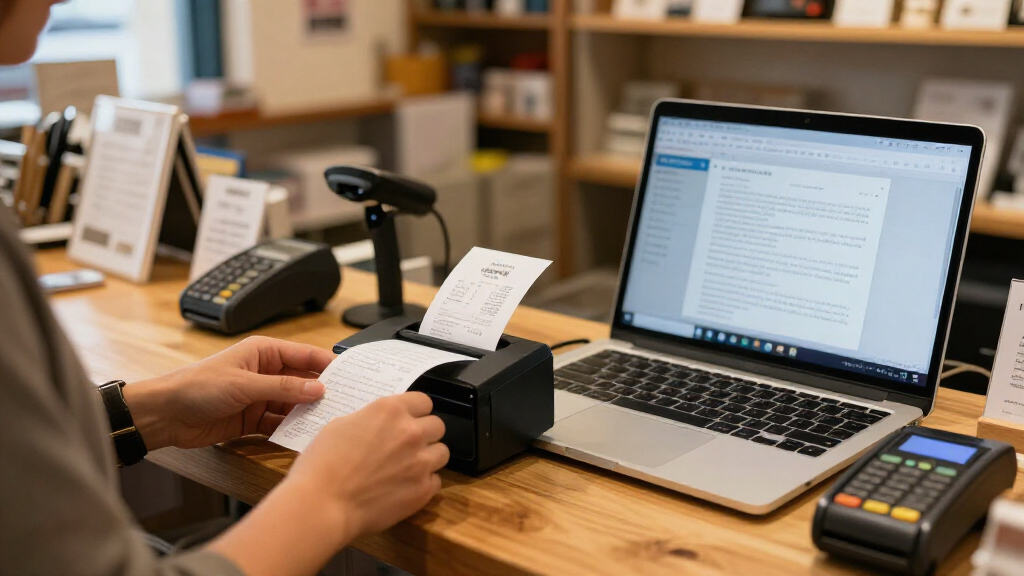
IdeaNavigator AI’s proposal outlines a possible OCR and auto-filing tool for paper-heavy small offices, but reports no real-world pilot results. It suggests asking five offices to scan 200 documents each over one week and measuring classification accuracy and willingness to pay.
IdeaNavigator AI has proposed testing a smartphone scanning and auto-filing service for paper-heavy small offices, recommending a one-week pilot with five organizations and 200 documents per office. The proposal describes a possible product and validation plan, not a launched service or demonstrated result.
In its proposal, IdeaNavigator AI describes a tool that would let an office worker photograph documents with a phone, then use optical character recognition (OCR) to turn the images into searchable PDFs. The service would suggest a document category and filename—for example, identifying an invoice and including its date and vendor—before saving files to a shared folder.
The proposal targets office managers at small nonprofits, clinics and law offices. It identifies a potential workflow problem: offices may have filing cabinets of forms, invoices and records that are difficult to search, while basic scanner apps can leave users with unsorted images and little useful labeling. These are IdeaNavigator AI’s stated problem assumptions, not findings from a reported survey.
IdeaNavigator AI suggests a per-seat monthly subscription, with a page-volume cap and additional charges for usage above it. Its proposed pilot would measure how often the software correctly classifies scanned documents and whether participating offices would pay per seat. The proposal provides no pricing, accuracy results or customer commitments.
Testing the Filing Workload
For a small office, the practical value of OCR is not simply whether text can be read from a page. The product would need to produce files that staff can find, identify and share reliably, without creating more correction work than the existing filing process. Classification errors or misleading filenames could make records harder to retrieve.
IdeaNavigator AI’s suggested pilot makes those operational questions central. A test of 1,000 documents across five offices could offer an initial indication of performance in several workplaces, if carried out as proposed and documented. It would not, on its own, establish how well the system works across different document types, organizations or longer periods.
The proposal also links product viability to willingness to pay. A technically usable scanner may still be a poor fit if staff must review every page or if the subscription cost exceeds the time saved. The two measures IdeaNavigator AI proposes—classification accuracy and stated willingness to pay—could help distinguish an attractive demo from a service offices would adopt.
smartphone document scanner with OCR
As an affiliate, we earn on qualifying purchases.
As an affiliate, we earn on qualifying purchases.
From Scans to Searchable Files
The concept in IdeaNavigator AI’s proposal sits between two familiar steps: capturing paper documents and organizing them for later retrieval. A phone camera can create an image, while OCR attempts to recognize printed text. The proposed service would add document-type suggestions, field extraction and automatic naming, then route searchable PDFs to a shared location.
IdeaNavigator AI argues that on-device and API-based OCR, alongside layout-aware models, are now sufficiently affordable and accurate to make this kind of workflow worth testing without a dedicated IT team. That is the proposal’s rationale, not independent evidence that a particular tool will meet the needs of clinics, nonprofits or law offices. The material does not identify a product, technical provider or benchmark.
The suggested development path is deliberately narrow: choose a paper-heavy office workflow, test it with real backlogs, and use the results to decide whether to proceed. Rather than claiming a finished market opportunity, IdeaNavigator AI frames small-organization document digitization as a problem to validate before building a minimum viable product.
automatic document filing software
As an affiliate, we earn on qualifying purchases.
As an affiliate, we earn on qualifying purchases.
Accuracy, Privacy and Demand
IdeaNavigator AI reports no pilot results. Its proposal does not say whether five offices have agreed to participate, whether the proposed 200-document backlog is representative, or what threshold would count as acceptable classification accuracy. It also does not specify which document types would be tested or how errors would be checked.
Important product and operational details remain open. The proposal provides no information about data storage, access controls, retention, deletion or handling sensitive records. Those issues may be particularly relevant to clinics and law offices, but the material does not describe safeguards or assess legal and regulatory requirements.
The proposal also does not explain how the service would handle handwriting, poor lighting, folded or damaged pages, multi-page documents, duplicate scans and uncertain classifications. It supplies no subscription price, page cap, overage rate or evidence of customer demand. The suggested test measures willingness to pay, but stated interest would not by itself establish paid adoption.
searchable PDF creator for small offices
As an affiliate, we earn on qualifying purchases.
As an affiliate, we earn on qualifying purchases.
A Pilot Before Product Build
IdeaNavigator AI proposes a one-week pilot at five small offices, with each office scanning a real backlog of 200 documents. The evaluation would track whether the app correctly classifies documents and whether office managers say they would pay for access. The proposal provides no schedule or participating organizations, and no launch date has been announced in the material provided.
To make the results useful, a pilot would need to report how classification accuracy is defined, what kinds of documents were included, how staff corrections were counted and whether the system saved time overall. It would also need to address security and data handling before testing sensitive records. Until those details and results are available, the idea remains a validation proposal rather than a proven product.
Source: IdeaNavigator AI proposal
As an affiliate, we earn on qualifying purchases.
Key Questions
Has the OCR auto-filing product launched?
No launch is reported. IdeaNavigator AI’s material describes a product concept and a proposed pilot, without identifying a released app or active service.
Who is the proposed tool for?
IdeaNavigator AI’s proposal targets office managers at small nonprofits, clinics and law offices that handle substantial volumes of paper records.
What would the pilot test?
The proposal suggests a one-week test in which five offices scan 200 documents apiece. It would measure correct document classification and whether participants would pay per seat.
How would the proposed service make money?
IdeaNavigator AI suggests a monthly subscription per seat, with a page-volume limit and extra charges for usage above that cap. The proposal gives no specific prices.
Are privacy protections or accuracy results available?
No results or security details are provided in IdeaNavigator AI’s proposal. It does not report measured accuracy or explain storage, access, retention or deletion practices.
Source: IdeaNavigator AI