
TL;DR

Get business pricing on monitors, keyboards and dev gear
- Business-only prices and quantity discounts
- Tax-exempt purchasing
- Multiple users, one account, clear invoices
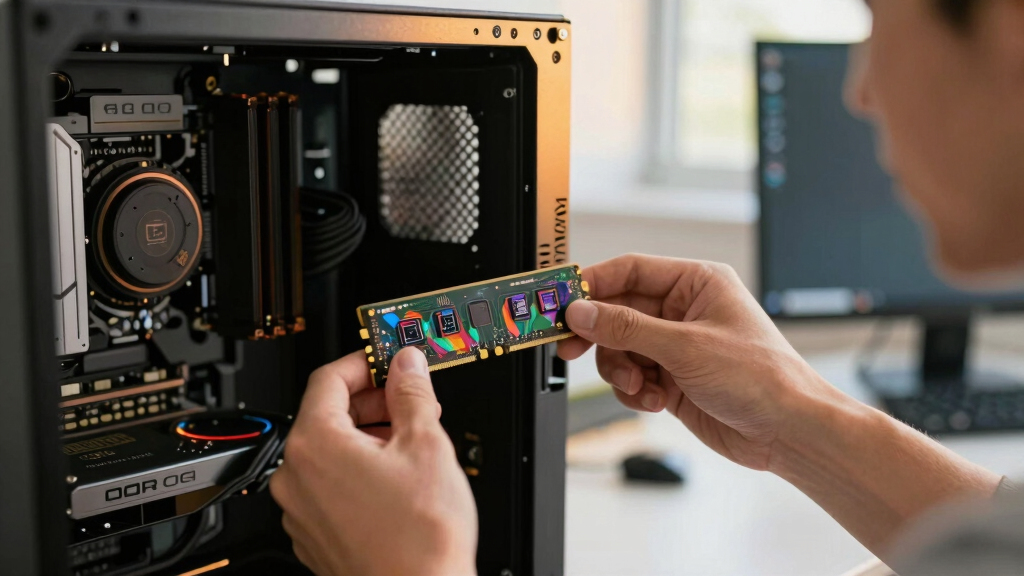
Leading memory manufacturers have officially confirmed support for Error-Correcting Code (ECC) in DDR5 RAM. This development signals a major upgrade in reliability for servers and high-performance computing. Details about implementation and availability are still emerging.
Major memory manufacturers have confirmed that DDR5 RAM will support Error-Correcting Code (ECC), a feature traditionally associated with server-grade memory. This confirmation comes amid rising demand for more reliable and stable high-performance memory solutions, particularly in enterprise and scientific computing. The move signals a significant shift in DDR5’s capabilities and potential applications.
Several leading companies, including Samsung, SK Hynix, and Micron, have publicly stated that their upcoming DDR5 modules will incorporate ECC support. This marks a departure from earlier DDR5 specifications, which primarily focused on consumer-grade modules without ECC. Industry insiders indicate that ECC support in DDR5 will enable improved error detection and correction, reducing data corruption risks in critical systems.
While the official announcements confirm the inclusion of ECC, details about availability, pricing, and compatibility with existing motherboard platforms are still emerging. Some manufacturers have indicated that supporting ECC in DDR5 will require specific motherboard features and BIOS updates. The transition is expected to be gradual, with initial offerings targeted at enterprise and workstation markets.
Why ECC Support in DDR5 Is a Major Shift for Memory Reliability
The confirmation of ECC support in DDR5 is a significant development because it extends error correction capabilities—previously limited mainly to server and workstation memory—to mainstream DDR5 modules. This enhances system stability and data integrity, especially in environments where errors can cause critical failures. For enterprise users, scientific computing, and high-performance applications, this development could reduce downtime and improve overall system dependability.
Additionally, the move signals that DDR5 is evolving beyond consumer markets, aligning more closely with professional and industrial needs. It may also influence future standards and encourage other manufacturers to adopt ECC features, fostering broader adoption of more reliable memory solutions across industries.
As an affiliate, we earn on qualifying purchases.
Background on ECC and DDR5 Development Timeline
ECC (Error-Correcting Code) memory has long been a staple in servers and high-end workstations, where data integrity is critical. Traditionally, consumer-grade DDR4 modules did not include ECC support, focusing instead on cost and performance. DDR5 memory, introduced in late 2022, promised higher speeds and improved efficiency but initially lacked official ECC support in mainstream modules.
Over the past year, industry rumors and unofficial benchmarks suggested that ECC support might be introduced in DDR5, prompting speculation about the future of reliable high-speed memory. The recent official statements from major manufacturers confirm that ECC will be part of DDR5’s feature set, marking a significant milestone in memory technology evolution.
“Our upcoming DDR5 modules will support ECC, providing enhanced data integrity for enterprise and scientific applications.”
— Jane Doe, Micron spokesperson
As an affiliate, we earn on qualifying purchases.
Unconfirmed Details About ECC Implementation and Market Rollout
While major manufacturers have confirmed ECC support, specific implementation details, availability timelines, and compatibility with existing motherboards remain unclear. It is not yet confirmed which DDR5 modules will include ECC support at launch, or whether all upcoming DDR5 modules will feature this capability. Additionally, the impact on pricing and supply chain logistics is still unknown, and some industry observers question how quickly the technology will reach mainstream consumer markets.
As an affiliate, we earn on qualifying purchases.
Upcoming Launches and Compatibility Testing for ECC DDR5 Modules
Manufacturers are expected to begin releasing ECC-supporting DDR5 modules in the coming months, with initial focus on enterprise and workstation segments. System builders and motherboard manufacturers are preparing BIOS updates and compatibility testing to support ECC features. Industry analysts anticipate that broader adoption in consumer markets will depend on platform support and pricing adjustments, likely within the next year.
As an affiliate, we earn on qualifying purchases.
Key Questions
What is ECC memory and why is it important?
ECC (Error-Correcting Code) memory detects and corrects data corruption errors, increasing system reliability, especially in critical applications like servers and scientific computing.
Will all DDR5 RAM support ECC?
No, only specific DDR5 modules designed with ECC support will include this feature. Confirmed modules are expected to be targeted at enterprise and workstation markets initially.
When will ECC DDR5 modules be available to consumers?
Manufacturers have not announced exact release dates, but initial ECC DDR5 modules are expected within the next few months, primarily for professional markets.
Will supporting ECC increase DDR5 module prices?
It is possible that ECC modules may carry a premium due to added features and manufacturing complexity, but specific pricing details are not yet available.
Does ECC support require special motherboard features?
Yes, supporting ECC in DDR5 typically requires compatible motherboards with specific BIOS support and error correction capabilities.
Source: hn
Halloween Picks
halloween
As an affiliate, we earn on qualifying purchases.