
Solid-state battery research is making exciting progress, offering safer and more efficient energy storage for buses. These batteries promise longer ranges, faster charging times, and improved safety due to stable solid electrolytes that last through many cycles and temperature changes. Advances in manufacturing techniques are also helping scale production and lower costs. If you keep exploring, you’ll uncover how these breakthroughs are shaping a cleaner, more reliable future for bus transportation.
Key Takeaways
- Recent advancements in solid electrolyte materials enhance battery safety, stability, and longevity for bus applications.
- Improved fabrication and integration techniques support scalable, durable solid-state battery manufacturing.
- Innovations in electrolyte stability address degradation issues, ensuring reliable long-term performance.
- Industry collaborations are accelerating the development of cost-effective, high-quality production methods.
- Solid-state batteries are emerging as a promising, safer alternative to lithium-ion technology for electric buses.
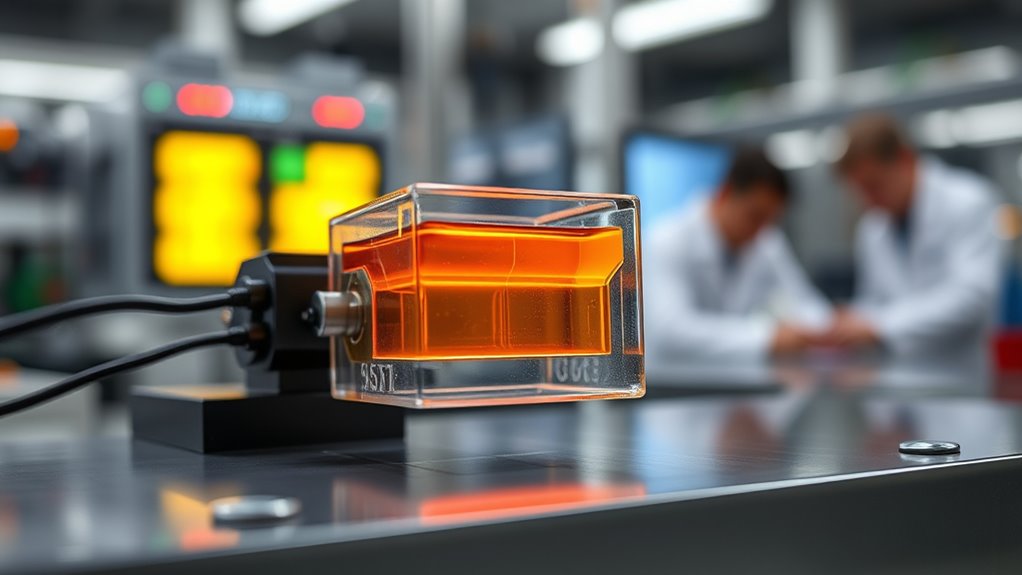
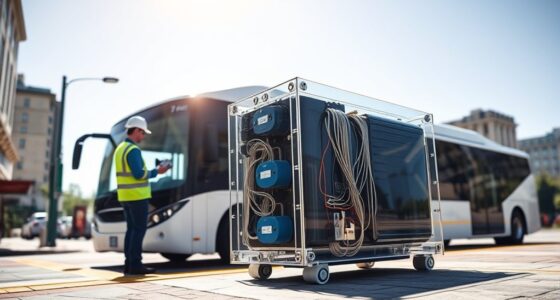
Solid-state battery research is rapidly advancing, promising safer and more efficient energy storage solutions. For bus applications, this progress could revolutionize how fleets operate, offering longer ranges, quicker charging times, and enhanced safety. A key challenge researchers focus on is electrolyte stability, which is critical for the battery’s performance and longevity. Unlike traditional liquid electrolytes, solid electrolytes must maintain their stability over many charge cycles and under varying temperature conditions. If the electrolyte degrades or reacts with other battery components, it could lead to safety issues or reduced capacity. Researchers are exploring various materials, such as ceramic and sulfide-based electrolytes, to find those that offer the right balance of conductivity, stability, and mechanical strength. Achieving stable electrolytes means your bus batteries can operate reliably over years of frequent charging and discharging, reducing maintenance costs and downtime. Additionally, cell fabrication techniques are evolving to improve the integration and durability of solid electrolytes within the battery structure.
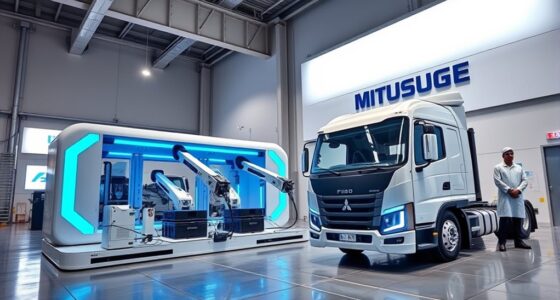
Another significant hurdle is manufacturing scalability. Developing a solid-state battery in the lab is one thing; producing it at a commercial scale is quite another. You need manufacturing processes that are not only cost-effective but also capable of producing consistent, high-quality batteries in large quantities. This involves refining techniques for fabricating solid electrolytes, integrating them with electrodes, and assembling complete cells efficiently. Scaling up production without compromising quality is essential for the widespread adoption of solid-state batteries in buses, where safety and durability are non-negotiable. As researchers and manufacturers work together, they’re experimenting with new manufacturing methods, such as roll-to-roll processing and advanced sintering techniques, to streamline production and lower costs. These innovations are crucial for making solid-state batteries a practical alternative to existing lithium-ion technology.
Top picks for "solid state battery"
Open Amazon search results for this keyword.
As an affiliate, we earn on qualifying purchases.
Frequently Asked Questions
What Are the Main Safety Advantages of Solid-State Batteries?
Solid-state batteries offer significant safety benefits, especially fire resistance and thermal stability. You don’t have to worry about the risk of fires or explosions because they are less prone to overheating and thermal runaway. Their solid electrolytes make them more stable under high temperatures, reducing the chance of leaks or combustion. Overall, these safety features make solid-state batteries a safer choice for bus applications and other electric vehicle uses.
How Do Solid-State Batteries Compare in Cost to Traditional Lithium-Ion Batteries?
You’ll find solid-state batteries currently cost about 50% more than traditional lithium-ion batteries, mainly due to material costs. This cost comparison reflects the expensive, less mature manufacturing processes and the high cost of solid electrolytes. However, as research advances and production scales up, experts expect material costs to decrease, making solid-state batteries more competitive and potentially more affordable in the near future.
What Manufacturing Challenges Are Faced in Scaling Solid-State Battery Production?
You face manufacturing challenges in scaling solid-state battery production mainly due to manufacturing scalability issues and maintaining material purity. Achieving consistent quality at large volumes is tough because current processes struggle with precise control over materials. Ensuring high material purity is essential for performance and safety, but it complicates production. Overcoming these hurdles requires advanced manufacturing techniques and stringent quality control to make solid-state batteries commercially viable.
How Long Is the Typical Lifespan of a Solid-State Battery in Bus Applications?
You can expect a solid-state battery in bus applications to last around 1,000 to 2,000 cycles, depending on usage and maintenance. Its lifespan is primarily influenced by cycle life and thermal stability, which help prevent capacity loss over time. Proper thermal management guarantees the battery remains stable under high temperatures, extending its overall durability. With good care, these batteries can reliably power buses for many years before needing replacement.
Are Solid-State Batteries Environmentally Sustainable and Recyclable?
Solid-state batteries are more environmentally sustainable and recyclable than traditional lithium-ion ones. You can utilize recycling processes that safely recover valuable materials, reducing waste and environmental impact. While they offer greener options, challenges remain in fully implementing recycling methods efficiently. You’re encouraged to support advancements in eco-friendly disposal and recycling, which help minimize the ecological footprint, making solid-state batteries a promising, sustainable choice for bus applications.
Conclusion
With these exciting breakthroughs in solid-state battery research, aren’t you imagining a future where buses charge faster, last longer, and operate more safely? As technology advances, you can expect cleaner, more reliable transportation that transforms urban travel. Don’t you want to be part of this revolution, embracing innovations that could redefine public transit? The path is clear—solid-state batteries hold the key to a sustainable and efficient transportation future. Are you ready to ride the wave of change?