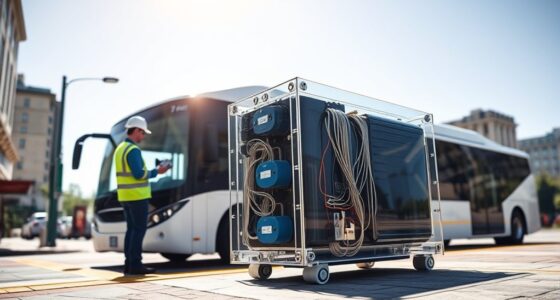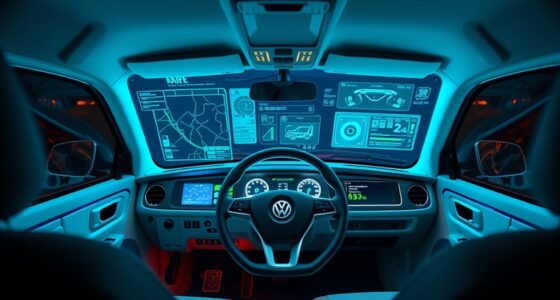

Vehicle-to-Grid (V2G) technology allows buses to become mobile power plants by using their batteries to feed energy back into the grid during peak times or outages. With bi-directional chargers and smart management systems, you can turn buses into flexible energy sources that support grid stability and sustainability. This technology reduces reliance on fossil fuels and boosts energy resilience. Keep exploring to discover how this innovation is shaping a cleaner, more efficient energy future.
Key Takeaways
- Buses equipped with bi-directional chargers can supply energy back to the grid during peak demand or outages.
- Advanced battery systems enable buses to safely and efficiently discharge energy without compromising vehicle lifespan.
- Connecting electric buses to V2G infrastructure transforms them into mobile energy storage units supporting grid stability.
- V2G-enabled buses can participate in energy markets, generating income while enhancing renewable energy integration.
- Expanding V2G-compatible bus fleets promotes sustainable transportation and creates a flexible, mobile power resource network.
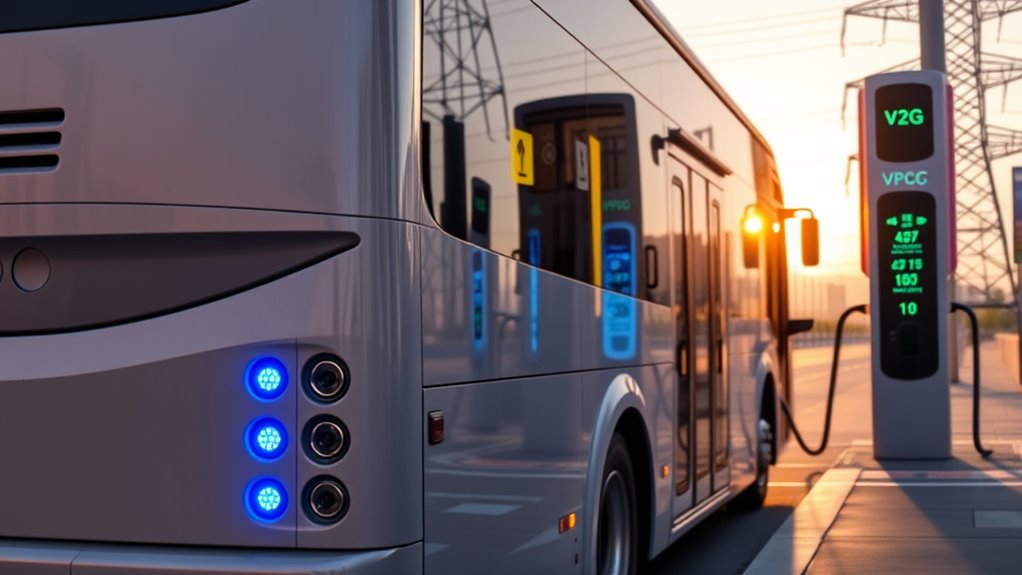
Vehicle-to-grid (V2G) technology is transforming how electric vehicles (EVs) interact with the power grid by allowing them to not only draw energy but also supply it back when needed. This innovation leverages the battery integration of EVs, turning them into dynamic energy resources. When you connect your EV to a compatible charging infrastructure, it becomes part of a broader system that can help stabilize the grid, especially during peak demand periods. Instead of just charging your vehicle, V2G enables your car’s battery to serve as a mobile energy storage unit that can discharge electricity into the grid when there’s excess supply or during outages. This dual function benefits both energy providers and consumers, creating a more resilient and efficient power system.
Vehicle-to-grid technology enables EVs to supply energy back to the grid during peak demand or outages.
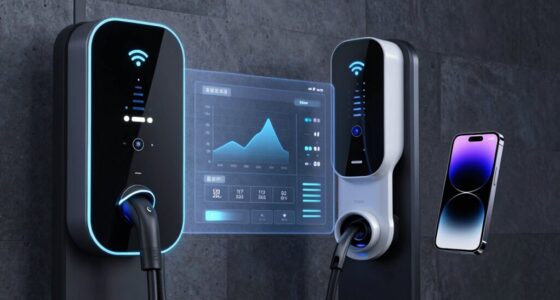
The key to *releasing* V2G’s full potential lies in robust charging infrastructure. Modern charging stations need to be equipped with bi-directional chargers that facilitate both charging and energy export. When you park your EV at such a station, your vehicle’s battery can be seamlessly integrated into the grid’s energy flow. This requires smart management systems that coordinate energy transfer based on grid needs, your vehicle’s charging status, and your personal energy consumption patterns. As a result, your EV becomes more than just a transportation device; it transforms into a flexible energy asset that can help manage renewable energy variability and reduce reliance on fossil fuels.
Implementing effective battery integration is *vital*. Your EV’s battery must support rapid, safe, and repeated charge-discharge cycles without degrading prematurely. Advances in battery technology, such as improved lithium-ion chemistries, ensure longevity and stability for V2G applications. The integration process involves sophisticated software and hardware to monitor battery health, optimize energy transfer, and protect your vehicle’s lifespan. When done correctly, it allows your EV to contribute to grid balancing, reduce energy costs, and even generate income if you participate in V2G service programs. Additionally, the integration of high-quality batteries with high cycle life is essential to maximize the longevity and effectiveness of V2G systems.
Furthermore, as charging infrastructure expands with more V2G-compatible stations, you’ll find it easier to participate in grid services. This infrastructure acts as the backbone for managing energy flows between your vehicle and the grid efficiently. It’s not just about convenience; it’s about actively contributing to a cleaner, more sustainable energy future. With the right setup, your electric bus or car can become a mobile power plant, supporting energy resilience, reducing emissions, and providing financial incentives—all through smart battery integration and advanced charging infrastructure.
Top picks for "vehicle grid technology"
Open Amazon search results for this keyword.
As an affiliate, we earn on qualifying purchases.
Frequently Asked Questions
What Are the Long-Term Maintenance Costs for V2g-Enabled Buses?
You’ll find that long-term maintenance costs for V2G-enabled buses are influenced by factors like charging infrastructure and power management systems. Regular upkeep of batteries, chargers, and control units is essential, but these costs tend to decrease over time as technology stabilizes. Properly managing charging infrastructure and optimizing power management can extend component life, reducing expenses. Expect ongoing investments, but with efficient upkeep, costs stay manageable and improve as the system matures.
How Does V2G Technology Impact Bus Battery Lifespan?
Think of V2G technology as a dance partner, sometimes pushing your bus’s battery to its limits. It can accelerate battery degradation if charging cycles and discharges happen frequently, shortening lifespan. However, with smart management, you can minimize these effects. You’ll need to balance power needs with battery health, ensuring the bus remains reliable while still benefiting from V2G’s potential. Proper use keeps your battery dancing smoothly over time.
Are There Specific Regulations Governing V2G Use for Buses?
You’ll find that regulations governing V2G use for buses vary by region, often requiring compliance with specific policy frameworks. These laws address safety, grid stability, and data security, so it’s essential to stay updated with local rules. Regulatory compliance guarantees your bus-to-grid integration is legal and efficient. Always consult local authorities or industry bodies to understand the specific regulations that apply, helping you avoid penalties and optimize V2G benefits.
How Does V2G Integration Affect Bus Scheduling and Operations?
Imagine your bus schedule as a carefully choreographed dance, now including the rhythm of V2G integration. It affects operations by requiring seamless charging station integration, ensuring buses are ready when needed, while also prioritizing passenger safety. You’ll need to coordinate charging times around routes, balancing power export with service demands. This dynamic dance keeps buses energized, the grid supported, and passengers safe, all while syncing power flow with daily transit rhythms.
What Are the Cybersecurity Risks Associated With V2G Systems?
You should be aware that V2G systems face cybersecurity vulnerabilities that can expose sensitive data privacy and allow malicious attacks. Hackers might exploit weak points in communication protocols, leading to unauthorized access or control of your bus’s power functions. These risks can disrupt operations, compromise passenger safety, and jeopardize your data security. To protect your system, implement robust cybersecurity measures, regular updates, and strict access controls.
Conclusion
Imagine turning your buses into mobile power plants that support the grid and save energy costs. Vehicle-to-grid technology makes this possible, offering a smarter, more sustainable future. Can you see a world where every electric bus helps power your city? Embracing V2G isn’t just about innovation—it’s about taking control of energy use and making a real difference. Are you ready to be part of this transformative shift toward cleaner, more efficient transportation?