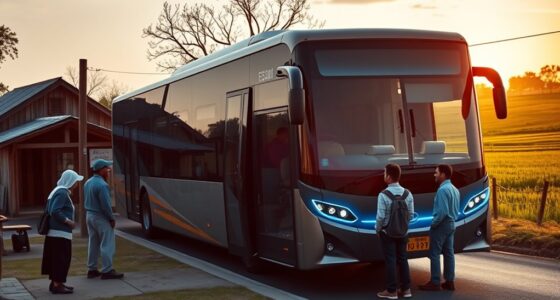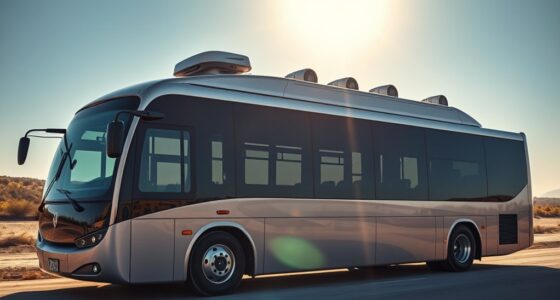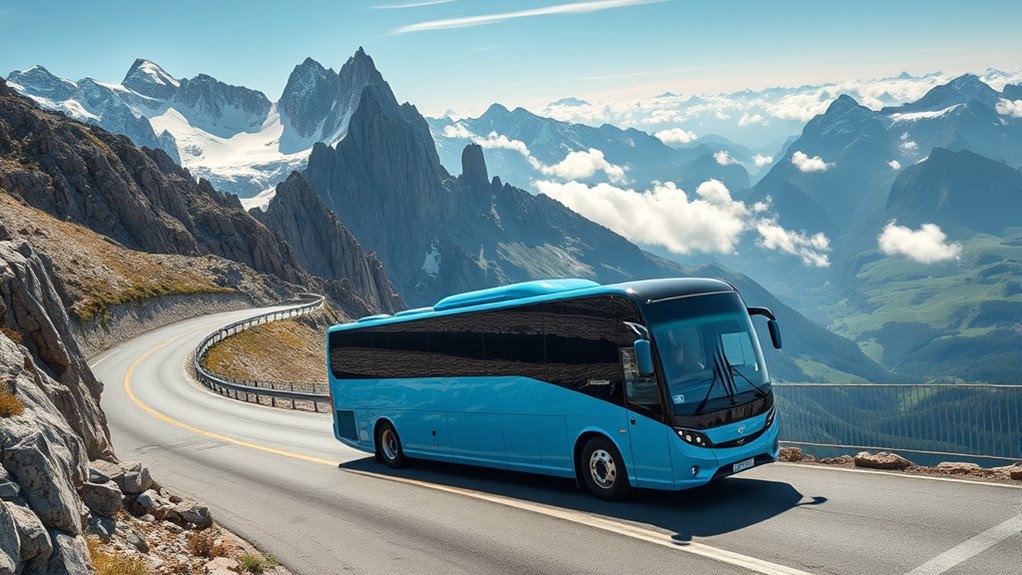

In mountainous regions, your electric bus’s performance can drop due to high altitudes and rugged terrain, which affect battery efficiency and power. You’ll notice reduced range and need to manage energy carefully, especially on steep climbs. Proper driver techniques, like smooth acceleration and regenerative braking, help extend battery life. As you tackle these challenges, understanding how altitude impacts your vehicle will make your high-altitude adventures safer and more efficient—keep going to learn more about optimizing your journey.
Key Takeaways
- High-altitude terrain reduces electric bus battery range and power due to thinner air and lower oxygen levels.
- Effective pre-trip planning and real-time battery monitoring are essential to mitigate altitude-related performance declines.
- Specialized driver training improves handling of steep inclines, sharp turns, and regenerative braking in mountain environments.
- Optimizing driving techniques, such as smooth acceleration and downhill regeneration, extends battery life and efficiency.
- Proper preparation and skilled operation ensure safe, reliable, and environmentally friendly mountain journeys with electric buses.
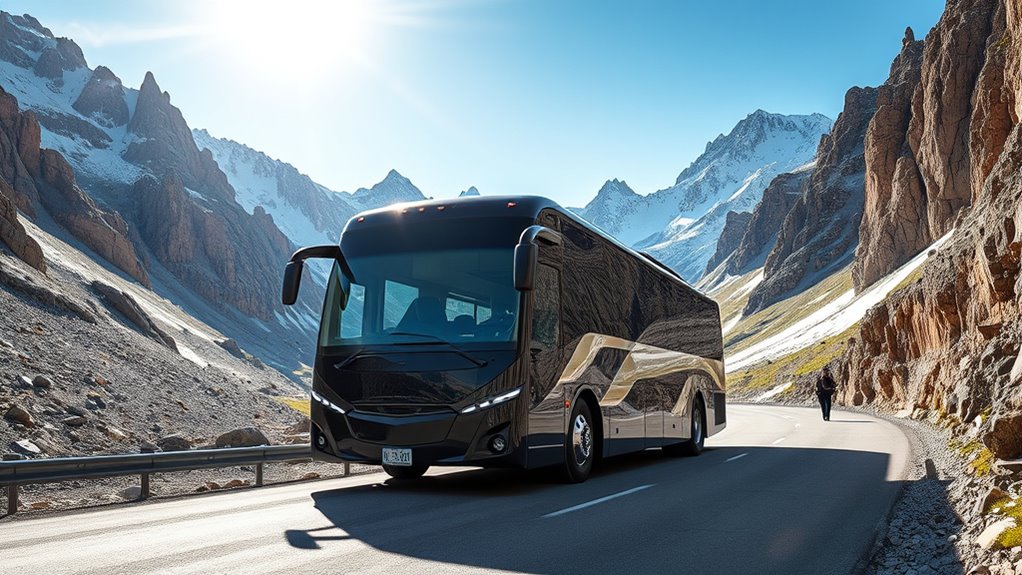
High-altitude adventures push you beyond everyday limits, offering exhilarating experiences in some of the world’s most breathtaking landscapes. When you’re navigating mountainous regions with an electric bus, the terrain and altitude pose unique challenges that test both the vehicle and your skills. One critical factor you’ll need to consider is battery efficiency. At higher elevations, thinner air and lower oxygen levels can impact the battery’s performance, often leading to reduced range and power output. That’s why it’s essential to optimize the bus’s battery management system for such conditions, ensuring that energy consumption remains as efficient as possible. Proper pre-trip planning, such as charging the battery to a full capacity before ascending and monitoring battery health in real-time, can help mitigate these effects. Additionally, understanding how different driving styles influence energy use allows you to adapt your approach, conserving power on steep climbs and during prolonged descents. Being aware of battery performance factors helps you make informed decisions and maintain vehicle reliability in challenging environments.
Driver training becomes just as vital as the vehicle’s technology. Operating an electric bus in mountainous terrain requires more than standard driving skills; it demands an understanding of how to handle steep inclines, sharp turns, and variable weather conditions safely and efficiently. With proper training, you learn to modulate acceleration and braking, reducing unnecessary energy drain and maximizing battery life. For instance, mastering regenerative braking allows you to recover energy during downhill stretches, extending your range and decreasing the need for frequent charging stops. Training also covers the importance of maintaining consistent speeds and avoiding aggressive maneuvers, which can significantly impact battery efficiency. Moreover, well-trained drivers are better equipped to anticipate terrain changes, making adjustments early to maintain safety and efficiency.
As you venture into these high-altitude environments, combining a good understanding of battery management with comprehensive driver training ensures a smoother, more reliable journey. You’ll gain confidence in handling the vehicle’s performance limits, especially when navigating unpredictable mountain roads. This preparation helps you avoid surprises, like sudden power drops or range anxiety, which can occur if you’re unacquainted with how altitude impacts electric vehicle operation. Ultimately, your success in mountain regions depends on your ability to adapt your driving techniques and manage your vehicle’s energy resources effectively. With the right knowledge and skills, you’ll enjoy the thrill of high-altitude adventures while minimizing environmental impact and ensuring your journey remains efficient and safe.
Top picks for "high altitude adventur"
Open Amazon search results for this keyword.
As an affiliate, we earn on qualifying purchases.
Frequently Asked Questions
How Do Electric Buses Handle Extreme Cold Temperatures at High Altitudes?
You’ll find that electric buses face challenges like cold start issues, but manufacturers improve cold weather performance with effective battery cooling systems. These systems help maintain ideal battery temperature, preventing capacity loss and ensuring reliable starts in extreme cold. Regular preconditioning can also warm the battery before departure. With these measures, electric buses can handle high-altitude cold temperatures and still deliver dependable performance, even in harsh mountain environments.
What Maintenance Challenges Do Electric Buses Face in Mountainous Environments?
You face maintenance challenges like managing battery degradation and addressing suspension wear. Cold temperatures accelerate battery degradation, reducing range and efficiency, so you need regular checks and possible replacements. Mountainous terrain causes suspension wear due to constant stress and vibrations, demanding frequent inspections and repairs. You must stay vigilant with these issues to keep your electric buses running smoothly, ensuring safety and performance in challenging high-altitude environments.
Are There Any Limitations on Battery Life at High Elevations?
Yes, high elevations can impact your electric bus’s battery life. You might notice reduced battery capacity and faster power degradation because the thinner air affects cooling and chemical reactions inside the battery. As a result, your bus may not run as long between charges, especially on steep climbs. To counter this, regular maintenance and monitoring of battery health are essential to maximize performance at high altitudes.
How Does Altitude Affect Charging Infrastructure Efficiency?
Altitude can impact charging infrastructure efficiency by affecting solar integration and grid stability. You might notice reduced solar panel output at higher elevations due to thinner atmosphere, which can limit renewable energy supply. Additionally, the decreased air density can cause power fluctuations, challenging grid stability. To maintain efficient charging, you need to optimize solar integration systems and reinforce grid infrastructure, ensuring reliable energy flow even in challenging mountainous environments.
What Safety Considerations Are Specific to Electric Buses in Mountain Regions?
You should prioritize safety considerations like monitoring terrain stability to prevent landslides or avalanches that could impact electric buses. Make certain emergency protocols are well-established, including quick evacuation and communication plans. Regularly inspect the bus’s electrical systems for weather-related damage, and train staff to handle altitude-specific issues. These steps help keep passengers safe and ensure reliable operation in challenging mountain environments.
Conclusion
So, next time you hop on that electric bus in the mountains, remember—you’re riding a marvel that defies every obstacle nature throws at it. It climbs higher, faster, and farther than any other vehicle could dream of, making the peaks seem like mere stepping stones. You’re not just traveling; you’re conquering the mountains with a silent, unstoppable force. Embrace the thrill—because this electric bus isn’t just high-tech, it’s a mountain-moving legend in disguise!