Converting your VW Bus to electric involves choosing the right batteries, like lithium-ion, and placing them low and evenly for good balance and handling. Position the motor near the transmission or on the wheels for efficiency. You may need custom mounts and chassis tweaks to fit components securely. Managing wiring and cooling is key for reliability. If you consider placement and integration carefully, your EV conversion will be smoother—keep going to uncover more tips and insights.

Get business pricing on monitors, keyboards and dev gear
- Business-only prices and quantity discounts
- Tax-exempt purchasing
- Multiple users, one account, clear invoices
Key Takeaways
- Proper battery placement under the floor or rear improves vehicle stability and maximizes available space.
- Near-original engine locations simplify wiring and reduce drivetrain complexity during conversion.
- Low, even battery distribution enhances handling and maintains balanced weight across the VW Bus.
- Custom mounts and chassis modifications are essential for secure integration of batteries and electric motor.
- Managing wiring, cooling, and component placement is crucial for a safe, efficient, and reliable electric conversion.
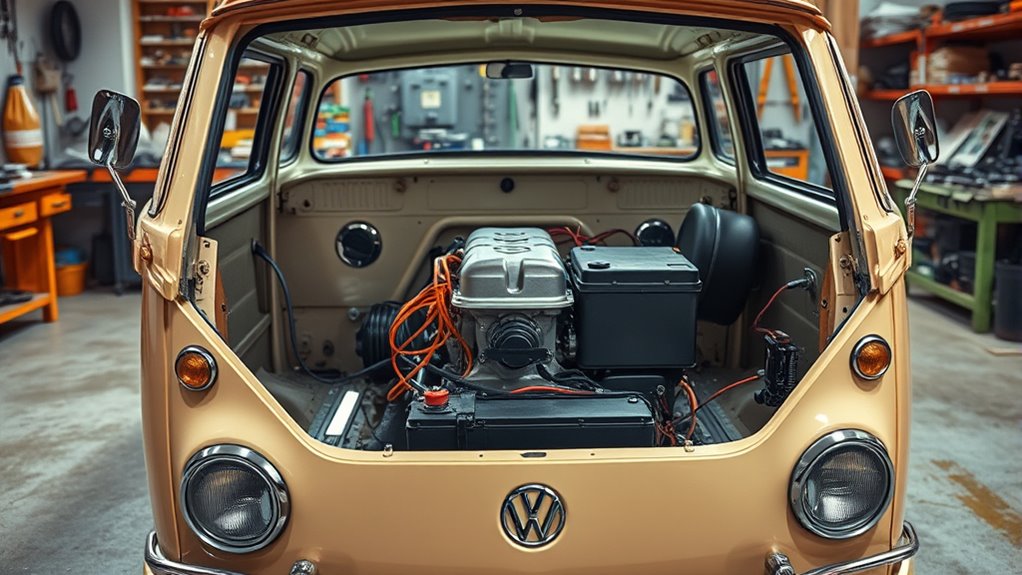
Converting a classic VW Bus to electric offers a rewarding way to preserve its nostalgic charm while embracing modern technology. One of the most vital aspects of this transformation is understanding battery technology. You’ll need to select batteries that balance energy density, weight, and cost. Lithium-ion batteries are the industry standard because they offer high energy capacity without adding excessive weight. You should consider the placement of these batteries carefully; placing them low and evenly distributed helps improve the vehicle’s center of gravity and handling. You might opt for a battery pack mounted under the floor or in the rear, depending on your space constraints and desired weight balance. Proper placement not only enhances stability but also guarantees you maximize space for other components.
Next, the motor placement plays a fundamental role in your conversion. For a VW Bus, positioning the electric motor where the original engine sat makes sense for simplicity and weight distribution. Many converters position the motor near the transmission or directly drive the wheels, depending on the design. Placing the motor closer to the drive wheels reduces the need for complex drivetrain modifications, making the conversion more straightforward. It also helps with weight distribution, ensuring the front or rear of the vehicle isn’t overly heavy. When choosing the motor, you want one that’s powerful enough to handle your driving needs but also compact enough to fit within the existing engine bay or rear compartment. Proper motor placement reduces stress on other components, enhances efficiency, and simplifies cooling.
As you proceed, you’ll realize that integrating these elements requires precise planning. The battery technology you select influences not only range but also how you manage weight and space. Meanwhile, thoughtful motor placement ensures your VW Bus remains balanced and drivable. You might need to modify the existing chassis or create custom mounts, but these adjustments are worth it for the improved performance and reliability. Throughout the process, keep in mind that wiring, cooling systems, and controller placement are just as important. Properly managing these components ensures your conversion runs smoothly and safely. Additionally, understanding the contrast ratio of your components can help you optimize the visual and functional aspects of your project. Ultimately, focusing on state-of-the-art battery technology and strategic motor placement can transform your VW Bus into a reliable, eco-friendly ride that honors its nostalgic roots while embracing the future.
lithium-ion EV battery pack for VW Bus
As an affiliate, we earn on qualifying purchases.
As an affiliate, we earn on qualifying purchases.
Frequently Asked Questions
What Are the Costs Involved in Converting a VW Bus to Electric?
Converting your VW bus to electric involves costs for a suitable battery capacity, which impacts range and performance. You’ll also need to budget for charging infrastructure, like installing a home charger or finding public charging stations. Overall, expect to spend several thousand dollars depending on battery size and equipment quality. Planning ahead guarantees you cover all essentials, making your conversion smooth and cost-effective while enjoying the benefits of electric driving.
How Long Does the Conversion Process Typically Take?
Think of your EV conversion as planting a garden; it takes time but yields rewards. Typically, the process takes 4 to 8 weeks, depending on your project’s complexity. You’ll need to install the battery capacity, upgrade your charging infrastructure, and make sure everything fits perfectly. Rushing can cause delays, so plan ahead and be patient. With steady work, you’ll soon enjoy a smooth, electric ride in your bus.
Are There Any Legal or Registration Issues After Conversion?
After converting your vehicle to electric, you might face registration challenges and need to guarantee legal compliance. Check with local DMV regulations, as some areas require updated documentation or inspections. You could also encounter specific emissions or safety standards. Staying informed about your region’s rules helps avoid legal issues, ensuring your EV conversion remains compliant and registered smoothly. Always consult local authorities to clarify any uncertainties beforehand.
What Is the Range of the Electric VW Bus?
Imagine your electric VW bus as a brave explorer on a new journey. Its range depends on battery capacity, which acts like its fuel tank, and the charging infrastructure it encounters along the way. Typically, you can expect around 100 to 150 miles per charge, but this varies with driving habits and terrain. To extend your adventure, guarantee access to reliable charging stations, turning your e-bus into a true road-trip companion.
How Does the Conversion Affect the Vehicle’S Safety Features?
When you convert your VW bus to electric, it impacts safety features like battery safety and crash compatibility. You need to guarantee the battery is well-protected to prevent damage during a collision. Upgrading structural elements and installing crash sensors help improve crash compatibility. These modifications make your vehicle safer, but it’s essential to follow best practices and consult professionals to maintain safety standards throughout the conversion process.
electric vehicle motor for VW conversion
As an affiliate, we earn on qualifying purchases.
As an affiliate, we earn on qualifying purchases.
Conclusion
So, after swapping your beloved VW Bus’s engine for electric power, you might think you’ve embraced the future. Ironically, in doing so, you’ve also preserved its timeless charm—just now, it’s whisper-quiet and eco-friendly. Who knew that embracing innovation could keep the spirit of vintage alive, all while quietly defying the very emissions it once spewed? Sometimes, the best upgrades are those that make you nostalgic for what you’re actually saving.
As an affiliate, we earn on qualifying purchases.
As an affiliate, we earn on qualifying purchases.
Halloween Picks
halloween
As an affiliate, we earn on qualifying purchases.