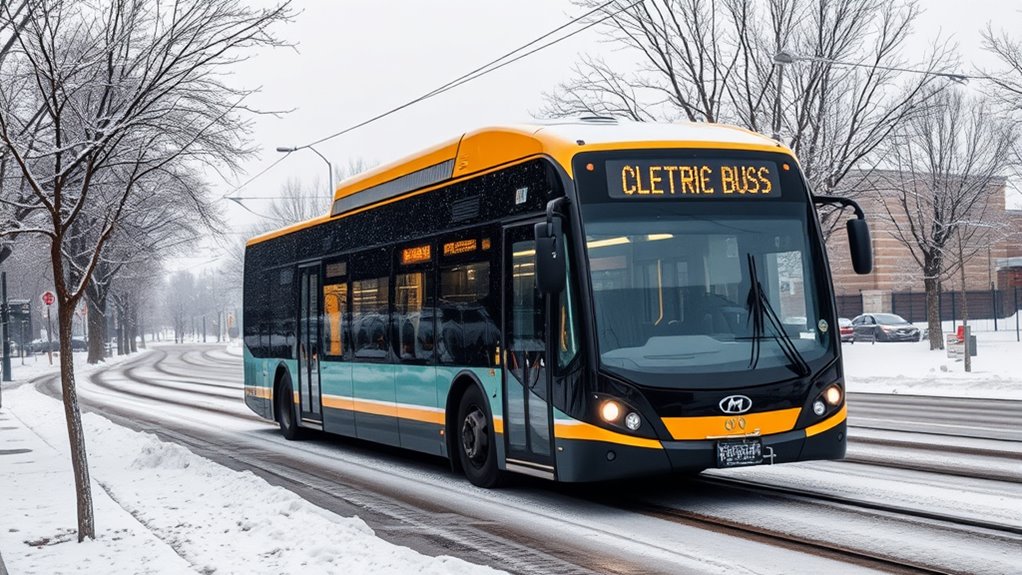

In cold Canadian winters, your electric bus’s range can drop by up to 40%, and you’ll notice longer charging times. Operators often use thermal management systems to keep batteries warm and plan routes to avoid remote stops. You’ll need to charge more frequently and adapt depending on weather conditions to keep service reliable. If you want to discover more strategies and real-world experiences, there’s plenty to explore next.

Get business pricing on monitors, keyboards and dev gear
- Business-only prices and quantity discounts
- Tax-exempt purchasing
- Multiple users, one account, clear invoices
Key Takeaways
- Cold temperatures significantly reduce electric bus range, requiring more frequent charging and longer charging times.
- Battery thermal management systems are vital for maintaining performance and preventing capacity loss in winter.
- Charging infrastructure must be reliable and well-maintained to ensure consistent operation in freezing conditions.
- Operators adjust routes and schedules to accommodate reduced range and avoid unheated or remote charging stations.
- Real-time battery monitoring and strategic planning help mitigate winter weather impacts on electric bus performance.
Have you ever wondered how winter weather impacts your electric vehicle’s battery performance? If you’re operating an electric bus in Canada’s cold climate, this question becomes especially relevant. Cold temperatures can considerably influence how your vehicle’s battery performs, and understanding this dynamic is key to maintaining reliable service. One of the main factors at play is the charging infrastructure. During winter, charging stations need to be accessible and well-maintained, especially in harsh weather conditions. Freezing temperatures can cause chargers to become less efficient or harder to use if they aren’t designed to withstand cold climates. Some charging stations might require pre-conditioning or heated enclosures to work properly, which means you need to plan your routes and charging stops carefully. Without adequate infrastructure, you risk longer charging times or even being unable to recharge when needed, which hampers your bus operation and affects service reliability.
When it comes to battery performance, the cold has a direct impact. Batteries rely on chemical reactions that occur more slowly at low temperatures, which causes a reduction in overall capacity. You’ll notice a considerable decrease in range, sometimes up to 30-40%, depending on just how cold it gets. This means that you might need to plan for more frequent charging or shorter routes, especially during the coldest months. The decreased efficiency isn’t just about range; it also affects how quickly your bus can charge. Cold batteries take longer to reach full capacity, which can cause delays if charging stations aren’t equipped with thermal management systems. Some buses come with built-in heating systems for batteries, but these draw additional power, further reducing the available range. It’s a balancing act – you need to keep your batteries warm enough to perform effectively without draining too much energy just to maintain temperature. Additionally, battery thermal management systems play a crucial role in maintaining optimal performance in cold climates.
To mitigate these issues, many Canadian operators have adopted strategies such as scheduling more frequent charging or installing battery thermal management systems. They also coordinate routes to avoid unexpectedly running out of power in remote or unheated locations. Knowing where your charging infrastructure is located and how it performs in winter conditions becomes essential. If your buses are equipped with real-time battery monitoring, you can make smarter decisions about when and where to recharge, reducing the risk of unexpected power loss. Ultimately, understanding how winter weather affects both your charging infrastructure and battery performance allows you to adapt your operations, ensuring your electric buses remain reliable and efficient even in Canada’s toughest winter months.
Frequently Asked Questions
How Do Battery Temperatures Affect Range During Winter?
Battery temperatures critically impact your range during winter. If your battery isn’t properly insulated, it can lose heat quickly, reducing efficiency. Thermal regulation systems help maintain ideal battery temperatures, preventing power loss. When batteries get too cold, chemical reactions slow down, decreasing range. Ensuring good insulation and effective thermal regulation keeps your battery warmer, so you get the most distance possible on cold days.
What Specific Winter Maintenance Practices Are Recommended for Electric Buses?
You should regularly inspect and maintain battery insulation to prevent cold-related capacity loss. Applying antifreeze solutions designed for electric bus batteries helps protect against freezing temperatures. Make certain that battery enclosures are properly insulated and sealed, and consider pre-heating systems before routes start. These practices keep batteries warmer, optimize performance, and extend range during winter months, helping you to operate efficiently and reliably in cold weather conditions.
How Do Charging Times Change in Cold Weather Conditions?
You might worry that cold weather slows down charging, but with proper battery insulation and reliable charging infrastructure, you can minimize delays. In freezing temperatures, charging times increase because batteries need more energy to reach full capacity. However, pre-conditioning the batteries and ensuring your charging stations are optimized for winter can help you maintain efficiency and keep buses ready for service without lengthy delays.
Are There Any Safety Concerns Unique to Winter Electric Bus Operations?
You should be aware of safety concerns like ice hazards, which can cause slipping or accidents during winter operations. Additionally, cold temperatures increase the risk of battery fires if the system is damaged or improperly managed. Always guarantee proper maintenance and cautious driving to mitigate these risks. Regularly check for ice buildup around the bus and battery compartments, and follow safety protocols to keep everyone safe during winter conditions.
What Are the Costs Associated With Winterizing Electric Bus Fleets?
Winterizing your electric bus fleet costs can feel like steering through a snowstorm—uncertain and challenging. You’ll need to evaluate a detailed cost analysis covering additional winter maintenance, charging infrastructure upgrades, and heated bus components. These expenses impact your budget planning, requiring foresight and adjustments. While initial investments are significant, they’re essential to ensure safety, reliability, and performance, turning winter’s chill into a manageable ride rather than an obstacle.
Conclusion
As you navigate winter’s icy grip, remember your bus is like a resilient leaf, bending but not breaking against the storm. Each charge is a steady heartbeat, fueling your journey through frosted streets. Embrace the challenge as a silent promise—your commitment to cleaner air and brighter mornings. With every mile, you carry the torch of progress, illuminating the path forward. Together, you and your electric bus symbolize hope shining through winter’s darkest shadows.
Halloween Picks
halloween
As an affiliate, we earn on qualifying purchases.