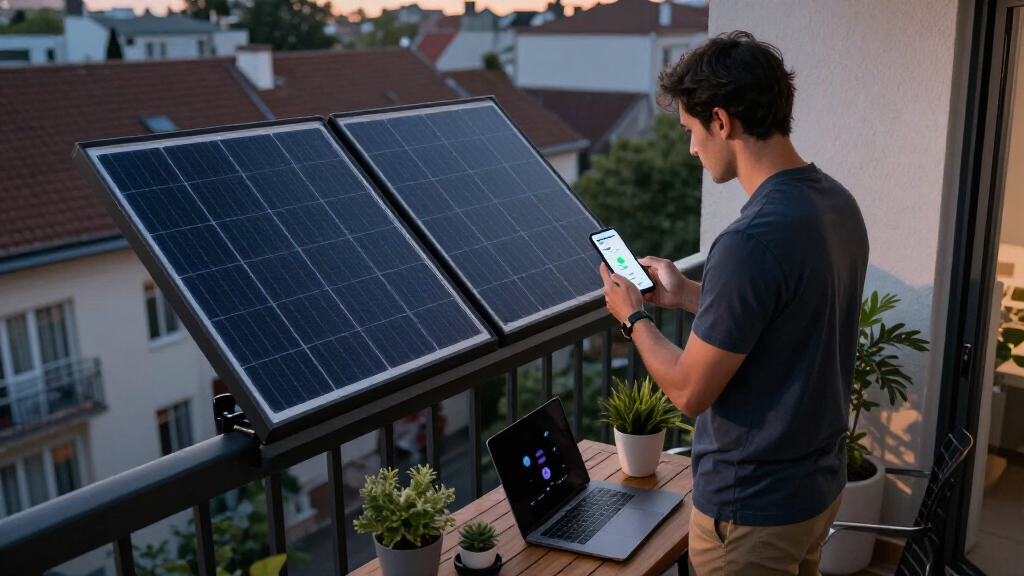

For a vertical solar setup, I’d start with the Callsun 450W Bifacial Solar Panel as the best overall pick: its dual-sided design is suited to installations where reflected light can reach the rear. The Renogy ShadowFlux 120W is a more approachable choice for smaller systems, while the BougeRV Arch Pro 200W offers a flexible option for curved surfaces. The right panel depends on mounting space, shade, rear-side clearance, system voltage, and whether you need a fixed, portable, or curved installation. Vertical mounting can help with limited roof space or low-angle winter sun, but output depends on orientation, shading, and the surface behind the panel. Read on for how the 11 options compare and which tradeoffs matter for your setup.

Get business pricing on monitors, keyboards and dev gear
- Business-only prices and quantity discounts
- Tax-exempt purchasing
- Multiple users, one account, clear invoices
Key Takeaways
- Bifacial models lead this lineup for vertical placement when the rear side has room to receive reflected light; a wall mounted flush against a dark surface may not make good use of that design.
- The Callsun 450W bifacial panel is the most balanced fixed-panel pick, while the 550W Callsun and 850W JJN kit favor buyers planning a larger system with more mounting area.
- Small panels offer flexibility over headline wattage. The Renogy 120W, two-panel 100W option, and ECO-WORTHY 4-pack let buyers build around constrained or divided mounting spaces.
- Flexible and folding panels solve different problems: BougeRV’s curved-surface format suits shaped installations, while MHPOWOS is aimed at temporary, portable charging.
- Kit labels need close inspection. The listed 360W Callsun kit pairs two 180W panels, while HISHEN’s 990W total is a two-panel kit; confirm dimensions, wiring, controller needs, and mounting hardware before planning a vertical array.
| Callsun 450W Bifacial Solar Panel – N-Type 16BB Monocrystalline, Double-Glass, Anti-Shade Dual-Module Design |  | Best for Partial Shade | Cell type: N-Type monocrystalline, 16BB | Conversion efficiency: Up to 25.6% | Panel design: Bifacial, double-glass, dual-module parallel | VIEW LATEST PRICE | See Our Full Breakdown |
| BougeRV Arch Pro 200W N-Type Fiberglass Flexible Solar Panel |  | Best for Curved RV Roofs | Cell type: N-type, 16BB | Conversion efficiency: Up to 25% | Open-circuit voltage: 36V ± 5% | VIEW LATEST PRICE | See Our Full Breakdown |
| HISHEN 2-Pack 495W Frameless Bifacial Solar Panel Kit (990W Total), UL 61730 Certified, 25.6% Efficiency |  | Best High-Output Kit | Panel count: 2 | Cell type: A+ grade monocrystalline bifacial | Efficiency: Up to 25.6% | VIEW LATEST PRICE | See Our Full Breakdown |
| ECO-WORTHY 400W 4-Pack 100W 18V N-Type Monocrystalline Solar Panels |  | Best for DIY System Building | Panel count: 4 | Maximum voltage: 25.2V | Output voltage: 21.6V | VIEW LATEST PRICE | See Our Full Breakdown |
| Renogy ShadowFlux 120 Watt N-Type Solar Panel |  | Best Compact Fixed Panel | Cell type: N-type with 16BB technology | Cell efficiency: 25% | Anti-shading: Anti-shading technology | VIEW LATEST PRICE | See Our Full Breakdown |
| 2-Pack 100W 18BB N-Type Monocrystalline Solar Panel, 12V/24V |  | Best for Modular Expansion | Quantity: 2 panels | Power: 100W per panel | Voltage: 12V/24V | VIEW LATEST PRICE | See Our Full Breakdown |
| JJN 850W Bifacial N-Type Solar Panel Kit (2 x 425W, 16BB) |  | Best for High-Capacity Fixed Systems | Total power: 850W (2 x 425W) | Cell type: A+ grade monocrystalline, 16BB, 182 mm | Stated efficiency: 25% | VIEW LATEST PRICE | See Our Full Breakdown |
| MHPOWOS 220W Portable Folding Solar Panel for Power Stations |  | Best Portable Option | Power output: 220W | Voltage: 40V | Cell type: Monocrystalline silicon | VIEW LATEST PRICE | See Our Full Breakdown |
| Callsun 360W Bifacial Solar Panel Kit (2 x 180W N-Type 16BB) for RV and Off-Grid Use |  | Best for Partial-Shade RV Setups | Total power: 360W (2 x 180W) | Cell type: N-Type 16BB monocrystalline | Stated efficiency: 25% | VIEW LATEST PRICE | See Our Full Breakdown |
| JJN Bifacial 200 Watt Monocrystalline Solar Panel, 25% High-Efficiency |  | Best Single-Panel Bifacial Pick | Power output: 200W | Cell type: 16BB N-Type monocrystalline | Stated efficiency: 25%+ | VIEW LATEST PRICE | See Our Full Breakdown |
| Callsun N-Type 16BB 550W Bifacial Solar Panel (2×275W) for 12V/24V Battery Systems |  | Best for Shaded Off-Grid Setups | Total power: 550W (2 × 275W) | Cell type: N-Type 16BB bifacial | Efficiency: 25.6% | VIEW LATEST PRICE | See Our Full Breakdown |
| vertical solar panel | Cell type |
|---|---|
| Callsun 450W Bifacial Solar Pa | N-Type monocrystalline, 16BB |
| BougeRV Arch Pro 200W N-Type F | N-type, 16BB |
| HISHEN 2-Pack 495W Frameless B | A+ grade monocrystalline bifacial |
| ECO-WORTHY 400W 4-Pack 100W 18 | — |
| Renogy ShadowFlux 120 Watt N-T | N-type with 16BB technology |
| 2-Pack 100W 18BB N-Type Monocr | N-Type monocrystalline, 18BB |
| JJN 850W Bifacial N-Type Solar | A+ grade monocrystalline, 16BB, 182 mm |
| MHPOWOS 220W Portable Folding | Monocrystalline silicon |
| Callsun 360W Bifacial Solar Pa | N-Type 16BB monocrystalline |
| JJN Bifacial 200 Watt Monocrys | 16BB N-Type monocrystalline |
| Callsun N-Type 16BB 550W Bifac | N-Type 16BB bifacial |
More Details on Our Top Picks
Callsun 450W Bifacial Solar Panel – N-Type 16BB Monocrystalline, Double-Glass, Anti-Shade Dual-Module Design
The Callsun 450W suits buyers who need substantial output from a single panel and expect patches of shade across the array. Its dual-module parallel design is meant to limit the effect of partial shading, giving it an advantage over the larger HISHEN two-panel kit when trees, roof fixtures, or nearby structures interrupt sunlight. The bifacial double-glass build can also collect reflected light, though that benefit depends on an installation with reflective space behind the panel; a close-mounted roof may leave much of it unused. At this wattage, compatibility matters: buyers need an MPPT controller or inverter suited to the panel’s electrical characteristics. I’d choose it for a carefully planned, shade-prone system, while the ECO-WORTHY four-panel set offers more flexibility for arranging smaller panels.
Pros:- 450W rated output can reduce the number of panels needed
- Dual-module parallel layout is designed to limit losses from partial shade
- Bifacial double-glass construction can gather reflected light
- IP68-rated build is suited to harsh outdoor conditions
Cons:- Requires a compatible MPPT controller or inverter
- Bifacial gains may be limited on close-mounted, non-reflective rooftops
- One large panel offers less placement flexibility than the ECO-WORTHY four-panel set
Best for: Home or cabin system builders who need high output from one panel and have intermittent shade across the installation
Not ideal for: RV owners or rooftop installers with limited space behind the panel, or anyone whose controller cannot handle a high-output panel
- Cell type:N-Type monocrystalline, 16BB
- Conversion efficiency:Up to 25.6%
- Panel design:Bifacial, double-glass, dual-module parallel
- Frame:Reinforced aluminum
- Materials and workmanship warranty:10 years
- Output guarantee:25 years, at least 84.5%
Our verdict“Choose the Callsun 450W when high single-panel output and partial-shade tolerance matter more than simple controller compatibility or flexible placement.”
BougeRV Arch Pro 200W N-Type Fiberglass Flexible Solar Panel
For a curved van or RV roof that cannot take a rigid framed panel, the BougeRV Arch Pro 200W has a clear fit: it weighs 7.94 pounds, measures just 2.5mm thick, and can bend up to 270 degrees. That makes it easier to work around contours than the rigid HISHEN 495W panels, though the tradeoff is lower output per panel and a five-year product support term rather than HISHEN’s 10-year warranty. Its N-type 16BB cells and bypass diodes are intended to help maintain production in partial shade, and the ETFE surface is rated IP68. Check the 36V open-circuit voltage against the power station or charge controller before buying; the supplied cable is short, and installation adhesive is separate.
Pros:- Lightweight 7.94-pound construction suits weight-sensitive vehicle roofs
- Bends up to 270 degrees to fit curved surfaces
- N-type 16BB cells and bypass diodes support output in partial shade
- ETFE coating and IP68 rating provide water and dust protection
Cons:- 200W output is lower than the Callsun 450W or HISHEN 495W panels
- 36V open-circuit voltage may not suit some power stations
- Installation adhesive is sold separately and the pre-attached cable is 2.95 feet
Best for: Van and RV owners fitting a lightweight panel to a curved roof or vehicle surface
Not ideal for: Buyers seeking high output from a few rigid panels, or those whose power station cannot accept the panel’s open-circuit voltage
- Cell type:N-type, 16BB
- Conversion efficiency:Up to 25%
- Open-circuit voltage:36V ± 5%
- Weight:7.94 lb
- Thickness:2.5mm
- Flexibility:Up to 270°
- Cable length:2.95 ft, pre-attached
Our verdict“Pick the BougeRV Arch Pro if your vehicle roof needs a thin, flexible panel and your controller is compatible with its voltage.”
HISHEN 2-Pack 495W Frameless Bifacial Solar Panel Kit (990W Total), UL 61730 Certified, 25.6% Efficiency
The HISHEN kit is the output-focused pick here: two 495W panels provide 990W total, making it a better match for a cabin, boat, or larger off-grid setup than the single-panel BougeRV Arch Pro. Its UL 61730 certification gives buyers a documented safety standard, while the frameless Cleanedge design is intended to shed dust, snow, and debris with rain. That construction may reduce cleaning, but it can complicate mounting: buyers should confirm compatible hardware and handle the panels carefully without a protective frame. The HISHEN’s 10-year product warranty is longer than the stated support period for the BougeRV, but a two-panel kit demands more installation planning and room. It makes the most sense when high combined capacity and low-maintenance surfaces take priority over easy handling.
Pros:- 990W combined rated power from two 495W panels
- UL 61730 certification covers electrical, fire, mechanical, and environmental safety
- Frameless Cleanedge design is intended to reduce debris buildup
- 10-year product warranty
Cons:- Frameless construction may require specialized mounting hardware
- Panels need careful handling without a frame for structural protection
- Two large panels require more mounting area and installation planning than the BougeRV Arch Pro
Best for: Off-grid cabin, marine, or rooftop system builders who can mount two high-output panels and want a safety-certified kit
Not ideal for: Small RV owners, solo installers, or buyers who need panels with standard framed mounting hardware
- Panel count:2
- Cell type:A+ grade monocrystalline bifacial
- Efficiency:Up to 25.6%
- Certification:UL 61730
- Frame design:Frameless Cleanedge
- Warranty:10-year product warranty
- Battery system compatibility:12V/24V charging systems
Our verdict“Choose the HISHEN kit for a spacious off-grid installation where near-kilowatt output and certified construction outweigh mounting complexity.”
ECO-WORTHY 400W 4-Pack 100W 18V N-Type Monocrystalline Solar Panels
The ECO-WORTHY set offers four 100W panels, which gives DIY builders more freedom to position and wire an array than the single 450W Callsun panel. Pre-drilled holes and MC4 connectors simplify mounting and connections, while the 18V-class output suits many 12V battery-charging setups. The smaller panels can be useful where roof space is broken up by vents or other obstacles; in exchange, fitting four panels means more mounting points and wiring to manage. The product data describes the panels as bifacial and cites bypass diodes for shaded conditions, but this listing’s central advantage is modularity and approachable installation rather than maximum output in one panel. Note that the set ships in two boxes, so the pieces may arrive separately.
Pros:- Four 100W panels allow flexible array placement
- Pre-drilled holes and MC4 connectors simplify mounting and wiring
- N-type cells and bypass diodes are suited to low-light and partially shaded conditions
- Compatible with 12V/24V battery charging systems
Cons:- Four panels require more mounting points and wiring than the Callsun 450W single panel
- The shipment may arrive in two separate boxes
- At 400W total, rated output is below the HISHEN kit’s 990W
Best for: First-time DIY solar builders assembling a 12V or 24V battery system across several available mounting spots
Not ideal for: Buyers who want a single high-output panel, minimal wiring, or a compact installation with few mounting points
- Panel count:4
- Maximum voltage:25.2V
- Output voltage:21.6V
- Amperage capacity:4.96A
- Cell type and efficiency:N-type monocrystalline silicon; up to 25%
- Dimensions per panel:35.63 × 23.03 × 1.18 in
- System compatibility:12V/24V battery charging; on-grid, off-grid, and hybrid systems
Our verdict“Choose ECO-WORTHY if you want a modular, connector-ready set for a DIY battery array and can accommodate four separate panels.”
Renogy ShadowFlux 120 Watt N-Type Solar Panel
The Renogy ShadowFlux is the lineup’s compact fixed-panel choice for a small RV, shed, or auxiliary battery, where a 120W panel can fit more easily than the Callsun 450W or HISHEN 495W options. Its stated anti-shading technology targets a common problem on vehicle roofs, where vents or accessories can cast shadows across part of a panel. The listing also describes it as 10% smaller than comparable PERC panels, which may help in tight layouts, though it does not provide dimensions or weight here. The compact format comes with a clear capacity ceiling: it is not a substitute for a large array when powering energy-hungry equipment. The 25-year output guarantee offers a longer stated performance horizon than the BougeRV’s five-year product support, while its materials warranty is five years.
Pros:- Compact 120W format fits smaller installations
- N-type 16BB cells are listed at 25% cell efficiency
- Anti-shading technology is designed to maintain output when part of the panel is shaded
- 25-year output guarantee specifies at least 80% power
Cons:- 120W output may not cover high-power loads
- Product data does not give exact dimensions or weight
- Five-year materials warranty is shorter than the HISHEN kit’s 10-year product warranty
Best for: RV owners or shed operators adding a compact panel to maintain a small battery or support modest electrical loads
Not ideal for: Household or cabin users who need high daily energy production from a limited panel count
- Cell type:N-type with 16BB technology
- Cell efficiency:25%
- Anti-shading:Anti-shading technology
- Relative size:10% smaller than comparable PERC panels
- Materials and craftsmanship warranty:5 years
- Output guarantee:25 years, 80% power output
Our verdict“Pick the ShadowFlux for a compact, shade-conscious add-on panel when 120W is enough for your intended loads.”
2-Pack 100W 18BB N-Type Monocrystalline Solar Panel, 12V/24V
The two-panel 100W set suits buyers who want to build a modest 12V or 24V system in manageable increments. Its 18BB N-Type cells and stated efficiency of up to 25% give it a higher-output focus than entry-level panels, while the aluminum frames and tempered glass are rated for substantial wind and snow loads. Compared with the larger Callsun 360W kit, these panels offer a smaller starting footprint and a stated limit of three panels per connection, but less total capacity out of the box. Pre-drilled holes simplify mounting; the tradeoff is that the supplied details call for cleaning every two weeks and warn against exceeding the connection limit. This is a rigid installation choice, not a foldable option for repositioning on the go.
Pros:- Two 100W panels provide a modular starting point for a small system.
- 18BB N-Type cells are specified at up to 25% conversion efficiency.
- Frame and tempered glass ratings cover 2400 Pa wind and 5400 Pa snow loads.
- Pre-drilled mounting holes simplify installation.
Cons:- The stated connection limit is three panels in parallel or series.
- The product data recommends cleaning every two weeks to maintain performance.
- Rigid panels are less convenient to reposition than the MHPOWOS folding model.
Best for: RV and workshop owners building a small 12V or 24V system who want to start with two rigid panels.
Not ideal for: Buyers seeking a high-capacity array in one purchase or a portable panel they can fold and move.
- Quantity:2 panels
- Power:100W per panel
- Voltage:12V/24V
- Cell type:N-Type monocrystalline, 18BB
- Stated conversion efficiency:Up to 25%
- Wind resistance:2400 Pa
- Snow load resistance:5400 Pa
- Maximum connection:3 panels in parallel or series
Our verdict“Choose this set for a small, expandable fixed installation; pick the Callsun 360W kit if you need more capacity from the start.”
JJN 850W Bifacial N-Type Solar Panel Kit (2 x 425W, 16BB)
With 850W across two large bifacial panels, this JJN kit is aimed at buyers prioritizing capacity over easy handling. Its dual-glass design can capture reflected light from the rear, which may add output when the installation has a suitable reflective surface. The product data lists UL61730 certification and 25% efficiency, giving it a more utility-minded profile than the smaller JJN 200W panel. That scale brings a real installation cost in effort: each panel is listed at 103.2 pounds and measures 67.8 by 44.6 inches, so positioning and mounting call for help and a suitable structure. The rigid format also limits placement flexibility compared with the portable MHPOWOS panel. I’d shortlist it for a permanent roof, farm, or off-grid setup with room for the full-size modules.
Pros:- Two 425W panels provide 850W of stated total capacity.
- Bifacial dual-glass construction can collect reflected light from the rear.
- The product data lists UL61730 certification and 25% efficiency.
- Drain clips are included.
Cons:- Each panel is listed at 103.2 pounds, making handling and mounting demanding.
- Large rigid dimensions limit placement options compared with smaller or folding panels.
- Bifacial gains depend on the rear side receiving usable reflected light.
Best for: Property owners and off-grid system builders with a strong mounting structure, space for full-size modules, and help to install them.
Not ideal for: Solo installers, RV owners with limited roof area, or anyone needing panels that fold for transport.
- Total power:850W (2 x 425W)
- Cell type:A+ grade monocrystalline, 16BB, 182 mm
- Stated efficiency:25%
- Design:Bifacial, dual-glass, rigid
- Dimensions per panel:67.8 x 44.6 x 1.2 in
- Weight per panel:103.2 lb
- Output voltage:31.05V
- Certification:UL61730
Our verdict“Choose this kit for a permanent, high-capacity installation with room and support for heavy panels.”
MHPOWOS 220W Portable Folding Solar Panel for Power Stations
The MHPOWOS is the lineup’s moveable, folding choice, built for charging a compatible power station rather than becoming a permanent roof array. Its 220W output, 23.5% stated efficiency, four kickstands, and adjustable positioning make it easier to aim at the sun than the fixed Callsun 360W panels. IP67 protection adds dust and water resistance for outdoor use, while the 8.5 kg weight is portable in context but not featherlight for frequent long carries. Compatibility deserves a check before buying: its 40V output may exceed a power station’s maximum input, and the station itself can cap charging power. Compared with the JJN 200W rigid panel, it trades fixed mounting strength for foldability and repositioning. It makes most sense for campsite or backup use where portability outweighs roof-ready construction.
Pros:- Folding construction and carry handles support transport and storage.
- Four kickstands allow adjustable placement toward the sun.
- IP67 waterproof and dustproof rating suits outdoor use.
- 220W output and 23.5% stated conversion efficiency.
Cons:- The 40V output may exceed some power stations’ input limits.
- The power station’s maximum input can limit actual charging power.
- At 8.5 kg, it may be cumbersome to carry for longer distances.
Best for: Campers and emergency-preparedness buyers with a power station rated to accept 40V input who want to reposition their panel outdoors.
Not ideal for: Buyers whose power station has a lower maximum input voltage or who need a permanent roof-mounted panel.
- Power output:220W
- Voltage:40V
- Cell type:Monocrystalline silicon
- Stated conversion efficiency:23.5%
- Weight:8.5 kg
- Kickstands:4
Our verdict“Pick this panel for portable charging when your power station is compatible with its 40V output.”
Callsun 360W Bifacial Solar Panel Kit (2 x 180W N-Type 16BB) for RV and Off-Grid Use
For an RV roof or off-grid installation where shade can fall across part of the array, the Callsun kit brings together 360W total capacity and TwinCell technology described as maintaining output under partial shade. Its bifacial N-Type panels may also gather reflected light, though the stated gain depends on the installation. Compared with the two 100W 18BB panels, this kit delivers more capacity at once and adds IP68 protection; compared with the 850W JJN kit, it is a smaller system to accommodate, with each panel listed at 20.9 pounds. The product data gives a 1.8 kWh daily output, but actual generation depends on sunlight, so I would treat that as a condition-dependent estimate. Its 10-year product and 25-year performance warranties are useful terms to compare, while rooftop placement may still take more than one person.
Pros:- Two 180W panels provide 360W of stated total capacity.
- TwinCell technology is specified to maintain production under partial shade.
- Bifacial N-Type design can use reflected light.
- IP68 protection and listed 5400 Pa snow-load resistance suit exposed installations.
Cons:- The stated 1.8 kWh daily output depends heavily on sunlight conditions.
- At 20.9 pounds per panel, rooftop installation may be awkward for one person.
- Bifacial gains depend on reflected light reaching the rear of the panels.
Best for: RV owners and off-grid users who need a two-panel array and may encounter intermittent shade.
Not ideal for: Buyers who need portable panels, maximum capacity from a two-panel kit, or guaranteed daily output independent of conditions.
- Total power:360W (2 x 180W)
- Cell type:N-Type 16BB monocrystalline
- Stated efficiency:25%
- Output voltage:21.93V
- Dimensions per panel:46.46 x 30.31 x 1.58 in
- Weight per panel:20.9 lb
- Warranty:10-year product; 25-year linear performance
Our verdict“Choose this kit for an RV or off-grid array where partial shade is a concern and 360W meets your needs.”
JJN Bifacial 200 Watt Monocrystalline Solar Panel, 25% High-Efficiency
This JJN panel is a single 200W rigid option for buyers who want bifacial construction without committing to a two-panel kit. Its 16BB N-Type cells are listed at 25% or higher efficiency, while the transparent backsheet can collect some reflected light when the mounting surface allows it. That makes the rear-facing design more installation-dependent than the MHPOWOS folding panel, which can be repositioned directly toward the sun. At 24.3 pounds, this JJN is far easier to handle than the 103.2-pound JJN 425W modules, and its corrosion-resistant frame is rated for 2400 Pa winds and 5400 Pa snow loads. The tradeoff is that useful bifacial gain needs reflective space behind the panel, and pre-drilled holes do not include mounting hardware. It’s a practical middle ground for fixed RV, boat, or small off-grid installations.
Pros:- Single 200W panel offers a simpler starting point than multi-panel kits.
- 16BB N-Type cells are specified at 25% or higher efficiency.
- Frame is rated for 2400 Pa wind and 5400 Pa snow loads.
- At 24.3 pounds, it is more manageable than the JJN 425W panels.
Cons:- Bifacial output depends on reflective light reaching the transparent backsheet.
- Mounting hardware is not included beyond the pre-drilled holes.
- A fixed rigid panel is less convenient to reposition than the MHPOWOS folding model.
Best for: RV, boat, and small off-grid system owners who need one rigid 200W panel and can provide reflective space behind it.
Not ideal for: Buyers who cannot expose the panel’s rear to reflected light or who expect a ready-to-mount package with hardware included.
- Power output:200W
- Cell type:16BB N-Type monocrystalline
- Stated efficiency:25%+
- Design:Bifacial with transparent backsheet
- Weight:24.3 lb
- Wind resistance:2400 Pa
- Snow load resistance:5400 Pa
- Output warranty:88.9% at 30 years
Our verdict“Choose this panel for a compact fixed installation when you can use its bifacial design and source compatible mounting hardware.”
Callsun N-Type 16BB 550W Bifacial Solar Panel (2×275W) for 12V/24V Battery Systems
For a roof or vehicle installation where shade can affect part of the array, I’d put the Callsun 550W kit ahead of the single-panel JJN Bifacial 200W: its two-panel parallel design is intended to keep output steadier when one module is shaded. The N-Type 16BB cells and stated 25.6% efficiency also make better use of a limited mounting area than lower-output small-panel kits. Its bifacial construction may add yield when the rear side has a bright surface and room to reflect light, but that gain depends on installation conditions. The tradeoff is practical: each module supplies 275W, so buyers need space and mounting hardware for two large, rigid panels to reach the stated 550W. At 29.8 pounds per panel, it is less suited to weight-sensitive builds than the flexible BougeRV Arch Pro.
Pros:- Two-panel parallel anti-shade design is intended to help maintain output when one module is partly shaded.
- 25.6% stated efficiency helps produce substantial rated output from a limited mounting area.
- Bifacial construction can capture rear-side reflected light when installation conditions allow.
- Tempered glass, a corrosion-resistant aluminum frame, and an IP68 junction box suit outdoor installations.
Cons:- The 550W total requires installing both 275W panels, each measuring over 68 inches long.
- At 29.8 pounds per panel, the rigid modules add more weight than flexible alternatives.
- The stated rear-side yield gain depends on clearance and reflective conditions behind the panels.
Best for: RV, van, marine, and off-grid owners with room for two rigid panels who expect intermittent shade and can provide a reflective surface behind the modules.
Not ideal for: Van builders prioritizing low weight or curved mounting surfaces, and buyers with space for only one panel who need the full stated system output.
- Total power:550W (2 × 275W)
- Cell type:N-Type 16BB bifacial
- Efficiency:25.6%
- Amperage capacity:13.69 A
- Maximum voltage:25.26 volts
- Output voltage:21.29 volts
- Dimensions per panel:68.35 × 30.31 × 1.38 inches
- Weight per panel:29.8 lbs
- Warranty:10-year material and workmanship; 30-year 87.4% output
Our verdict“Choose this kit for a two-panel off-grid array where partial shade is a concern and the mounting surface can support its size and weight.”
How We Picked
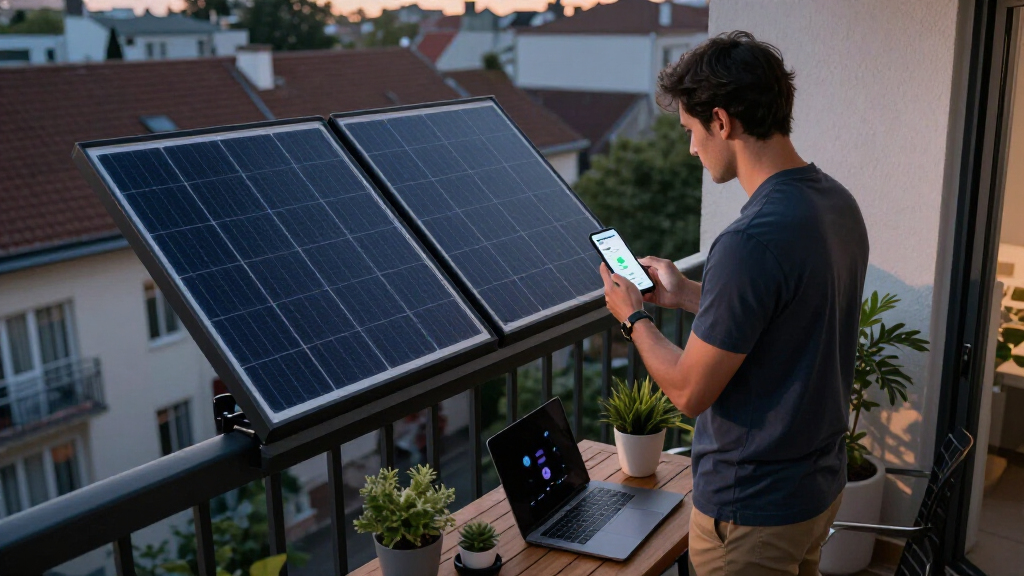
I ranked these products for vertical-mount suitability, looking at whether their design can work on a wall, fence, RV, or other upright surface. I weighed bifacial construction and rear-side light access, panel format, stated output, and the practical demands of mounting and wiring. A high wattage rating alone does not make a panel a strong vertical choice: a large module may be difficult to position, and a bifacial model may lose much of its advantage if its back is blocked.
The ranking favors options with a clear fit for a distinct buyer and a plausible vertical use case. I placed flexible and portable models according to their specialized formats, rather than treating them as direct substitutes for rigid fixed panels. Product details supplied for this roundup do not establish real-world output, complete mounting compatibility, or included system components, so buyers should verify those points with the manufacturer before choosing.
Factors to Consider When Choosing Best Vertical Solar Panels
Before picking a panel, I’d plan the installation around the wall and the power system together. Vertical mounting changes sun exposure and can make access, wiring, and rear clearance harder than a roof setup.
Check sun direction and seasonal exposure
A vertical panel’s output depends heavily on which direction it faces and what blocks the sun across the day. A south-facing wall can suit many Northern Hemisphere installations, but nearby buildings, trees, roof overhangs, and winter shadows may matter more than the panel’s stated wattage. Mark the usable wall area and observe its sun exposure before buying. If the spot is shaded for part of the day, compare how the panels and system handle partial shade, and avoid assuming that a bifacial label solves shade losses. A seasonal change in sun angle can also shift when the panel produces most of its power. Choose the location first, then size the system around that exposure.
Give bifacial panels room behind them
Bifacial panels can collect light from both faces, but the rear face needs access to light for that feature to help. A panel mounted tight against a solid wall may behave more like a front-facing panel, even if it is advertised as bifacial. A gap can admit light, though the usable benefit depends on nearby surfaces, their reflectivity, and the angle of incoming light. Bright paving or a light-colored wall may return more light than dark ground, but actual gains vary by site. Account for the mounting brackets, wind exposure, cleaning access, and cable routing when deciding how far to space the panel. If you cannot leave rear clearance, prioritize fit and front-side performance over bifacial claims.
Match panel dimensions to the mounting surface
Rated watts do not tell you whether a module will fit your wall, RV, or railing. Measure the clear mounting area and allow room for brackets, edge spacing, and any access needed for maintenance. Larger kits can reduce the number of panels and connections, yet their size and weight may complicate vertical mounting. Smaller panels can fit separate sections, though a multi-panel array needs suitable wiring and may be affected by shade differently depending on its configuration. Flexible panels can adapt to some curved surfaces, but the mounting method and surface compatibility still need checking. Ask for the exact dimensions and mounting requirements before ordering.
Plan voltage, wiring, and the rest of the system
A panel that fits physically can still be mismatched to a battery, charge controller, or power station. Confirm the module’s voltage and electrical specifications, then check that the controller supports the planned series or parallel arrangement. Multiple panels wired in series raise voltage, while parallel wiring raises current; either choice affects cable and controller requirements. Shade across one panel can also influence a series-connected string, so layout matters alongside total wattage. Do not assume that a panel kit includes a compatible controller, connectors, or mounting hardware unless the listing says so. For a permanent system, have the wiring and protective equipment checked against the equipment makers’ instructions and local requirements.
Decide whether you need permanent or portable power
A fixed vertical array is useful when you want a set-and-forget location, while a folding panel can be repositioned as the sun moves. Portable designs trade permanent mounting convenience for setup time and a need for safe storage between uses. Flexible models can suit curved RV surfaces, but they are not automatically the right choice for a vertical wall or long-term exposed installation. Think about who will move or maintain the panel, how often the power source needs charging, and whether the installation must withstand wind and weather. A permanent setup may call for sturdier mounting and professional advice; a temporary setup may benefit more from portability than maximum rated output. Choose the format around how you’ll use it, not just where it can be attached.
Compare usable system output, not headline watts
Panel wattage is a rating under specified conditions, not a promise of daily energy from a vertical installation. Orientation, temperature, shading, wiring, and the amount of reflected light reaching a bifacial panel all affect what the system can deliver. Start with the devices or battery you want to support, estimate their energy needs, and account for days with weak sun. If you need reliable power, battery capacity and charging control matter alongside panel capacity. Paying for a larger module can make sense when you have room and a compatible system, but a well-positioned smaller panel may suit a constrained site better. Compare the full system requirements and panel dimensions before deciding that a larger number is the better fit.
Frequently Asked Questions
Will a bifacial panel produce more power when mounted against a wall?
It can, but only if light reaches the rear face and the surrounding surface reflects some of that light. A flush mount against a solid wall blocks most rear-side exposure, limiting the reason to choose bifacial construction. A mounting gap and a bright surface may help, though output gains depend on the site and sun conditions. Check whether the proposed brackets allow rear access while keeping the installation secure. If the rear will stay dark, compare the panel on its front-facing merits instead.
Are these panels ready to connect directly to a battery or power station?
Do not assume so from a panel’s wattage or a kit name. A battery system generally needs compatible charge control, wiring, connectors, and protection, and a power station may accept only a specific input voltage and connector type. Check the panel’s electrical specifications against the receiving equipment’s limits before connecting anything. Verify which components are included in the exact package, since the listed panel or kit may not include everything required. When specifications are unclear, ask the manufacturer or a qualified installer to confirm compatibility.
Should I choose one large panel or several smaller panels for a vertical installation?
Choose based on the usable mounting area, access, and shade pattern rather than panel count alone. One large module may simplify connections, but it can be harder to lift, mount, or fit around windows and obstructions. Several smaller panels can fill separated areas and allow more flexible placement, though their wiring adds complexity. Shade across one part of an array can affect production depending on how its panels are connected. Compare exact dimensions and plan the electrical layout before settling on either format.
Can I use a flexible solar panel on a vertical surface?
Possibly, if the panel’s manufacturer permits that mounting orientation and the surface, attachment method, and weather exposure suit the product. Flexible construction can help on curved surfaces, such as some RV roofs, but it does not by itself make a panel suitable for every wall. A vertical installation also needs secure support against wind and a way to route and protect cables. Check the mounting instructions, allowable bend, and exposure limits before purchase. For a permanent exterior wall, compare those requirements with a rigid panel and purpose-built mounting hardware.
How should I size a vertical solar setup for cloudy days or winter use?
Begin with the energy your devices or battery need, then account for the reduced and variable sunlight at your site. Vertical panels may collect useful low-angle winter sun in some locations, but cloudy weather and short days can still limit charging. Use the system’s expected seasonal conditions rather than the panel’s rated watts alone when planning capacity. A battery can store energy for later, but it cannot make up for a prolonged shortfall in generation. If dependable power matters, consider backup charging and ask an installer to assess the site’s orientation and shade.
Conclusion
For most buyers planning a fixed vertical installation with room for rear-side light, I’d choose the Callsun 450W Bifacial Solar Panel as the best overall balance in this lineup. The ECO-WORTHY 400W 4-Pack is my value-minded pick for buyers who can use several smaller panels, while the HISHEN 990W two-panel kit is the premium-scale option for a larger, carefully planned system. Beginners with modest needs may find the Renogy ShadowFlux 120W easier to place than a large kit, though they should still confirm controller and mounting needs. For curved RV surfaces, consider the BougeRV Arch Pro; for temporary charging, look at the MHPOWOS folding panel. Match your final choice to wall exposure, available dimensions, rear clearance, and system compatibility.
Halloween Picks
halloween
As an affiliate, we earn on qualifying purchases.