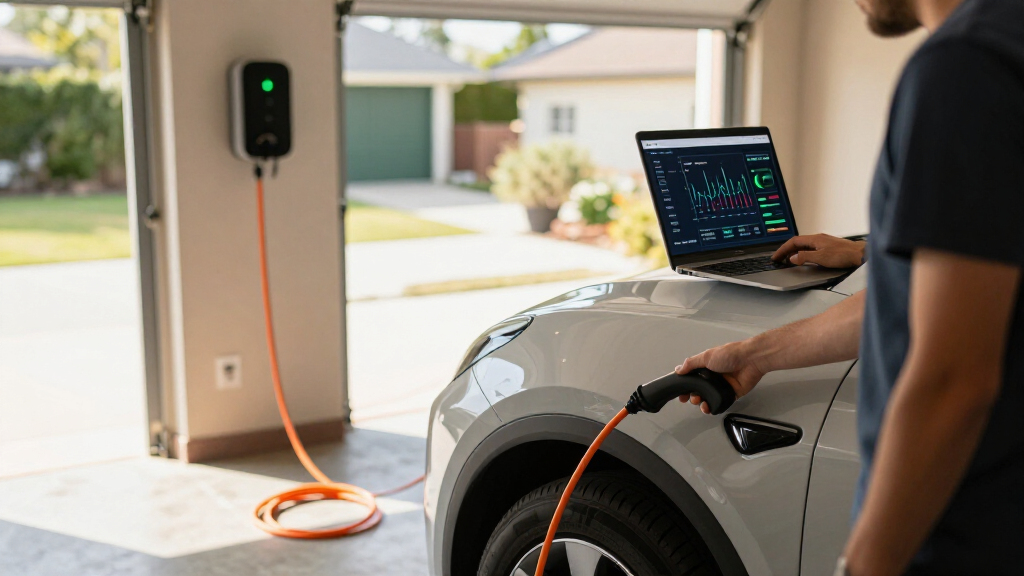
The best electric car charger for most drivers is the ChargePoint Home Flex, which pairs flexible 12-to-50-amp charging with a polished app and reliable connectivity, though it charges a subscription for its smartest scheduling features. If raw power is the priority, the Autel MaxiCharger 80 Amp hardwired unit delivers the fastest home charging in this lineup, while the Grizzl-E Classic wins on toughness and value for anyone who wants a no-app, plug-in workhorse. The main tradeoff you’ll face is between smart features and simplicity — Wi-Fi chargers offer scheduling and energy tracking but add setup friction and connectivity quirks, while dumb chargers just work but can’t take advantage of cheap off-peak rates. Cable length, amperage, and whether your panel supports plug-in versus hardwired installation round out the decisions. Keep reading for the full breakdown of all 15 chargers.

Get business pricing on monitors, keyboards and dev gear
- Business-only prices and quantity discounts
- Tax-exempt purchasing
- Multiple users, one account, clear invoices
Key Takeaways
- Amperage determines charging speed more than any other spec: the 80A Autel hardwired unit can add roughly twice the range per hour of the 32A portable options, but only if your home’s electrical panel and wiring support it.
- The Autel MaxiCharger appears three times in this lineup at different amperages and configurations — a sign of consistent build quality, but the 50A plug-in and hardwired versions differ enough that buyers should match the model to their panel, not just the brand.
- EVDANCE offers the widest price ladder here, from a budget Level 1/Level 2 portable to a 40A adjustable unit, making it the go-to brand for first-time EV owners who want to start cheap and upgrade later.
- Smart features are now standard at the 40A-and-up tier: WiFi app control with scheduling appears on the ApexCharger, AIMILER, Autel and Emporia units, while Grizzl-E and ELEGRP deliberately skip connectivity for simpler, arguably more reliable operation.
- 25 feet has become the default cable length across nearly every pick, but the ApexCharger MACH 1 stretches to 30 feet — a meaningful advantage for drivers who charge in a driveway rather than a garage.




| electric car charger | Cable length | Connector | Warranty | Voltage |
|---|---|---|---|---|
| EVDANCE Level 1 and Level 2 Po | 25 ft | J1772 | 1 year | — |
| ApexCharger MACH 1 Level 2 EV | 30 ft | J1772 | — | 200–240V |
| Autel MaxiCharger AC Home Leve | 25 ft | J1772 | 3 years | 240V |
| Raylix Portable Level 1 and Le | — | SAE J1772 | 2 years | — |
| Autel MaxiCharger Level 2 EV C | 25 ft | SAE J1772 | 5 years | — |
| Level 2 EV Charger | 25 ft | J1772 | 3 years | 240V |
| AIMILER Level 2 EV Charger | 25 ft | J1772 | — | 220V-240V |
| EVDANCE Level 2 Portable EV Ch | 25 ft | SAE J1772 | 1 year on extension cable | — |
| ChargePoint Home Flex Level 2 | — | J1772 | — | 240V |
| EVIQO Level 2 EV Charger | 25 ft | J1772 | 3 years | 240V |
| Autel MaxiCharger AC Home Leve | 25 feet | — | 3 years | — |
| Grizzl-E Classic Level 2 EV Ch | 24 feet | — | — | 240V |
| ELEGRP Level 2 EV Charger 40A | 25 ft | J1772 | 2 years | — |
| Emporia Level 2 EV Charger | 25 ft | SAE J1772 | — | 240V |
| EVDANCE Level 2 EV Charger 40A | 25 ft | — | — | 240V |
More Details on Our Top Picks
EVDANCE Level 1 and Level 2 Portable EV Charger with 25 ft Cable
The EVDANCE portable charger suits drivers who want one unit for a standard household outlet and a compatible 240V outlet. Its 25-foot cable gives more reach than the Raylix Portable Level 1 and Level 2 J1772 EV Charger, while the included bag makes it easier to pack for travel. At 240V, its 16A limit delivers up to 3.68 kW, so it is aimed at overnight charging rather than rapid top-ups. The LED display and built-in protections help clarify charging status, but outlet flexibility has limits: some plug types need a separate adapter, and Tesla owners need a separate vehicle adapter. Its one-year warranty is also shorter than Raylix’s two years. I would choose it for useful reach and portability, not maximum charging speed.
Pros:- Supports Level 1 at 120V and Level 2 at 240V
- 25-foot cable provides useful reach to a driveway or parking space
- Carrying bag helps with storage and travel
- LED status display and built-in safety protections
Cons:- 16A maximum at 240V is slower than higher-current Level 2 chargers
- Some outlet types and Tesla vehicles require separately sold adapters
- One-year warranty is shorter than the Raylix’s two-year coverage
Best for: J1772 vehicle owners who need a portable charger for both household and compatible 240V outlets, with extra cable reach.
Not ideal for: Drivers seeking faster Level 2 charging, or Tesla owners who want a ready-to-use adapter in the box.
- Connector:J1772
- Charging levels:Level 1 and Level 2
- Input options:12A at 120V; 16A at 240V
- Maximum power:3.68 kW
- Cable length:25 ft
- Outlet types:NEMA 5-15/5-20 at 120V; NEMA 6-20 at 240V
- Housing protection:IP66
- Warranty:1 year
Our verdict“Choose this EVDANCE if portability, a long cable, and two charging levels matter more than high Level 2 output.”
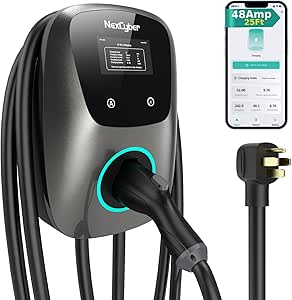
ApexCharger MACH 1 Level 2 EV Charger, 48 Amp, 30 ft Cable, J1772 Connector with Tesla NACS Adapter
The ApexCharger MACH 1 pairs a long 30-foot cable with a choice of plug-in or hardwired installation, making it a fit for garages where the car parks far from the outlet. Its included Tesla NACS adapter also covers a common compatibility need that the Autel MaxiCharger AC Home 50A does not address in its listed package. The tradeoff is output: the MACH 1 reaches 48A only when hardwired to a 60A breaker, while its NEMA 14-50 setup tops out at 40A. Wi-Fi, Bluetooth, RFID cards, and app controls add scheduling and access options, though buyers who want a simple portable setup may find the EVDANCE Level 1 and Level 2 easier to move. Pick the MACH 1 for reach and connected controls, with installation requirements in mind.
Pros:- 30-foot cable reaches farther than the 25-foot cables on the listed Autel home chargers
- Can be installed hardwired or with a NEMA 14-50 plug
- Includes a Tesla NACS adapter
- Wi-Fi, Bluetooth, RFID cards, display, and app controls
Cons:- NEMA 14-50 installation is limited to 40A
- Full 48A output requires hardwiring and a 60A breaker
- More installation planning than a portable charger such as the EVDANCE Level 1 and Level 2
Best for: Homeowners with a distant parking spot who want a long cable, app controls, and a choice of plug-in or hardwired installation.
Not ideal for: Renters or drivers without a suitable 14-50 outlet or the electrical setup for hardwiring at 48A.
- Maximum current:48A hardwired; 40A with NEMA 14-50 plug
- Voltage:200–240V
- Installation:Hardwired or NEMA 14-50 plug
- Connector:J1772
- Included adapter:Tesla NACS
- Cable length:30 ft
- Connectivity:Wi-Fi and Bluetooth
- Use:Indoor or outdoor
Our verdict“Choose the MACH 1 if cable reach and connected features matter and your electrical setup supports the output you want.”
Autel MaxiCharger AC Home Level 2 EV Charger, 50A, 240V, 25-Foot Cable
The Autel MaxiCharger AC Home 50A stands out for buyers who need a hardwired charger that can face outdoor conditions, including cold weather. Its 25-foot cable is designed to stay flexible down to −40°C, and NEMA Type 4 protection adds weather resistance. Compared with the ApexCharger MACH 1, it gives up five feet of cable and the option of plug-in installation, but offers a higher 50A maximum and Ethernet alongside Wi-Fi and Bluetooth. App controls support charging schedules and firmware updates, which can help owners manage charging without visiting the unit. The cost of this fixed setup is an electrician-assisted hardwired installation, and J1772 may require an adapter for some vehicles. It fits buyers who prioritize outdoor readiness and cold-weather cable handling over portability.
Pros:- Up to 50A and 12 kW output
- NEMA Type 4 protection for indoor or outdoor use
- Cable designed to remain flexible down to −40°C
- Wi-Fi, Bluetooth, Ethernet, scheduling, and firmware updates
Cons:- Hardwired installation requires an electrician
- J1772 compatibility may require an adapter for some vehicles
- The ApexCharger MACH 1 offers a longer cable and a plug-in installation option
Best for: Drivers in cold climates who need a hardwired outdoor charger with a weather-protected housing and flexible cable.
Not ideal for: Renters or anyone who needs a plug-in charger; owners of vehicles that need a connector adapter should plan for one.
- Charger level:Level 2
- Maximum current:50A
- Voltage:240V
- Power:Up to 12 kW
- Connector:J1772
- Cable length:25 ft
- Installation:Hardwired
- Connectivity:Wi-Fi, Bluetooth, and Ethernet
- Warranty:3 years
Our verdict“Choose this MaxiCharger for a fixed outdoor installation where cold-weather durability matters more than plug-in flexibility.”
Raylix Portable Level 1 and Level 2 J1772 EV Charger, 16A
The Raylix Portable Level 1 and Level 2 charger brings useful control to a compact, outlet-based setup: drivers can select 8A, 10A, 12A, or 16A and set a delay timer from one to 12 hours. That suits households working around a limited circuit or a charging schedule. Its included 120V and 240V plug options make it more immediately adaptable than the Autel MaxiCharger AC Home 50A, which is hardwired, though the Autel is far faster at its higher current. Raylix’s display adds voltage, current, power, and temperature information, and its two-year warranty exceeds the EVDANCE portable charger’s one year. The main limit is speed: at 240V it peaks at 3.68 kW, and at 120V it is capped at 12A. I would pick it for flexible, scheduled overnight charging, not quick turnaround.
Pros:- Includes 120V NEMA 5-15 and 240V NEMA 6-20 options
- Four selectable current settings from 8A to 16A
- One-to-12-hour delay timer supports scheduled charging
- TFT display reports voltage, current, power, and temperature
Cons:- Maximum 3.68 kW output is modest compared with the 50A Autel MaxiCharger
- 120V charging is limited to 12A
- Vehicles without a J1772 port may require an adapter
Best for: J1772 drivers who want a portable charger with adjustable current and a delay timer for scheduled home charging.
Not ideal for: Drivers who need faster charging for long daily commutes or want a hardwired high-current home station.
- Connector:SAE J1772
- Charging levels:Level 1 and Level 2
- Adjustable current:8A, 10A, 12A, or 16A
- Delay timer:1–12 hours
- Level 1 input:NEMA 5-15; 120V, up to 12A, 1.44 kW
- Level 2 input:NEMA 6-20; 240V, 16A, 3.68 kW
- Display:TFT color display
- Warranty:2 years
Our verdict“Choose Raylix if you want adjustable, scheduled charging from common outlets and can accept a slower charge rate.”
Autel MaxiCharger Level 2 EV Charger, 80 Amp, Hardwired, J1772, Indoor/Outdoor
The Autel MaxiCharger 80A is the high-output choice in this group, delivering up to 19.2 kW when paired with an appropriate 100A circuit. That headroom can suit a household with a vehicle capable of accepting high AC charging power or more than one driver who needs to turn cars around quickly. Compared with the Autel MaxiCharger AC Home 50A, it raises the output ceiling substantially and adds Wi-SUN connectivity, but the electrical demands are also much greater. Its 25-foot J1772 cable and app features cover everyday reach, scheduling, remote session control, and energy monitoring. Tesla drivers need to supply their own NACS adapter, unlike buyers of the ApexCharger MACH 1, which includes one. The 100A circuit and hardwired installation make this a specialist pick, and vehicle charging limits may prevent some owners from using its full capacity.
Pros:- Up to 80A and 19.2 kW output
- App supports scheduling, remote session management, and energy monitoring
- Wi-Fi and Wi-SUN connectivity
- 25-foot cable and five-year warranty
Cons:- Hardwired installation and a recommended 100A circuit demand substantial electrical capacity
- Tesla NACS adapter is not included
- Many vehicles cannot use the full 80A output
Best for: Households with a high-acceptance-rate EV and a suitable electrical service that want the fastest listed home AC charging capacity.
Not ideal for: Drivers with limited electrical capacity, vehicles that cannot accept high AC power, or Tesla owners who want an adapter included.
- Maximum output:19.2 kW / 80A
- Output voltage:240 VAC
- Connector:SAE J1772
- Cable length:25 ft
- Installation:Hardwired; 100A circuit recommended
- Connectivity:Wi-Fi and Wi-SUN
- Certifications:CSA and UL
- Warranty:5 years
Our verdict“Choose this 80A MaxiCharger only if your vehicle and electrical service can make practical use of its unusually high output.”
Level 2 EV Charger, 48A NEMA 14-50P with 25ft Cable, WiFi App & Touch Screen
This unit’s 48-amp ceiling is what sets it apart from the plug-in pack — most NEMA 14-50 competitors like the EVIQO cap out at 40A, which means this charger squeezes up to 46 miles of range per hour when hardwired. The 25-foot cable matches the longest in this roundup, easily reaching across a two-car garage. Amperage is adjustable from the touch screen itself, which beats the app-only approach of the AIMILER when your WiFi is down. The tradeoffs are real, though: hitting full 48A output requires 6AWG wiring and professional installation, and some owners report occasional fault resets. Tesla owners also need to supply their own adapter, unlike the ApexCharger MACH 1 which includes one.
Pros:- Up to 46 miles of range per hour when hardwired — faster than any other plug-in in this lineup
- Amperage adjustable directly on the touch screen, no app needed
- Military-grade 25ft cable rated for 10,000+ charge cycles
- ETL, FCC, and Energy Star certified with a 3-year warranty
Cons:- Full 48A output requires 6AWG wiring and professional installation
- Some users report E-Stop fault issues requiring resets
- No Tesla/NACS adapter included, and the IP65 rating falls short of the IP66 protection on the EVIQO and AIMILER
Best for: Drivers of long-range EVs with big batteries who want maximum overnight recovery without hardwiring an 80A unit
Not ideal for: Renters or anyone on an older electrical panel — the 48A requirement demands a 60A circuit and 6AWG wiring, which is a serious electrical project
- Max Current:48A (adjustable 16A-48A)
- Voltage:240V
- Connector:J1772
- Plug Type:NEMA 14-50P
- Cable Length:25 ft
- Charging Speed:Up to 46 mph (hardwired); 38 mph (plug-in at 40A)
- Weather Protection:NEMA Type 3 / IP65
- Certifications:ETL, FCC, Energy Star
- Warranty:3 years
Our verdict“Buy this if you need the fastest plug-in charging available and your panel can support it; skip it if you’re renting or want set-and-forget reliability.”
AIMILER Level 2 EV Charger, 32A 240V Portable EVSE with 25ft Cable
The AIMILER hits a sweet spot the pricier options miss: full smart charging features — scheduling, cost tracking, usage history — at a mid-tier amperage that works with existing 40A circuits. Charging at 7.68kW it’s roughly six times faster than a Level 1 cord, which covers the daily needs of most commuters overnight. Compared with the EVDANCE 32A portable, the AIMILER adds app control and a smarter touch screen for similar hardware; the EVDANCE counters with simpler operation and bundled accessories. The IP66 rating actually exceeds the IP65 on the 48A flagship above, making it the better outdoor bet. Drawbacks: the app only speaks 2.4GHz WiFi and setup can be finicky, and plugging into a 120V outlet drops you back to Level 1 crawling.
Pros:- Full smart app with off-peak scheduling and cost/history tracking at a lower price tier
- IP66 weather protection, better than several pricier chargers here
- Adjustable 16A-32A output via screen or app for older circuits
- Cable rated for 10,000+ charge cycles
Cons:- 2.4GHz-only WiFi and finicky initial app setup
- 32A ceiling is meaningfully slower than the 40-48A options nearby
- No Tesla adapter included
Best for: Budget-conscious EV owners who want app scheduling and cost tracking without paying for amperage they don’t need
Not ideal for: Drivers of large-battery EVs (trucks, long-range SUVs) who regularly need to recover 100+ miles overnight — 32A will feel slow
- Max Current:32A (adjustable 16A-32A)
- Max Power:7.68 kW
- Voltage:220V-240V
- Connector:J1772
- Plug:NEMA 14-50P
- Cable Length:25 ft
- Circuit Requirement:20A-40A breaker
- Certifications:ETL, FCC (UL2231, UL2251, UL2594)
- Connectivity:WiFi 2.4GHz, smart app
Our verdict“The smart-charging value pick — full app features and solid weatherproofing for buyers who don’t need 40+ amps of speed.”
EVDANCE Level 2 Portable EV Charger, 32A, 240V, NEMA 14-50P, J1772
Not everyone wants another WiFi device in their life, and the EVDANCE 32A answers that. Everything — current adjustment (10A to 32A), delay timer, charging status — happens on the unit’s LED screen with physical controls, no account, no app, no connectivity headaches. That makes it more dependable than the AIMILER for anyone with unreliable home internet. It also ships with a carrying case and wall bracket, so it doubles as a travel charger in a way the wall-hung EVIQO doesn’t. The tradeoff is the absence of scheduling-by-app, cost tracking, and smart home integration — if you want those, the AIMILER or ChargePoint Home Flex are better fits. Its IP66 rating matches the AIMILER’s, but like most portables here it’s not designed for direct sun or heavy rain, and Tesla owners must add an adapter.
Pros:- Works entirely offline — no app, account, or WiFi dependency
- Five adjustable current settings (10A-32A) for older circuits or RV hookups
- Includes carrying case and wall-mount bracket for portable or fixed use
- IP66-rated protection
Cons:- No smart features, scheduling automation, or energy tracking
- 32A ceiling recovers range more slowly than 40-48A picks
- Tesla vehicles require a separately purchased adapter
Best for: Plug-and-play buyers and road-trippers who want a dependable dumb charger with a case, no smartphone required
Not ideal for: Rate-optimizers who charge on time-of-use electricity plans and need scheduled off-peak charging — there’s no app or automation
- Connector:SAE J1772
- Plug:NEMA 14-50P
- Input Voltage:240V AC
- Max Current:32A (adjustable 10/16/20/24/32A)
- Power Output:7.68 kW
- Cable Length:25 ft
- Display:LED screen
- Included Accessories:Carrying case, wall-mount bracket
- Warranty:1 year on extension cable
Our verdict“The pick for simplicity and portability — grab it if you want to plug in and charge with zero setup, pass it by if off-peak scheduling matters to your bill.”
ChargePoint Home Flex Level 2 EV Charger (J1772, NEMA 14-50 Plug)
The Home Flex earns its place through software maturity. Its app offers scheduling, reminders, and smart home integration that feel more polished than the smaller brands here, and it ties into ChargePoint’s 274,000+ public charging network — a genuine advantage if you also charge on the road. At up to 45 miles of range per hour it nearly matches the 48A flagship above while carrying a UL listing. Where it stumbles versus newer rivals: there’s no on-unit display or screen-based amperage adjustment like the EVIQO or the 48A touch-screen model, and its feature set hasn’t kept pace with bargain challengers offering cost tracking at lower prices. Installation demands a proper 40A or 50A circuit, and Tesla drivers need an adapter.
Pros:- Mature app with scheduling, reminders, and smart home integration
- Up to 45 miles of range per hour — near the top of this lineup
- UL certified with a cold-resistant cable rated for indoor or outdoor mounting
- 24/7 support plus access to a massive public charging network
Cons:- No display or on-unit controls — everything routes through the app
- Requires a 240V NEMA 14-50 outlet on a 40A or 50A circuit, typically installed by an electrician
- Tesla vehicles require a separate adapter
Best for: Owners who already use the ChargePoint network or want the most mature app experience with smart home ties
Not ideal for: Value-first buyers — newer competitors like the EVIQO offer comparable speed, a screen, and longer warranties for less
- Connector:J1772
- Plug:NEMA 14-50
- Voltage:240V
- Amperage:50A max (40A or 50A circuit required)
- Charging Speed:Up to 45 mi/hr
- Certification:UL listed
- Installation:Indoor or outdoor, by electrician
- Weight:13.8 lbs
Our verdict“Choose this for the ecosystem — polished software and network access — rather than raw hardware value; bargain hunters will find more elsewhere in this roundup.”
EVIQO Level 2 EV Charger, J1772 40A NEMA 14-50, 240V Wall Charging Station
The EVIQO lands at the intersection most buyers actually need: 40 amps of charging speed, full app control, IP66 weatherproofing, and a 3-year warranty with U.S.-based support. Its six-level adjustable output (6A-40A) offers finer control than the AIMILER’s 16A floor, useful on shared or older circuits. Compared with the ChargePoint Home Flex, you get a comparable smart feature set with stronger weather sealing at a more accessible price point; compared with the 48A flagship, you give up about 15% charging speed but gain simpler wiring requirements and fewer reported faults. The one notable miss: unlike the ApexCharger MACH 1, no Tesla adapter is in the box, and app features lock you to 2.4GHz WiFi.
Pros:- Works with virtually every EV and plug-in hybrid via J1772
- Fine-grained 6A-40A adjustable output for tricky electrical situations
- UL/ETL certified, Energy Star rated, and IP66/NEMA 4 weatherproof
- 3-year warranty with U.S.-based support
Cons:- Requires a dedicated 50A circuit — not usable on dryer outlets
- 2.4GHz WiFi required for app features
- Tesla adapter not included
Best for: First-time home charger buyers who want fast daily charging, smart scheduling, and long-term support in one purchase
Not ideal for: Owners of high-capacity EV trucks needing maximum recovery speed — a 48A or 80A hardwired unit like the Autel MaxiCharger serves them better
- Connector:J1772
- Amperage:40A (adjustable 6-40A)
- Voltage:240V
- Plug Type:NEMA 14-50
- Cable Length:25 ft
- Ingress Protection:IP66 / NEMA 4
- Certifications:UL, ETL, FCC, Energy Star
- WiFi:2.4 GHz
- Warranty:3 years
Our verdict“The safest default pick in this roundup — well-balanced speed, smarts, and support unless you specifically need maximum amps or minimum price.”
Autel MaxiCharger AC Home Level 2 EV Charger, 50A, 240V, Hardwired with 25-Foot Cable
For buyers who want a permanently installed smart charger, this Autel stands out for pushing a full 12 kW at 50A — noticeably more than the Emporia’s 48A hardwired ceiling and well beyond the 40A ceiling of plug-in models like the ELEGRP. The tradeoff is immediate: hardwiring means an electrician visit before you charge a single mile, so this is a commitment purchase rather than a weekend impulse. What justifies that commitment is the connectivity stack — Wi-Fi, Bluetooth, and Ethernet plus over-the-air updates, which gives it more flexibility than the Wi-Fi-only Emporia if your garage sits at the edge of your router’s range. The NEMA Type 4 enclosure and a cable rated to stay pliable at -40°C make it a better fit for harsh-climate outdoor installs than the EVDANCE’s IP66 rating. Compared with the Grizzl-E Classic, you give up nothing on raw power but you do add a dependency on app reliability for scheduling.
Pros:- 12 kW output is among the fastest in this roundup
- Triple connectivity (Wi-Fi, Bluetooth, Ethernet) keeps the app reliable in weak-signal garages
- NEMA Type 4 enclosure plus -40°C-rated cable suits brutal outdoor winters
- Over-the-air updates add features without hardware changes
Cons:- Hardwired installation requires professional electrician work
- J1772 connector means Tesla owners need an adapter
Best for: Homeowners setting up a permanent, weather-exposed outdoor charging spot who want full smart scheduling and maximum hardwired power
Not ideal for: Renters or anyone without a 240V hardwired circuit budget — the electrician requirement makes it impractical for temporary setups
- Charger level:Level 2
- Maximum current:50A
- Maximum power:12 kW
- Cable length:25 feet
- Connectivity:Wi-Fi, Bluetooth, Ethernet
- Installation:Hardwired
- Weather protection:NEMA Type 4
- Warranty:3 years
Our verdict“This pick makes the most sense for owners investing in a long-term, hardwired home charging station where maximum speed and smart features matter more than upfront setup cost.”
Grizzl-E Classic Level 2 EV Charger, 240V/40A, UL Certified, NEMA 14-50 Plug, 24-Foot Cable, Black
The Grizzl-E Classic earns its slot by refusing to be smart — no Wi-Fi, no app, no account — and that’s a genuine advantage for buyers burned by connectivity-dependent units like the Autel MaxiCharger or Emporia. Fewer electronics means fewer failure points, and the build reflects it: IP67 water resistance, fire resistance, and full UL certification make it the toughest enclosure in this batch, a step above the EVDANCE’s IP66. The dip-switch amperage settings (16A to 40A) let it adapt to older or weaker circuits without an app, which matters if your panel can’t support a full 40A breaker. Real tradeoffs exist: at 16.61 lbs it’s heavier than the ELEGRP’s 13.2 lbs, the 24-foot cable is a foot shorter than most rivals here, and off-peak scheduling is entirely manual — your car’s timer becomes the workaround. This model is better suited to reliability-focused buyers than gadget lovers.
Pros:- Full UL certification with IP67 and fire resistance for demanding outdoor installs
- Amperage adjustable across four settings to match weaker circuits
- Dead-simple operation with nothing to configure or connect
- Compatible with all North American EVs and PHEVs
Cons:- No smart connectivity or app control whatsoever
- Heavy at 16.61 lbs for a nominally portable unit
- Requires a dedicated NEMA 14-50 circuit or hardwired setup
Best for: EV owners in extreme climates who value bulletproof durability and want charging that works even when Wi-Fi and apps fail
Not ideal for: Tech-forward buyers who want scheduling, energy tracking, or remote control from their phone
- Max current:40A (adjustable 16/24/32/40A)
- Voltage:240V
- Plug type:NEMA 14-50
- Cable length:24 feet
- Certification:UL Full Tested and Certified
- Ingress protection:IP67 water resistant
- Charge rate:28-30 mph at 40A
- Weight:16.61 lbs
Our verdict“Choose the Grizzl-E if you want a rugged, set-and-forget workhorse and skip it if smart scheduling is a dealbreaker.”
ELEGRP Level 2 EV Charger 40A, J1772 Portable Electric Car Charger with 240V NEMA 14-50 Plug and 25FT Cable (ETL Certified)
Compared with the EVDANCE 40A, the ELEGRP matches the headline specs — 9.6 kW, 40A, a 25-foot cable, five current settings, and a 1–12 hour delay timer — but adds a wider operating range of -21°F to 121°F and a three-layer PBE safety system on top of ETL certification. Where the EVDANCE pulls ahead is on-device feedback: its 2.4-inch TFT display shows live charging data, while the ELEGRP relies on indicator lights alone. Against the Grizzl-E, this unit is lighter (13.2 vs 16.61 lbs) and easier to move between a home outlet and an RV park or relative’s garage. The delay timer is the standout value feature — it shifts charging into off-peak windows without needing the Wi-Fi setup that the Autel and Emporia demand. Be aware that Tesla owners need a separately purchased adapter, and support hours are limited to weekdays plus Saturday mornings Pacific time.
Pros:- Full 9.6 kW Level 2 speed at a lower complexity level than smart units
- Five adjustable current settings plus a 12-hour delay timer for off-peak savings
- 25-foot cable with IP67 weatherproofing and wide temperature tolerance
- ETL certified with multi-layer safety protection and a 2-year warranty
Cons:- Tesla compatibility requires a separately sold adapter
- No display — charging status relies on indicator lights
- Limited customer support hours (Mon–Sat, 5 AM–3 PM PT)
Best for: Budget-conscious EV owners who want a portable, no-app-needed Level 2 charger they can use at home and take on the road
Not ideal for: Tesla drivers who don’t already own a J1772 adapter, and buyers who expect display-based charging feedback
- Connector:J1772
- Max current:40A (adjustable 16/20/24/32/40A)
- Max power:9.6 kW
- Plug:NEMA 14-50
- Cable length:25 ft
- Certification:ETL Certified
- Operating temperature:-21°F to 121°F
- Warranty:2 years
Our verdict“A sensible pick for straightforward plug-in charging with scheduling basics, as long as you don’t need a screen or Tesla-native support.”
Emporia Level 2 EV Charger, 48 Amp, 240V, Wi-Fi, J1772 Connector, 25 ft Cable
The Emporia’s strongest card is installation flexibility: run it at 40A on a NEMA 14-50 plug today, then hardwire it later for 48A — a path no pure plug-in unit in this roundup offers. That makes it a natural stepping stone for buyers who want to start simple but leave headroom for a faster setup, sitting between the plug-only ELEGRP and the hardwired-only Autel. Its real-time energy data in the app goes deeper than the Autel’s scheduling focus, which matters if you’re tracking electricity costs per charge or pairing with solar. Both the UL listing and ENERGY STAR certification also help with utility rebate eligibility, something the uncertified budget options can’t claim. Drawbacks are real, though: reaching the full 48A requires professional hardwiring anyway, and the 2.4 GHz-only Wi-Fi can be flaky in detached garages — the Autel’s Ethernet port exists precisely for that scenario.
Pros:- Dual install options: 40A plug-in now, 48A hardwired later
- App delivers charging schedules plus granular real-time energy data
- UL listed and ENERGY STAR certified for rebate eligibility
- 25-foot cable handles awkward driveway and garage layouts
Cons:- Maximum 48A output requires professional hardwiring
- Wi-Fi limited to 2.4 GHz with no Ethernet fallback
Best for: Data-driven EV owners, especially solar users, who want detailed energy tracking and the option to upgrade to 48A hardwired output
Not ideal for: Buyers who never want an app or account, or those with weak Wi-Fi in a detached garage where 2.4 GHz-only connectivity may struggle
- Maximum current:48A hardwired; 40A with NEMA 14-50 plug
- Voltage:240V
- Connector:SAE J1772
- Cable length:25 ft
- Wi-Fi:2.4 GHz
- Certifications:UL listed; ENERGY STAR
- Weight:16.6 lbs
Our verdict“The most future-proof choice here for energy-conscious buyers — just plan on an electrician if you want the full 48A.”
EVDANCE Level 2 EV Charger 40A, 240V 9.6kW Portable Charging Station with NEMA 14-50P, 25FT Cable, Adjustable Current & Timing Delay, J1772 Connector
What separates the EVDANCE from the near-identical ELEGRP is the 2.4-inch TFT display — live amperage, voltage, and session data on the unit itself, which most budget portables in this roundup simply omit. That visibility is genuinely useful when you’re troubleshooting at an unfamiliar outlet. Its six-level amperage range (10A to 40A) also goes lower than the ELEGRP’s 16A floor, letting it run safely on modest circuits at cabins or older garages. The IP66 rating handles all-weather use from -22°F to 122°F, though it’s a notch below the Grizzl-E’s IP67 for anyone mounting in permanently soaked environments. Included accessories — cable holder, control box holder, and a carry bag — make it the most travel-ready option here. The cost-saving delay start timer covers off-peak charging without any Wi-Fi setup, and Tesla owners should note the adapter is sold separately, same as the ELEGRP.
Pros:- On-board TFT display shows real-time charging data without an app
- Widest amperage range (10–40A) for weak or shared circuits
- Carry bag and mounting holders included for true portability
- Delay start timer trims costs by avoiding peak hours
Cons:- Requires a separately purchased adapter for Tesla vehicles
- Needs a NEMA 14-50 outlet, often a professional install
- IP66 rating trails the Grizzl-E’s IP67 for wet exposure
Best for: Road-trippers and multi-location chargers who want on-device readouts and the widest amperage flexibility in a travel-ready kit
Not ideal for: Tesla owners without a J1772 adapter, and buyers whose home lacks a NEMA 14-50 outlet and doesn’t want to pay for one
- Max current:40A (adjustable 10/16/20/24/32/40A)
- Voltage:240V
- Max power:9.6 kW
- Plug type:NEMA 14-50P
- Cable length:25 ft
- Display:2.4-inch TFT
- Operating temperature:-22°F to +122°F
Our verdict“The best choice among the portable 40A units if seeing live charging data matters — a practical grab-and-go charger for homes, cabins, and travel.”
How We Picked
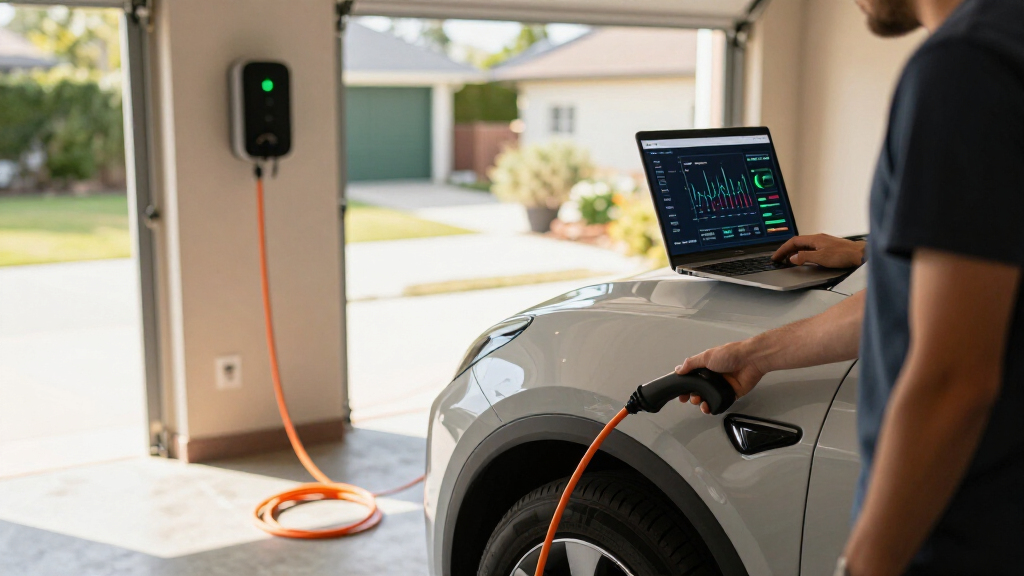
My ranking logic starts with charging speed and electrical compatibility, because an EV charger is only as useful as your panel allows it to be. I grouped these 15 models into plug-in NEMA 14-50 units (easiest installation), hardwired units (highest amperage, requires an electrician), and portable units (flexibility over power), then judged each against what its category should deliver. A 48A plug-in charger that can’t hit its rated output on a standard 50-amp circuit — a common mismatch — lost points against models that honestly match their amperage to realistic home wiring.
From there, I weighed smart features that actually change behavior — off-peak scheduling, energy monitoring, load management — against build quality and connector durability, favoring UL or ETL certified housings and connectors rated for outdoor use. Cable length, warranty strength, and app quality separated closely matched competitors. Finally, I factored in who each charger is for: a rugged dumb charger earned a high rank for rural or cold-climate drivers even without Wi-Fi, while app-heavy models rose for suburban homeowners on time-of-use utility rates. The result is a lineup where every pick has a clear buyer, not just a feature list.
| electric car charger | Connector |
|---|---|
| EVDANCE Level 1 and Level 2 Po | J1772 |
| ApexCharger MACH 1 Level 2 EV | J1772 |
| Autel MaxiCharger AC Home Leve | J1772 |
| Raylix Portable Level 1 and Le | SAE J1772 |
| Autel MaxiCharger Level 2 EV C | SAE J1772 |
| Level 2 EV Charger | J1772 |
| AIMILER Level 2 EV Charger | J1772 |
| EVDANCE Level 2 Portable EV Ch | SAE J1772 |
| ChargePoint Home Flex Level 2 | J1772 |
| EVIQO Level 2 EV Charger | J1772 |
| Autel MaxiCharger AC Home Leve | — |
| Grizzl-E Classic Level 2 EV Ch | — |
| ELEGRP Level 2 EV Charger 40A | J1772 |
| Emporia Level 2 EV Charger | SAE J1772 |
| EVDANCE Level 2 EV Charger 40A | — |
Factors to Consider When Choosing Best Electric Car Chargers
Before picking a specific model, it helps to understand the decisions that shape every EV charger purchase. These six factors explain why two chargers with similar specs can suit completely different households.Match Amperage to Your Panel, Not Your Ambitions
The most common mistake buyers make is purchasing a 48A or 50A charger without verifying their electrical panel can support it. A charger on a 50-amp circuit must be limited to 40 amps of continuous draw per electrical code, which means many 50A-rated units realistically run at 80% capacity on standard home wiring. Hardwired units like the 80A Autel can access dedicated 100-amp circuits, but that often means a panel upgrade costing thousands — far more than the charger itself. If your panel is tight, a 32A model like the AIMILER or EVDANCE portable delivers roughly 25 miles of range per hour, which covers most daily driving overnight anyway. The right question isn’t “what’s the fastest charger” but “what’s the fastest charger my home can feed without an upgrade.”
Plug-In Versus Hardwired Installation
Every charger in this lineup is either a NEMA 14-50 plug-in unit or a hardwired unit, and the difference shapes both cost and flexibility. Plug-in models install in minutes if you already have a 14-50 outlet (common in homes with prior RV or dryer hookups), and you can take the charger with you when you move. Hardwired models require an electrician but unlock higher amperage, avoid GFCI breaker compatibility issues that can trip plug-in chargers, and generally meet stricter installation codes in some jurisdictions. Renters and apartment dwellers should strongly favor plug-in or portable options like the Raylix or EVDANCE Level 1/2 units. Homeowners planning to stay put a decade may find hardwiring worth the upfront cost for the speed ceiling alone.
Smart Features: When Apps Earn Their Keep
Wi-Fi connectivity divides this category sharply, and it’s worth being honest about who benefits. If your utility offers time-of-use rates, app-based scheduling on the ChargePoint, Emporia or Autel can cut charging costs by 30-50% by shifting loads to overnight hours — the feature pays for itself within a year. Solar owners get even more from models like the Emporia, which can coordinate charging with home solar production. But if you’re on a flat rate, smart features add setup friction, app updates, and occasional connectivity drops without financial payoff. Brands like Grizzl-E built loyal followings precisely by skipping apps entirely. There’s also a middle path: the EVDANCE 40A offers timer delay scheduling without full app control, covering basic off-peak needs with less complexity.
Cable Length and Connector Reach
Cable length is the spec buyers most often regret getting wrong. A 25-foot cable — the standard across this lineup — comfortably reaches most garage bays, but driveway parkers, households with two EVs sharing one charger, or anyone who backs in may need more. The ApexCharger MACH 1’s 30-foot cable exists precisely for these situations. Also check the connector type and adapters: every model here uses J1772, the North American standard, but Tesla drivers need a NACS adapter, and only the ApexCharger includes one in the box. Factor in that cold weather stiffens cables, making longer reach harder to manage — an often-overlooked reason shorter, thicker cables suit northern climates better than long thin ones.
Certification and Outdoor Durability
An EV charger handles 240 volts continuously, sometimes in rain, snow, and freezing temperatures, so UL or ETL certification is non-negotiable — non-certified chargers can void insurance claims and may be rejected by electricians during installation. Beyond certification, look at the enclosure rating: units like the Grizzl-E Classic are built around an aluminum housing rated for extreme cold, while budget portables often use lighter plastic better suited to garages. The connector itself matters too, since it’s the part you handle daily — a poorly seated or fragile J1772 plug becomes a frustration within weeks. Spending more for a ruggedized housing makes sense for outdoor mounting; it’s wasted money for a protected indoor garage spot.
Portability as a Strategy, Not a Compromise
Portable chargers like the Raylix, EVDANCE Level 1/2, and AIMILER occupy a specific niche: they let you charge from a standard 120V outlet in a pinch and a 240V outlet at home, all with one device. This dual-voltage approach is ideal for new EV owners still deciding on their long-term setup or drivers who charge at multiple locations. The tradeoff is real — most portables top out at 16-32 amps, roughly half the speed of dedicated wall units. My advice for budget-conscious buyers: start with a capable portable on a 14-50 outlet, live with it for a few months, then upgrade to a 40A+ wall unit only if you actually need faster overnight recovery. Many drivers never do.
Frequently Asked Questions
Can a 50-amp charger actually deliver 50 amps to my EV?
No — and this trips up a lot of first-time buyers. Electrical codes require continuous loads like EV charging to stay at 80% of a circuit’s rating, so a charger plugged into a 50-amp circuit draws a maximum of 40 amps regardless of its rated peak. The Autel and ChargePoint 50A units only reach their full output when hardwired to a 60-amp circuit, which requires an electrician and adequate panel capacity. Practically, this means a “50A” plug-in charger charges at the same real-world speed as a 40A model like the EVIQO or ELEGRP. Check your panel and circuit before paying a premium for amperage you can’t legally use.
Do I need a smart Wi-Fi charger, or is a basic one enough?
It depends entirely on your electricity rate structure. If your utility charges time-of-use rates, app-based scheduling on models like the Emporia, Autel, or ChargePoint automatically shifts charging to cheap overnight hours and can save real money every month — often enough to justify the higher price within a year or two. If you pay a flat rate per kilowatt-hour, scheduling saves you nothing, and a dumb-but-durable unit like the Grizzl-E Classic is the smarter buy: fewer components, fewer firmware quirks, nothing to connect or update. Solar panel owners are the third group who genuinely benefit, since a few models can prioritize charging when your panels are producing. For everyone else, skip the app and pocket the difference.
Will these J1772 chargers work with my Tesla?
Yes, with a caveat. Every charger in this roundup uses the J1772 connector, which is the universal North American standard, and every Tesla sold includes (or can use) a J1772-to-NACS adapter that lets it charge from these units at full speed. The ApexCharger MACH 1 is the only pick here that ships with a Tesla adapter in the box, saving you a separate purchase and one more thing to keep track of. Newer Teslas with native NACS ports still work fine through the adapter, though you should confirm your adapter came with your vehicle or buy a quality one, since cheap adapters have caused overheating issues. Functionally, Tesla owners lose nothing by choosing a J1772 charger — many prefer it for future-proofing if a second, non-Tesla EV joins the household.
Is a portable charger good enough for daily home charging?
For most commuters, yes — with realistic expectations. A 32A portable like the AIMILER or EVDANCE on a 240V outlet adds roughly 20-25 miles of range per hour, which fully replenishes a typical day’s driving (30-40 miles) in under two hours. Even the modest 16A Raylix covers overnight needs if you drive 50 miles a day or less. The genuine downsides are durability and convenience: portables get moved, coiled, and stuffed in trunks, so their cables and connectors wear faster than a wall-mounted unit’s, and you’ll be handling the unit every day rather than just the plug. If you charge at home 95% of the time, a mounted 40A station is worth the upgrade. If you charge in multiple places or want a trunk backup, a portable is the practical choice.
How much does professional installation cost, and can I install a charger myself?
Hardwired installation should always go through a licensed electrician — expect roughly $300 to $800 for a straightforward run from your panel, and potentially several thousand if you need a panel upgrade or subpanel to support a 48A-or-higher charger. Plug-in NEMA 14-50 models are where DIY gets interesting: if your home already has a 14-50 outlet (common near garages in houses that once had an RV or large dryer), you simply mount the bracket and plug in. Installing a new 14-50 outlet yourself is possible for experienced DIYers but carries real risk at 240 volts, and unpermitted work can complicate home insurance claims. My suggestion: get an electrician’s quote for the circuit first, then decide between plug-in and hardwired based on the real cost of each path in your specific home.
Conclusion
After comparing all 15 chargers, the right choice comes down to your household’s charging pattern and your panel’s capacity. For the best overall pick, the ChargePoint Home Flex balances speed, app quality, and flexibility that fits nearly any home. The Autel MaxiCharger 80A hardwired takes the best premium spot for drivers who want the fastest possible home charging and have the electrical infrastructure to support it. On value, the Grizzl-E Classic is hard to beat — a UL-certified, weatherproof 40A workhorse with no app to babysit, matched closely by the ELEGRP 40A for plug-in buyers.
For beginners and budget-conscious first-time EV owners, the EVDANCE Level 1/Level 2 portable or the Raylix 16A let you start charging immediately from outlets you already have, deferring the big installation decision until you know your real needs. Specific needs round out the map: the ApexCharger MACH 1 for Tesla owners (included NACS adapter) and long driveways (30-foot cable), the Emporia 48A for solar households chasing smart energy coordination, and the AIMILER 32A for apartment dwellers or anyone charging on a modest circuit. Whatever your situation, match the charger to your panel and your driving habits — not to the biggest number on the box — and any pick on this list will serve you well for years.
Fall Picks
fall essentials
As an affiliate, we earn on qualifying purchases.