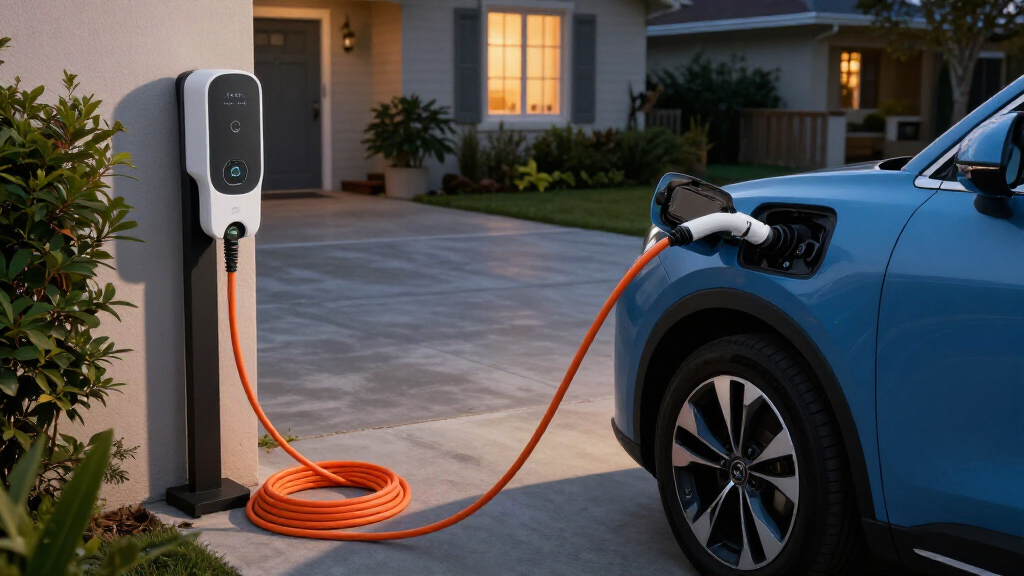

The EVDANCE J1772 40A 30FT Extension Cable earns my best overall pick for the way it balances reach, amperage headroom, and broad charger compatibility, making it the safest default choice for most non-Tesla owners. If you drive a Tesla or a NACS-equipped vehicle, the EVDANCE NACS Extension Cord 50A 21FT is the standout in that connector format, while the VEVOR 32A 21FT appeals to budget-minded buyers who still want an IP66-rated build. The main tradeoffs in this category come down to connector type (J1772 versus NACS versus plain NEMA 14-50), amperage matching your charger’s output, and whether extra length costs you charging speed or money. Cheaper 32A cables save money but throttle faster home chargers, and 50A cables cost more and are heavier to handle daily. Keep reading for the full breakdown of all 15 options and which one fits your driveway, charger, and vehicle.

Get business pricing on monitors, keyboards and dev gear
- Business-only prices and quantity discounts
- Tax-exempt purchasing
- Multiple users, one account, clear invoices
Key Takeaways
- Amperage matching was the single biggest differentiator: pairing a 40A or 48A charger with a 32A cable (like the VEVOR or SEGUMA 32A models) silently throttles charging speed, so I only recommend those with lower-output Level 2 stations.
- The EVDANCE J1772 40A 30FT won on reach alone — no other J1772 cable in this lineup combines 30 feet with 40A capacity, which matters for long driveways and awkward parking spots.
- Only one product in the roundup (the SEGUMA 50A 20FT) carries a UL listing, and only one (the ELEVOCHARGE 48A) includes a carrying bag — safety certification and storage accessories were rare, not standard, at this price tier.
- The two NEMA 14-50 options (CircleCord and POWGRN) are not true EV extension cables — they extend the wall outlet side, not the J1772 connector side, which makes them a cheaper but less weatherproof and less convenient workaround.
- For Tesla and NACS vehicles, the EVDANCE NACS 50A 21FT was the only true NACS-native option in the lineup, so connector compatibility effectively decides that purchase before price or length even enter the conversation.


| EV charging extension cable | Length | Voltage | Water Resistance | Connector |
|---|---|---|---|---|
| WenStorm J1772 EV Extension Ca | 21 feet | 240V | IP66 | SAE J1772 Male-to-Female |
| EVDANCE EV Charger Extension C | 30 feet | 110V-240V | Water resistant | SAE J1772 Male-to-Female |
| EVDANCE NACS Extension Cord fo | 21 feet | 240V | IP66 | NACS (Tesla) |
| SEGUMA J1772 EV Charger Extens | — | — | IP66 | J1772 |
| EVDANCE J1772 EV Charger Exten | — | 110V-240V | IP66 | SAE J1772 Male-to-Female |
| VEVOR EV Charger Extension Cab | 21 ft (252 in) | 120V–240V (Level 1 / Level 2) | IP66 | — |
| CircleCord 50 Amp 25 Feet RV/E | 25 ft | — | — | — |
| LEFANEV 40A 20-Foot EV Charger | 20 ft (240 in) | — | — | J1772 Male-to-Female |
| EV Charger Extension Cable | 17 ft | 110V–240V (Level 1 / Level 2) | IP67 | — |
| SEGUMA EV Charger Extension Ca | 21 ft (6.4 m) | — | IP66 | — |
| J1772 EV Extension Cable | 40 ft | 240V | — | — |
| Wissandric EV Charger Extensio | — | 240V | — | — |
| ELEVOCHARGE 21ft J1772 EV Exte | 21 feet | 110V-240V | IP55 | Male-to-Female SAE J1772 |
| POWGRN 25 FT 50 Amp NEMA 14-50 | 25 ft | 125/250V | — | — |
| SEGUMA EV Charger Extension Ca | 20 ft (6m) | 240 volts | — | J1772 |
More Details on Our Top Picks
WenStorm J1772 EV Extension Cable 32A 21FT
This option stands out for its paperwork: it’s one of the few cables in this roundup carrying both ETL Listing and UL Certification, which matters if your homeowner’s insurance or local electrical code gives you side-eye about DIY charging setups. At 32A, it deliberately trades raw speed for headroom — compared with the EVDANCE 40A 30FT, it charges noticeably slower, but that lower current also means less heat stress on the connectors over years of daily use. The IP66 weatherproofing and UV-resistant jacket make it a dependable choice for a driveway that bakes in summer sun. The included carrying case is a nice touch the SEGUMA 40A doesn’t offer, though at 4 pounds it’s still a handful to coil after every session.
Pros:- Dual ETL Listed and UL Certified for verified safety
- IP66 weatherproof plus UV-resistant jacket for full-time outdoor use
- Flame-retardant jacket and premium copper wiring
- Includes a carrying case for tidy storage
Cons:- 32A rating caps charging speed below the 40A-50A alternatives
- No Tesla compatibility without a separate adapter
Best for: Cautious buyers and code-conscious homeowners who prioritize certified safety over maximum charging speed
Not ideal for: Drivers with 40A+ home chargers who don’t want their extension cable bottlenecking charging speed
- Connector:SAE J1772 Male-to-Female
- Amperage:32A
- Voltage:240V
- Wattage:7.68 kW
- Length:21 feet
- Water Resistance:IP66
- Certifications:ETL Listed, UL Certified, SAE J1772
- Includes:Extension cord, carrying case
Our verdict“This pick makes the most sense for safety-first buyers who want certified, all-weather reliability and can live with 32A charging speeds.”
EVDANCE EV Charger Extension Cable, J1772 40A 30FT
Length is the whole story here. At 30 feet, this EVDANCE cable outstretches every other J1772 option in this lineup by a full nine feet or more, which is the difference between charging comfortably from a garage-mounted station and playing parking Tetris with your driveway. It handles both 110V and 240V sources, so it works whether you’re extending a Level 1 wall outlet setup or a Level 2 station. The tradeoff is honest physics: nearly 10 pounds of cable that’s awkward to drag across a driveway and awkward to store. Compared with the WenStorm 32A, you gain charging speed and reach but give up the carrying case and the dual ETL/UL certification, settling for weather-resistant rather than fully IP66-rated protection.
Pros:- Longest J1772 reach in the lineup at 30 feet
- 40A capacity keeps Level 2 charging speeds intact
- Works across 110V and 240V power sources
- Universal fit with all SAE J1772 chargers and EVs
Cons:- Heaviest cable here at roughly 10 pounds
- Weather-resistant rather than IP66-rated, a step below the SEGUMA and EVDANCE 50A models
Best for: Households with long driveways or awkward parking angles where standard 21-foot cables simply don’t reach
Not ideal for: Anyone who needs to coil and stow the cable after every charge — at nearly 10 pounds, daily handling gets old fast
- Connector:SAE J1772 Male-to-Female
- Amperage:40A
- Voltage:110V-240V
- Wattage:9.6 kW
- Length:30 feet
- Conductors:2
- Water Resistance:Water resistant
Our verdict“Buy this if reach is your limiting factor — no other J1772 cable in this roundup gets close to 30 feet.”
EVDANCE NACS Extension Cord for Tesla – 50A, 21FT
Every other cable here speaks J1772 — this is the only native NACS option, which means Tesla drivers skip the adapter dance entirely. It supports up to 50A at 240V (12 kW) across Wall Connectors, Destination Chargers, and mobile connectors, matching the amperage of the EVDANCE J1772 50A while plugging straight into a Tesla port. Build quality is a highlight: UL 94 V-0 TPE and 5-micron silver-plated copper put it a materials tier above standard copper-only cables like the WenStorm. The caveats are Tesla-specific and real: it won’t work at Superchargers, owners of 48A Wall Connectors must dial output down to 40A, and the button doesn’t pop the charge port door — a small daily annoyance Tesla drivers will feel.
Pros:- Native NACS connector — no adapter needed for Tesla vehicles
- High 50A / 12 kW power support for fast home charging
- Premium UL 94 V-0 TPE and silver-plated copper construction
- IP66 waterproof with carrying case and 1-year warranty
Cons:- Incompatible with Tesla Superchargers
- Requires lowering a 48A Wall Connector to 40A
- Button doesn’t control the Tesla charge port door
Best for: Tesla Model 3/Y/S/X and Cybertruck owners extending a home Wall Connector or mobile connector without adapters
Not ideal for: Road-trippers relying on Superchargers, or households with mixed Tesla and J1772 vehicles
- Connector:NACS (Tesla)
- Amperage:50A
- Voltage:240V
- Max Power:12 kW
- Length:21 feet
- Water Resistance:IP66
- Material:UL 94 V-0 TPE, silver-plated copper
- Warranty:1 year
Our verdict“If you drive a Tesla and charge at home, this is the extension cable built for you — everyone else needs a J1772 model instead.”
SEGUMA J1772 EV Charger Extension Cable, 40A, 21FT
This SEGUMA hits the practical sweet spot most buyers actually need: 40A at 21 feet covers the amperage of the vast majority of home Level 2 chargers without paying for 50A capability you may never use. The silver-plated inlets are the differentiator at this price tier — they resist the overheating that cheaper bare-copper connectors develop over hundreds of plug cycles, something the WenStorm 32A doesn’t offer. You also get a 12-month warranty with 24/7 support, which is more backing than most no-name cables provide. The compromises are the flip side of value: IP66 waterproofing is solid but there’s no ETL or UL certification like the WenStorm carries, and Tesla drivers will need to supply their own adapter, unlike the native-NACS EVDANCE Tesla cable.
Pros:- 40A capacity handles most home Level 2 chargers without bottlenecking
- Silver-plated inlets reduce overheating at the connection points
- IP66 waterproof TPE-and-copper build for outdoor mounting
- 12-month warranty with round-the-clock support
Cons:- Lacks the ETL/UL certification the WenStorm carries
- Tesla compatibility requires a separate adapter that isn’t included
Best for: Budget-minded J1772 EV or PHEV owners with a standard 32A-40A home charger who want dependable daily performance
Not ideal for: Buyers who want third-party safety certification on record, or Tesla owners who don’t already own a J1772 adapter
- Connector:J1772
- Max Current:40A
- Cable Length:21 feet (6m)
- Compatibility:Level 1/Level 2 chargers, J1772 EVs and PHEVs
- Material:100% copper TPE
- Water Resistance:IP66
- Warranty:12 months
Our verdict“For typical home charging at 40A or below, this delivers the right features where they count while skipping the premium extras you’d rarely notice.”
EVDANCE J1772 EV Charger Extension Cable, 50A, 21FT
If you own a 48A-capable EV and a matching wall station, nothing less than this cable’s 50A rating makes sense — anything lower, like the SEGUMA 40A or EVDANCE 30FT, quietly throttles every charge session. This model pairs the full 50A capacity with silver-plated contacts for conductivity and a high-strength polycarbonate housing that shrugs off driveway abuse better than typical plastic shells. IP66 waterproofing matches the SEGUMA’s, and the 12-month warranty levels the playing field on support. That headroom comes at a cost in the hand: this is a bulky, heavy cable that’s genuinely tiring to maneuver daily, and like every J1772 cable here except the NACS EVDANCE, Tesla owners must buy an adapter separately. For raw J1772 capability, though, it’s the ceiling of this lineup.
Pros:- Full 50A support — no power bottleneck on high-output home chargers
- Silver-plated inlet for better conductivity and cooler connections
- IP66 waterproof, heat-resistant polycarbonate housing
- 12-month warranty included
Cons:- Bulky and heavy for daily coiling and handling
- Tesla vehicles require a separate adapter that isn’t included
Best for: Owners of high-amperage EVs like the ones that accept 48A who refuse to let an extension cable slow them down
Not ideal for: EVs that max out at 32A-40A onboard charging — the extra capacity is wasted money and extra weight
- Connector:SAE J1772 Male-to-Female
- Amperage:50A
- Voltage:110V-240V
- Wattage:12 kW
- Cable Length:21 feet
- Conductors:2
- Water Resistance:IP66
- Housing Material:High-strength polycarbonate (PC)
Our verdict“This is the pick when your EV can actually swallow 50A — anything less and you’re leaving charging speed on the table.”
VEVOR EV Charger Extension Cable, 32A 21 ft J1772, Level 1/Level 2, IP66
This option stands out for being the only one in this batch that arrives as a complete kit — carrying bag, cleaning cloth, and cable tie included — which matters more than it sounds when you’re shuttling the cable between home charging and road trips. The dual-voltage 120V/240V support makes it genuinely flexible for Level 1 top-ups at a cabin outlet and Level 2 charging at home, and the IP66 rating with a -22°F to 122°F operating range is broader than the SEGUMA 21FT cable’s comparable spec. The tradeoff is speed: at 32A maximum, it charges slower than the 50A EVDANCE or the Wissandric 50A cable, and at 5.7 lbs it’s one of the heavier 21-foot options here. Compared with the bare-bones LEFANEV cord, you give up amperage headroom but gain all-weather resilience and portability.
Pros:- Dual 120V/240V support covers both Level 1 and Level 2 charging
- IP66 waterproofing and wide -22°F to 122°F temperature tolerance for harsh climates
- Includes carrying bag, cleaning cloth, and cable tie for travel
- Fire-resistant TPE and PC+ABS construction for outdoor safety
Cons:- Capped at 32A, limiting charging speed on higher-amp stations
- At 5.7 lbs, heavier than comparable 20-21 ft cables
Best for: Owners of plug-in hybrids or lower-amp EVs who want a travel-ready kit with storage and all-weather durability
Not ideal for: Drivers with 40A+ home chargers who want full charging speed from their extension
- Connector Type:J1772 (Type 1) Male-to-Female
- Max Current:32 A
- Voltage:120V–240V (Level 1 / Level 2)
- Length:21 ft (252 in)
- Water Resistance:IP66
- Operating Temperature:-22°F to 122°F
- Material:Copper TPE, PC + ABS
- Weight:5.7 lbs
Our verdict“Buy this if you charge modestly and want a durable, well-equipped travel kit; skip it if you need to match a 40A+ station.”
CircleCord 50 Amp 25 Feet RV/EV Charging Extension Cord
Unlike every J1772 cable in this lineup, the CircleCord extends the wall side of your setup rather than the vehicle side — a NEMA 14-50 plug-to-receptacle cord that works equally well for an RV pedestal and a portable EV charger like a mobile connector. That dual-purpose design is its whole reason for being here. The 50A pure-copper STW construction with ETL listing gives it more raw capacity than the VEVOR or SEGUMA 32A cables, and the grip handles on both ends make disconnecting under load far safer than grabbing a bare plug. The tradeoffs are real: it’s bulky and heavy even by extension-cord standards, and the included organizer only wraps properly if you coil it in a wide circle. It also won’t help if your problem is the J1772 cable being too short at the car end — that’s the LEFANEV’s job.
Pros:- 50A / 12,500W capacity handles the fastest portable charging setups
- Flame-retardant, UV-resistant STW jacket survives rain, snow, and abrasion
- Grip handles on both ends for safe unplugging
- Works for both RV shore power and EV charging duty
Cons:- Heavy and bulky at 25 feet of 50A cable
- Cord organizer only fits if coiled in a larger-than-expected circle
Best for: RV owners and Tesla-style mobile-connector users who need to stretch a 14-50 outlet across a driveway or campsite
Not ideal for: Anyone whose charger cable won’t reach the car’s charge port — this extends the outlet, not the J1772 side
- Max Current:50 A
- Length:25 ft
- Plug / Receptacle:NEMA 14-50P / 14-50R
- Max Power:6,250W @ 125V / 12,500W @ 250V
- Wire:Pure copper, STW PVC jacket
- Certification:ETL Listed
- Includes:Cord organizer, storage bag
Our verdict“The right pick if your bottleneck is outlet distance rather than cable reach — especially for households that own an RV too.”
LEFANEV 40A 20-Foot EV Charger Extension Cord for J1772 Charging Stations
The LEFANEV occupies a useful middle ground: 40A / 10,000W is enough to keep pace with most residential Level 2 stations, where the 32A VEVOR and SEGUMA cables would throttle output. It’s built to meet or exceed SAE J1772 specifications, which is the standard you want on the vehicle-connector side, and the 20-foot reach solves the classic driveway-parking problem without paying for the extra length of the EVDANCE 30FT cable. The key thing to understand before buying: this is an extension, not a charger — it only works downstream of an existing charging station, unlike the CircleCord which sits upstream of the outlet. At 3 kg it’s manageable but not light, and its water resistance is a step below the IP67 rating on the 50A B0FHJ3MXRP cable. The 12-month warranty is also shorter than that cable’s 36 months.
Pros:- 40A / 10,000W rating matches most residential Level 2 stations without throttling
- Meets or exceeds SAE J1772 safety specifications
- 20 ft of reach covers typical driveway scenarios
- Water resistant for outdoor mounting paths
Cons:- Extension only — useless without an existing charging station
- Heavier than shorter 32A alternatives at 3 kg
- Basic water resistance rather than a formal IP rating
Best for: Homeowners with a fixed J1772 wall station whose parking spot sits just out of reach
Not ideal for: Anyone expecting a standalone charging solution, or those running 48A+ stations like the ELEVOCHARGE supports
- Connector:J1772 Male-to-Female
- Max Current:40 A
- Max Voltage:250 V
- Wattage:10,000 W
- Length:20 ft (240 in)
- Weight:3 kg (6.6 lbs)
- Warranty:12 months
Our verdict“A sensible mid-power choice for stretching a wall-mounted J1772 station — just confirm your charger’s amp output first.”
EV Charger Extension Cable, 50A 17ft SAE J1772 Extension Cord
This cable’s claim to a spot is the combination of IP67 waterproofing with UL and ETL certification — a stronger ingress rating than the IP66 on both the VEVOR and SEGUMA 32A cables, which matters if your charge point sits exposed to driving rain or snowmelt. The silver-plated terminals are a genuine differentiator too, reducing contact resistance where cheaper cables heat up, and the 36-month warranty triples the LEFANEV’s coverage. You do pay for that headroom in reach: at 17 feet, it’s the shortest J1772 cable in this batch, shorter than the 21-foot SEGUMA or the 20-foot LEFANEV. And like all high-amp cables here, it must be fully uncoiled before charging or the leftover coil becomes a heat trap — an easy habit to forget. Tesla drivers also need an adapter, same as the SEGUMA.
Pros:- IP67 waterproof rating exceeds the IP66 on most rivals here
- Dual UL and ETL certification for verified safety
- Silver-plated terminals improve conductivity and cut heat buildup
- 36-month warranty is the longest coverage in this batch
Cons:- Shortest reach in the lineup at 17 ft
- Must be fully uncoiled before use to avoid overheating
- Tesla owners need a separate adapter (not included)
Best for: Owners of 48A-capable EVs charging outdoors in wet climates who prioritize certifications and warranty length
Not ideal for: Anyone needing maximum reach on a budget — 17 ft is short and shorter cables elsewhere cost less per foot
- Connector Standard:SAE J1772
- Max Current:50 A
- Voltage:110V–240V (Level 1 / Level 2)
- Length:17 ft
- Water Resistance:IP67
- Material:TPE coating, pure copper, silver-plated terminals
- Certifications:UL, ETL
- Warranty:36 months
Our verdict“Pick this when weather exposure and certification matter more than absolute length — it’s the safest bet in nasty conditions.”
SEGUMA EV Charger Extension Cable, 32Amp 21FT J1772 Charging Cord
For most EV owners, a 32A charging session overnight fully refills the battery, which makes the SEGUMA’s combination of 21 feet of reach and silver-plated inlets the pragmatic choice over pricier 50A options like the EVDANCE 50A cable — amps you never actually use are wasted money. The silver plating does real work here, keeping the inlet cool during sustained sessions where plain copper contacts on cheaper cords can warm up, and the 100% copper TPE build with IP66 rating holds up to daily outdoor duty. Compared with the VEVOR kit at the same length and amperage, you trade away the carrying bag and accessories but typically get a friendlier price. The limitations mirror the category: J1772 only, so Tesla drivers need their own adapter, and it must be fully uncoiled before every session.
Pros:- Full 21 ft of reach at a typically lower price than 50A rivals
- Silver-plated inlets reduce resistance and overheating
- IP66 waterproof TPE construction handles daily outdoor use
- No power loss at its rated 32A output
Cons:- J1772 only — Tesla owners must supply their own adapter
- Must be fully uncoiled before use to prevent heat buildup
- Only a 1-year manufacturer guarantee
Best for: Budget-conscious J1772 EV owners who charge overnight at 32A or less and mainly need extra reach
Not ideal for: Tesla drivers without an adapter, or anyone with a 40A+ station who would be throttled to 32A
- Connector Type:J1772 Male-to-Female
- Max Current:32 A
- Charging Level:Level 1 / Level 2
- Length:21 ft (6.4 m)
- Water Resistance:IP66
- Material:100% copper TPE, silver-plated inlets
- Warranty:1 year manufacturer guarantee
Our verdict“The sensible default for standard overnight home charging — buy it for reach, not for speed records.”
J1772 EV Extension Cable, 40FT, 50A Level 2 Charging Cord
When a 21-foot cord simply won’t bridge the gap between your charger and your parking spot, this 40-foot monster solves the problem outright. At 50A / 240V, it matches the full capacity of the Wissandric and SEGUMA cables while nearly doubling their reach, so you can charge from a detached garage, across a wide driveway, or reach whichever side of the car the port sits on. The IP66, UV-resistant jacket means sun and snow won’t degrade it the way lighter-duty cords can crack over time. The tradeoff is honest physics: this cable is heavy, bulky, and awkward to coil, and Tesla owners will need a J1772-to-NACS adapter. This pick makes the most sense for anyone who has already been parking awkwardly or running a charger across a walkway with shorter options.
Pros:- 40 ft reach solves parking-distance problems no standard-length cable can
- Full 50A / 240V capacity keeps fast Level 2 charging speeds intact
- IP66 weatherproof and UV-resistant for permanent outdoor setups
- ETL Listed and UL Certified for safety peace of mind
Cons:- Heavy and bulky — coiling and storing a 40 ft 50A cable takes effort
- J1772 only, so Tesla (NACS) vehicles need an adapter
Best for: Homeowners with long driveways, detached garages, or awkward parking layouts where standard 20-25 ft cords fall short
Not ideal for: Tesla drivers without an adapter, or anyone who needs to move and store the cable frequently — the 40 ft length is genuinely unwieldy
- Length:40 ft
- Max Current:50 Amps
- Voltage:240V
- Connector Type:SAE J1772
- Compatibility:All J1772 EVs, Level 1 & Level 2 chargers
- Certifications:ETL Listed, UL Certified
- Wiring:Premium copper, flame-retardant jacket
Our verdict“Buy this only if distance is your problem — it’s the reach champion, but overkill for a standard garage setup.”
Wissandric EV Charger Extension Cable 21FT, 50A Level 2, J1772
What separates this cable from the crowded field of 21-foot J1772 extensions — like the EVDANCE 50A and the 40-foot cable above — is what’s inside: genuine 8 AWG pure copper conductors. Thicker wire means less resistance, less heat buildup, and more stable delivery at sustained 50A loads, which matters if you charge overnight every night. Compared with the SEGUMA 20FT, the Wissandric trades a little length for that heavier-gauge construction, a worthwhile swap for buyers who prioritize thermal headroom over reach. The IP66 housing handles driveway duty in rain and dust without complaint. The downside is predictable: thick copper makes this one of the heavier, stiffer options in its size class, and EVs pulling above 50A will still be capped.
Pros:- 8 AWG pure copper conductors minimize heat at sustained 50A loads
- 21 ft length hits the sweet spot for garage, driveway, and workplace use
- IP66 weatherproofing for year-round outdoor charging
- Universal J1772 compatibility works with any SAE-compliant charger
Cons:- Heavier and stiffer than lighter-gauge 21 ft competitors
- Cannot support charging speeds above 50A
Best for: Daily Level 2 chargers who run long overnight sessions and want wiring with margin against heat buildup
Not ideal for: Owners of high-amperage EVs or wallboxes above 50A, and anyone who frequently moves the cable between locations
- Amperage:50A
- Voltage:240V
- Cable Length:21 ft
- Wire Gauge:8 AWG pure copper
- Connector Type:SAE J1772
- Charging Level:Level 1 & Level 2
- Ingress Protection:IP66
- Certifications:UL Certified, ETL tested
Our verdict“The steadiest choice for nightly high-current charging — pick it over lighter cords if heat and durability concern you more than portability.”
ELEVOCHARGE 21ft J1772 EV Extension Cable, 48Amp, 110V-240V, with Carrying Bag
Most extension cables in this roundup are designed to live in a garage — this one is designed to travel. The included carrying bag and broad 110V-240V tolerance make it a natural companion for a trunk, letting you extend a Level 1 or Level 2 charge anywhere you find a J1772 source. At 48A / 11kW, it runs just shy of the Wissandric’s 50A ceiling but comfortably covers the vast majority of home and public chargers. The -22°F to 122°F operating range is wider than most, and Tesla Model 3/Y/S/X owners are explicitly supported with an adapter. Two quirks hold it back: a mandatory 30-second wait after plugging in, and an IP55 rating — a notch below the IP66 of the SEGUMA and Wissandric — so it’s better protected from splashes than from torrential weather.
Pros:- Carrying bag makes trunk storage and travel genuinely practical
- Wide 110V-240V input works with both Level 1 and Level 2 sources
- -22°F to 122°F temperature tolerance covers extreme climates
- Explicit Tesla compatibility (with adapter), including Model 3/Y/S/X
Cons:- IP55 rating is lower than the IP66 of competing cables
- 30-second wait required after plugging in before connecting to the vehicle
- 21 ft length limits far-spot reach; longer 33 ft version costs extra
Best for: EV owners who want an extension cable they can keep in the trunk for road trips, workplace charging, or visiting family
Not ideal for: Buyers in harsh-wetter climates needing maximum ingress protection, or those with far parking spots — 21 ft may fall short
- Length:21 feet
- Amperage:48 A
- Wattage:11000 watts
- Voltage:110V-240V
- Connector:Male-to-Female SAE J1772
- Water Resistance:IP55
- Operating Temperature:-22°F to 122°F
- Included Accessories:Carry bag, user manual
- Warranty:1 year
Our verdict“The one to buy if your extension cable needs to move with you, not just live on a garage wall.”
POWGRN 25 FT 50 Amp NEMA 14-50 RV/EV Extension Cord
This is the odd one out in the lineup, and deliberately so: instead of a J1772 connector, it extends the NEMA 14-50 outlet itself. That changes who it’s for. If your charger or portable EVSE plugs into a 14-50 socket — as many Tesla Mobile Connectors and RV-adjacent setups do — this 25-foot cord moves the power source closer to the car without touching the charging cable. Unlike the J1772-to-J1772 options from Wissandric or ELEVOCHARGE, it also doubles as an RV hookup cord, a genuine two-for-one for households with a trailer. The insulated handle and -40°F flexibility are thoughtful touches the J1772 cables don’t offer. But the compatibility is narrow: 4-pin NEMA 14-50 only, and it must be fully unwound during use, which rules out lazy coiled deployment.
Pros:- Extends the outlet rather than the charger, keeping your EVSE fully intact
- Works equally well for RV hookups — genuine dual-purpose value
- Stays flexible down to -40°F, a rarity among heavy cords
- Insulated handle makes plugging and unplugging safer and easier
Cons:- Only compatible with 4-pin NEMA 14-50 outlets and equipment
- Cable must be fully unfolded during use, complicating setup
Best for: Owners of portable EVSEs or Tesla Mobile Connectors that plug into a 14-50 outlet, especially households that also tow an RV
Not ideal for: Anyone with a hardwired charger or J1772-native EVSE — the 14-50 connectors won’t interface with it at all
- Connector Type:NEMA 14-50P Male to NEMA 14-50R Female
- Length:25 ft
- Amperage:50A max
- Voltage:125/250V
- Wattage:6250/12500W
- Conductor Material:Pure copper
- Certification:ETL
- Temperature Flexibility:-40°F
Our verdict“A smart buy if your charger terminates in a 14-50 plug — skip it entirely if you need J1772-to-J1772 extension.”
SEGUMA EV Charger Extension Cable, 50A 20FT UL Listed J1772 Extension Cord
At first glance this looks like a standard 20-foot 50A J1772 cable, but the differentiator sits in the connector itself: silver-plated contacts. Silver conducts better than plain copper terminals and resists oxidation, which means lower contact resistance, less heat at the junction, and a connection that won’t degrade after hundreds of plug cycles — a detail none of the other cables in this roundup advertise. The 100% copper TPE construction keeps the jacket flexible where the Wissandric’s thicker 8 AWG build feels stiffer, though the SEGUMA still weighs a substantial 8.36 pounds. Its 20 ft length is the shortest of the J1772 picks here, so it’s best treated as a short-range problem-solver — bridging a few awkward feet rather than spanning a driveway. The extra connector junction is an unavoidable tradeoff of any extension, adding one more point to manage during storage.
Pros:- Silver-plated contacts reduce resistance and long-term oxidation
- 50A capacity with no measurable power loss for fast Level 2 charging
- IP66 waterproofing for all-weather outdoor use
- Flexible TPE jacket easier to handle than stiffer rivals
Cons:- Shortest reach among the full-size J1772 cables in this lineup
- Relatively heavy at 8.36 pounds for its length
- Extra connector junction adds bulk to storage and handling
Best for: Daily chargers who want the most electrically robust connector junction and only need a modest reach boost
Not ideal for: Anyone needing serious extra length — at 20 ft it adds less reach than nearly every other cable here
- Length:20 ft (6m)
- Amperage:50 A
- Voltage:240 volts
- Wattage:12000 watts
- Connector:J1772
- Cable Material:100% copper TPE, silver-plated contacts
- Certification:UL Listed
- Warranty:1-year manufacturer guarantee
Our verdict“Choose this for connector quality and everyday durability, not for reach — it’s a precision bridge, not a long span.”
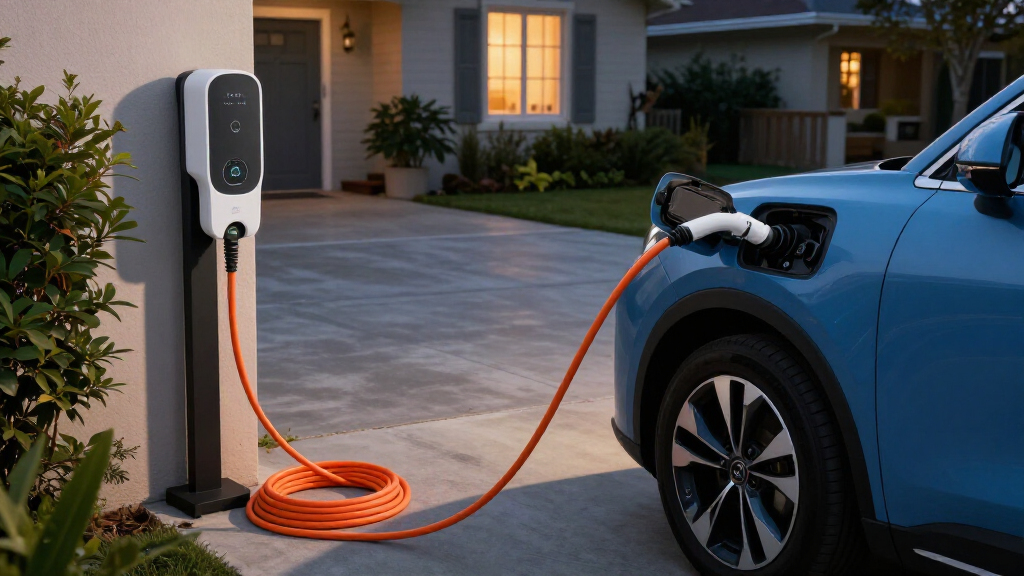
How We Picked
I evaluated each cable against five criteria, weighted in this order: electrical capacity relative to typical home chargers, connector compatibility, length practicality, weather and durability ratings, and overall value. A cable that cannot carry the full output of a modern 40–48A Level 2 charger is fundamentally limiting, so 32A models ranked below their 40A and 50A counterparts unless their price or build justified the tradeoff. Length was judged against real driveway scenarios — 17 to 21 feet handles most single-car setups, while 25 to 40 feet earns its premium only when parking is far from the charger.
I also penalized missing safety context: products with IP66 or IP55 ratings and UL listings ranked above equally specced cables without documented protection, because these cords live outdoors in rain and snow. Finally, I separated true J1772/NACS extension cables from NEMA 14-50 power cords, since they solve different problems and confusing the two is the most common mistake buyers make in this category.
| EV charging extension cable | Connector | Water Resistance |
|---|---|---|
| WenStorm J1772 EV Extension Ca | SAE J1772 Male-to-Female | IP66 |
| EVDANCE EV Charger Extension C | SAE J1772 Male-to-Female | Water resistant |
| EVDANCE NACS Extension Cord fo | NACS (Tesla) | IP66 |
| SEGUMA J1772 EV Charger Extens | J1772 | IP66 |
| EVDANCE J1772 EV Charger Exten | SAE J1772 Male-to-Female | IP66 |
| VEVOR EV Charger Extension Cab | — | IP66 |
| CircleCord 50 Amp 25 Feet RV/E | — | — |
| LEFANEV 40A 20-Foot EV Charger | J1772 Male-to-Female | — |
| EV Charger Extension Cable | — | IP67 |
| SEGUMA EV Charger Extension Ca | — | IP66 |
| J1772 EV Extension Cable | — | — |
| Wissandric EV Charger Extensio | — | — |
| ELEVOCHARGE 21ft J1772 EV Exte | Male-to-Female SAE J1772 | IP55 |
| POWGRN 25 FT 50 Amp NEMA 14-50 | — | — |
| SEGUMA EV Charger Extension Ca | J1772 | — |
Factors to Consider When Choosing Best EV Charging Extension Cables
Before settling on a cable, it helps to understand how extension cables interact with your charger, your breaker, and your vehicle’s onboard limits. The right pick is less about ‘best cable’ and more about matching the cable to a system that was already designed around specific amperage and connector standards.Amperage Must Match Your Charger, Not Exceed It
The most common mistake I see is buying a 50A cable for a 32A charger, or worse, a 32A cable for a 48A charger. The cable needs to match or exceed the charger’s maximum continuous output, because the cable is the weakest link in the chain — if it rates below the charger, the charger will either throttle or, in poorly designed systems, overheat the conductor. Many EV owners discover too late that their car charges slower after adding an extension, and an undersized cable is almost always why. At the same time, paying for 50A capacity when your charger tops out at 32A buys nothing except heavier, stiffer cable that is harder to coil in a trunk. Check the label on your charging station before you shop; it lists the output in amps, and that single number narrows this entire category down to a handful of options. If you plan to upgrade to a faster charger later, buying one tier of amperage headroom now is a reasonable hedge.
Connector Type: J1772, NACS, or NEMA Is Not Interchangeable
There are two fundamentally different kinds of ‘EV extension cable’ on the market, and mixing them up wastes money. A true J1772 or NACS extension plugs between your charger’s gun and your car’s charge port, carrying the full signaling connection so charging sessions start and stop correctly. A NEMA 14-50 extension cord like the CircleCord or POWGRN extends the wall outlet to a portable charger instead — cheaper, but it leaves the charger box exposed to weather and eliminates the J1772 lock at the vehicle end. Since Tesla’s NACS connector became an industry standard in North America, connector choice also depends on your vehicle’s age: newer cars from most brands are switching to NACS, while millions of existing EVs still use J1772. Adapters exist but add resistance and failure points, so I always recommend the native connector for the car you own today. If your household has both connector types, plan for either two cables or one very good adapter.
Length: Buy for Your Worst-Case Parking, Not Your Best
Cable length should be measured against the farthest realistic parking position, including days when someone else’s car blocks the near spot. A 17- to 21-foot cable covers most single-car garages and standard driveways, but the 30- and 40-foot options in this lineup earn their price when the charger is mounted on a detached wall or when you charge two vehicles from one station. There is a real cost to overbuying length beyond price: longer cables are heavier, harder to coil, more likely to kink in cold weather, and create more tripping hazards across walkways. Voltage drop over copper at these lengths is modest at 40A and below but becomes measurable at 50A over 40 feet, marginally slowing charge times. My rule of thumb: measure the diagonal from charger cradle to charge port with the car parked at the worst angle, then add three feet for routing around the vehicle. That number, not the shelf appeal of ‘extra long,’ should drive the decision.
Weather Ratings and Where the Cable Actually Lives
An IP rating tells you how well the cable resists water ingress at the connectors, which matters more than the cable body itself since the jacket is sealed by design. IP66-rated cables like the VEVOR can tolerate direct rain and snow, while unrated cables should stay under a covered carport or in a garage. Pay attention to the coupler — the junction where the extension meets the charger’s gun — because that connection point is where moisture causes pilot-signal errors and failed sessions. Cold-climate buyers should also check the jacket material, since cheaper PVC stiffens below freezing and cracks at the connector strain reliefs after a season or two. If your setup involves draping the cable across a driveway where it sits in pooled water, spend for the higher rating. A $30 savings is not worth waking up to a car that never charged overnight.
Safety Certifications and the Risk Nobody Prices In
Virtually every cable in this category claims compliance with SAE J1772 signaling standards, but very few carry a full UL listing from a recognized testing lab — in this roundup, only the SEGUMA 50A 20FT does. An unlisted cable can still be well built, but you are trusting the manufacturer’s word rather than third-party verification, which matters for homeowner’s insurance if something goes wrong. Look for overtemperature sensors at the coupler, which cut charging if the junction heats up from a loose fit or corrosion. Also verify the plug housing locks to the vehicle port — a cable that vibrates loose overnight defeats its purpose. If you charge unattended while sleeping, I would weight certification more heavily than price. If you only occasionally top up while present, the calculus shifts toward value picks.
Storage, Handling, and Daily Annoyances
The least discussed factor is how the cable behaves when you are not using it. A 50A, 25-foot cable can weigh over ten pounds and wants a wall-mounted hook or a carrying bag — which is exactly why the ELEVOCHARGE’s included bag is a genuine convenience rather than a gimmick. Cables left coiled on the ground collect water, get run over, and invite connector corrosion, so plan the storage before the cable arrives. Connector caps are worth having for outdoor setups, and only some manufacturers include them. Weight also affects who in the household can comfortably manage charging — a stiff 40-foot cord that defeats a partner’s willingness to plug in at night is a functional failure regardless of its specs. Treat handling ergonomics as part of the purchase, not an afterthought.
Frequently Asked Questions
Will a longer extension cable slow down my EV charging?
Length itself causes only modest voltage drop at 40A and below — a 30-foot cable might cost you a few hundred watts, which is negligible overnight. The real slowdown risk comes from amperage mismatch: if your charger outputs 48A and your extension is rated 32A, the session may throttle to protect the cable or fail entirely. As long as the cable’s amp rating matches or exceeds your charger’s output, the extra length will not meaningfully affect your daily charging time. The exception is 50A charging over 40 feet, where copper resistance starts to shave real power off each session. For most buyers matching amperage correctly matters far more than minimizing length.
Can I use a NEMA 14-50 extension cord instead of a J1772 extension cable?
You can, but only if your setup uses a portable charger with a 14-50 plug, and the tradeoffs are real. A NEMA cord like the POWGRN or CircleCord extends the outlet-to-charger leg, which means the charger box itself ends up on the ground or draped somewhere exposed to weather, and you lose the locking J1772 connection at the car. Outlet-to-box connections also loosen over time, creating heat at the plug — a known fire pattern in RV and EV applications. A true J1772 extension keeps the charger box safely indoors and moves only the weather-sealed vehicle connector outside. Use the NEMA route only as a budget workaround, never as a permanent outdoor installation.
Do I need a 50A extension cable if my charger is only 40A?
Strictly, no — a 40A-rated cable will run a 40A charger safely at its full output. Buying 50A capacity buys margin: cooler connectors on hot days, tolerance for a future charger upgrade, and usually a thicker jacket that survives more abuse. The cost is price, weight, and stiffness, which some users regret for daily plugging and unplugging. If your electrical panel already has a 50A breaker and you expect to buy a faster charger within a couple of years, the headroom is a reasonable hedge. If your setup is settled, spend the difference on weather ratings or a carrying bag instead.
Are EV extension cables safe to leave outside in rain and snow?
Provided the cable carries a genuine IP rating of IP55 or higher and the coupler sits off the ground, yes — J1772 connectors are designed for outdoor wet-mate conditions within those limits. The vulnerable point is the junction between your charger’s gun and the extension’s inlet, where water pooling can interrupt the pilot signal and abort sessions. Mount or hang that connection so it faces downward and stays above ground level, and use connector caps when unplugged. Unrated cables should stay under cover regardless of what the listing implies. In freezing climates, also check that the jacket is rated for cold flexibility, or you will fight a rigid coil all winter.
Which extension should I buy for a Tesla or NACS-port vehicle?
If your car has a native NACS port, the EVDANCE NACS 50A 21FT is the purpose-built choice in this lineup, preserving the connector’s locking latch and full signaling. J1772 cables work too, but you must add a J1772-to-NACS adapter at the vehicle end, which introduces an extra connection that can collect water and drop the pilot signal in bad weather. Older Teslas using a Tesla Mobile Connector or Wall Connector have their own extension ecosystem, and generic J1772 extensions will not fit those without adapter chains I would avoid. The cleanest setup is always one cable in the connector your car actually has. Reserve adapter-based solutions for households with mixed-connector vehicles.
Conclusion
For most buyers, the EVDANCE J1772 40A 30FT is the best overall pick — its combination of reach, 40A capacity, and charger compatibility covers the widest range of home setups without paying for capacity most chargers never use. Best value goes to the VEVOR 32A 21FT, whose IP66 rating and solid build undercut pricier rivals, provided your charger tops out at 32A. On the premium end, the ELEVOCHARGE 48A with carrying bag suits owners of high-output chargers who want handling convenience to match, while the UL-listed SEGUMA 50A 20FT is the pick when third-party safety certification is non-negotiable. Beginners should start with the SEGUMA 32A 21FT — simple, affordable, and forgiving of first-time mistakes. For specific needs: Tesla and NACS owners should go straight to the EVDANCE NACS 50A, long-driveway households need the 40FT 50A cable, and portable-charger users on a budget can make do with the POWGRN NEMA 14-50. Match the cable to your charger’s amps and your car’s connector first, and everything else in this decision falls into place.
Halloween Picks
halloween
As an affiliate, we earn on qualifying purchases.