
When choosing SD cards for your dash cam, endurance is more critical than storage size. High endurance guarantees the card can handle frequent rewrites from continuous recording without failing, protecting your footage during important moments. Look for ratings like TBW or DWPD, built-in wear leveling, and durability features. These ensure your dash cam stays reliable over time. Keep studying each aspect, and you’ll gain the knowledge to pick the best card for your needs.

Get business pricing on monitors, keyboards and dev gear
- Business-only prices and quantity discounts
- Tax-exempt purchasing
- Multiple users, one account, clear invoices
Key Takeaways
- Endurance ratings like TBW and DWPD indicate how well an SD card withstands continuous rewrites, crucial for dash cams.
- High endurance SD cards reduce failure risk, ensuring consistent footage during long-term, 24/7 recording.
- Features such as wear leveling and error correction extend SD card lifespan and data integrity under continuous use.
- Durability standards like shock, water, and temperature resistance enhance SD card longevity in harsh environments.
- Regular formatting and backups help maintain SD card performance and prevent data loss over time.
high endurance SD cards for dash cam
As an affiliate, we earn on qualifying purchases.
As an affiliate, we earn on qualifying purchases.
Why Is Endurance More Important Than Storage Size for Dash Cam SD Cards?
While having ample storage might seem like the top priority for dash cam SD cards, endurance actually matters more in the long run. High endurance ensures your card withstands frequent rewrites caused by continuous video recording, especially with advanced video compression that reduces file sizes but still demands durability. A card with better endurance minimizes the risk of failure, preserving your footage during critical moments. Additionally, if you rely on cloud backup, you want a reliable SD card that won’t fail unexpectedly, preventing gaps in your recordings. Endurance directly impacts your dash cam’s performance and lifespan, making it a more essential factor than storage size alone. Investing in a high-endurance SD card guarantees consistent recording, reducing the hassle of replacements and ensuring your footage remains safe. Furthermore, memory card technology continues to evolve, offering improved durability and reliability to meet the demands of continuous recording environments. As technology advances, wear leveling algorithms help extend the lifespan of SD cards by evenly distributing rewrite cycles across the card’s memory cells. Moreover, newer error correction techniques further enhance data integrity, ensuring your footage stays intact over extended use. A focus on quality manufacturing standards also plays a crucial role in ensuring the longevity of SD cards under demanding conditions. Additionally, incorporating temperature resistance features can help SD cards perform reliably in extreme weather environments.
dash cam SD cards with wear leveling
As an affiliate, we earn on qualifying purchases.
As an affiliate, we earn on qualifying purchases.
What Does Endurance Mean in SD Cards and How Is It Rated?
Endurance ratings help you understand how long your SD card will last with continuous use in your dash cam. They are based on systems that measure write and erase cycle limits, which affect the card’s lifespan. Factors like real-world usage and environmental conditions also play a role in how long your SD card will stay reliable. Additionally, wear leveling techniques are employed to distribute write and erase cycles evenly across the card, enhancing overall durability. Implementing proper data management practices can further extend your SD card’s lifespan and performance, especially when combined with an understanding of endurance metrics that reflect the card’s durability under different conditions. Understanding creative storytelling can also help in choosing the right features and specifications to match your specific needs.
Endurance Rating Systems
Understanding what endurance means in SD cards is essential when choosing a reliable option for your dash cam. Endurance rating systems help quantify how long an SD card can sustain continuous use under real-world conditions, influencing your storage capacity and data security. Manufacturers typically use ratings like TBW (Terabytes Written) or DWPD (Drive Writes Per Day) to measure how much data you can write to the card over its lifespan. Higher ratings indicate better endurance, meaning your footage remains secure without risk of corruption or failure. These systems provide a standardized way to compare cards and ensure you select one that can handle the demands of recording constantly, protecting your data, and maintaining storage capacity over time. Understanding the specific testing methods used can help you make more informed decisions about SD card durability, especially considering the horsepower of electric dirt bikes, which reflects the power and endurance needed for demanding off-road conditions. Additionally, endurance ratings are often determined through rigorous testing that simulates extended use, giving you confidence in the card’s longevity. Moreover, standardized testing procedures enable manufacturers to evaluate SD cards consistently across different brands and models, aiding consumers in making reliable choices.
Write/Erase Cycle Limits
Write and erase cycle limits define how many times you can update data on an SD card before it begins to wear out. This directly impacts the card’s endurance, especially in dash cam use where constant recording occurs. A higher cycle limit means the card can handle more write and erase operations, ensuring longer operation without failure. While it doesn’t directly affect battery life, it influences overall reliability. Transfer speed also plays a role here; faster speeds allow you to record seamlessly, reducing stress on the card during frequent updates. Understanding these cycle limits helps you choose an SD card that can handle the continuous writing demands of a dash cam, so your footage remains safe and the card stays functional longer. Additionally, considering the card’s wear leveling technology can further enhance its lifespan by distributing write and erase cycles evenly across the memory cells, thereby improving its overall durability. Implementing error correction features can also help maintain data integrity over time, further extending the card’s usability.
Real-World Longevity Factors
Since SD card endurance directly impacts how long your footage remains accessible, it’s important to know what endurance actually measures and how it’s rated. Endurance reflects the number of write and erase cycles an SD card can handle before failure, which affects the longevity of recordings, especially with high video resolution. Factors like consistent power supply and continuous recording stress can accelerate wear. To understand this better, consider the following:
| Factor | Effect on Endurance | Practical Impact |
|---|---|---|
| Video Resolution | Higher resolution increases data | More frequent writes shorten life |
| Power Stability | Fluctuations cause data corruption | May require quality power source |
| Write Speed | Faster speeds reduce stress | Supports continuous recording |
| Usage Frequency | More frequent recording wears out | Longer trips mean faster wear |
| Temperature | Excess heat accelerates wear | Proper cooling extends life |
water and shock resistant SD cards for vehicles
As an affiliate, we earn on qualifying purchases.
As an affiliate, we earn on qualifying purchases.
How Can You Tell If Your SD Card Is Failing or Unsuitable for Continuous Recording?
If your dash cam’s SD card starts acting up, it’s a clear sign that it might be failing or unsuitable for continuous recording. You may notice corrupted video files or frequent recording stops. These issues can hinder your ability to review footage and complicate data recovery if needed. To check if the card is failing, try viewing the videos on a computer, and look for glitches or missing segments. If you attempt video editing and find the footage unreliable, that’s another warning sign. Additionally, frequent read/write errors or slow performance suggest the card is nearing failure. Regularly backing up footage and monitoring the card’s behavior can help catch issues early, preventing data loss and ensuring your dash cam functions smoothly.
SD cards with TBW or DWPD ratings
As an affiliate, we earn on qualifying purchases.
As an affiliate, we earn on qualifying purchases.
What Key Features Make an SD Card Endurance-Friendly?
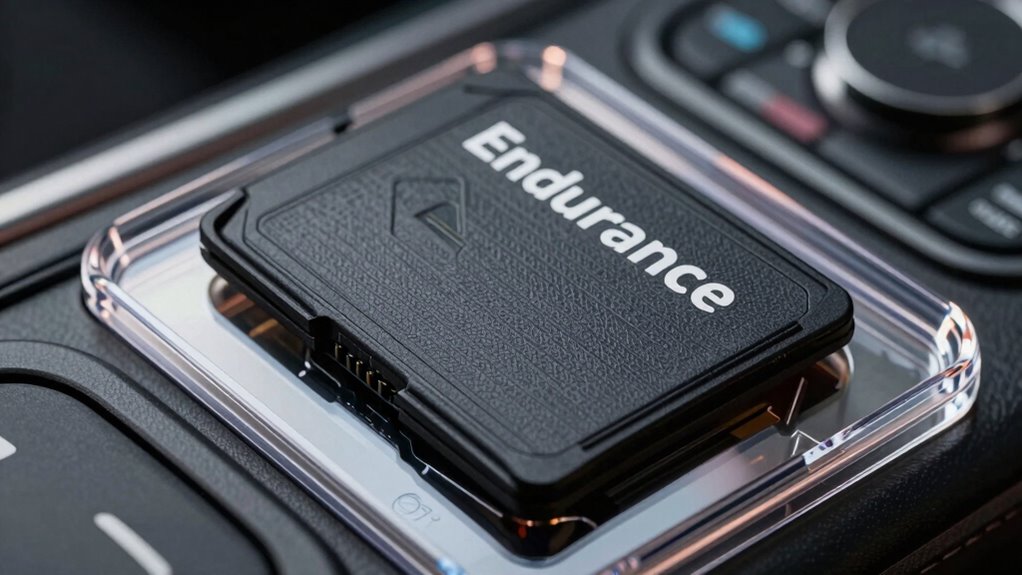
To guarantee your dash cam’s SD card lasts, look for high write cycle counts and rugged durability to handle constant use. Fast write speeds and ample buffering help prevent recording interruptions and data loss. Focusing on these features keeps your footage safe and your card working longer. Additionally, selecting cards with AI cybersecurity features can provide extra protection against data corruption or malicious threats. Ensuring the card’s endurance capabilities are sufficient for continuous recording is also crucial for reliable performance over time. Moreover, choosing cards with wear leveling technology can further extend the lifespan by evenly distributing write operations across the memory cells, which is especially important given the high write cycle demands of dash cam usage. Incorporating quality assurance standards can also ensure consistent performance and reliability in your SD card.
Write Cycles and Durability
Durability and write cycle count are essential factors when choosing an SD card for your dash cam, as they determine how well the card can handle constant recording over time. Higher write cycles mean the card can withstand repeated data writes without failing prematurely, vital for long-term reliability. Additionally, a card’s durability depends on how well it manages wear from frequent writes, which is influenced by its quality and design. Keep in mind that higher video resolution requires more data to be written, increasing wear, so an endurance-rated card is recommended. Power consumption also impacts durability, as lower power use reduces heat and stress on the card’s components. Choosing an SD card with a high endurance rating ensures your dash cam maintains performance during continuous use, even with demanding video settings. Moreover, manufacturing standards and protective features like water and shock resistance further enhance the longevity of an SD card in demanding environments. Incorporating wear leveling technology can significantly improve the lifespan by evenly distributing write and erase cycles across the memory cells. Additionally, error correction features help maintain data integrity over time, making the card more reliable for extended recording sessions.
Write Speed and Buffering
What features make an SD card truly endurance-friendly for dash cam use? High write speed is vital, especially as video resolution increases, requiring faster data transfer to prevent recording gaps. Look for cards with UHS Speed Class 3 (U3) or Video Speed Class V30 or higher, guaranteeing they handle continuous writes efficiently. Buffering capacity also matters; a larger buffer allows the card to temporarily store data, reducing the risk of dropped footage during rapid recording or power fluctuations. Additionally, lower power consumption minimizes heat generation and prolongs the card’s lifespan, maintaining consistent write performance over time. Together, high write speed, ample buffering, and efficient power use help guarantee your SD card endures daily recording demands without failure.
Which Endurance SD Cards Are the Best for Your Dash Cam?
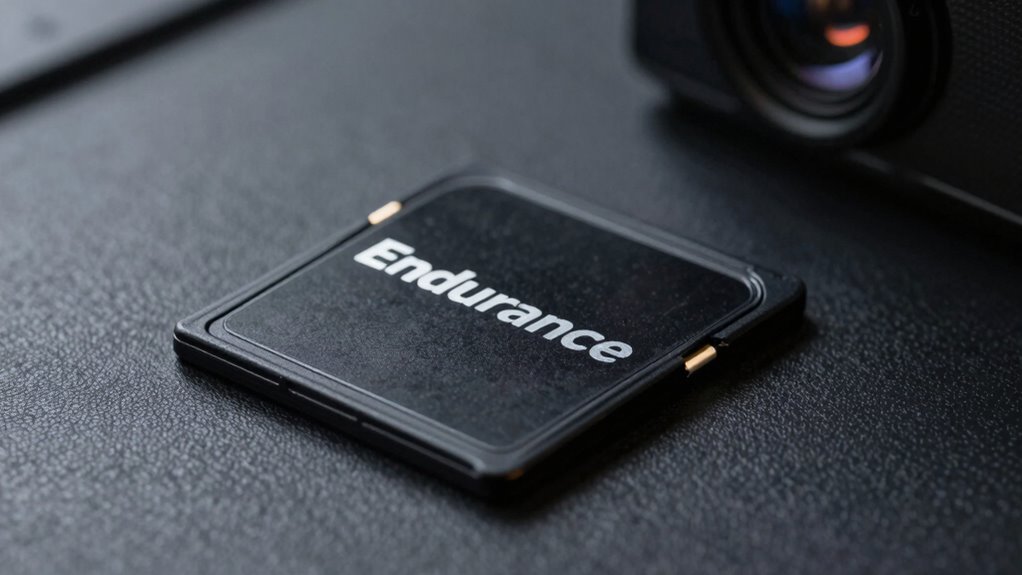
When choosing an Endurance SD card for your dash cam, it’s essential to focus on models known for their reliability and ability to handle continuous recording. Look for cards specifically designed for high video resolution, ensuring smooth footage without lag or dropouts. Brands like SanDisk, Samsung, and Kingston offer endurance cards proven to withstand constant use and extreme conditions. These cards are built to handle the demands of 24/7 recording, reducing the risk of data loss. Additionally, consider cards that support cloud backup options, so your footage remains safe even if the SD card fails. Prioritize durability, capacity, and compatibility with your dash cam to ensure consistent performance and peace of mind on every journey.
How Can You Extend Your SD Card’s Lifespan and Ensure Reliable Recording?
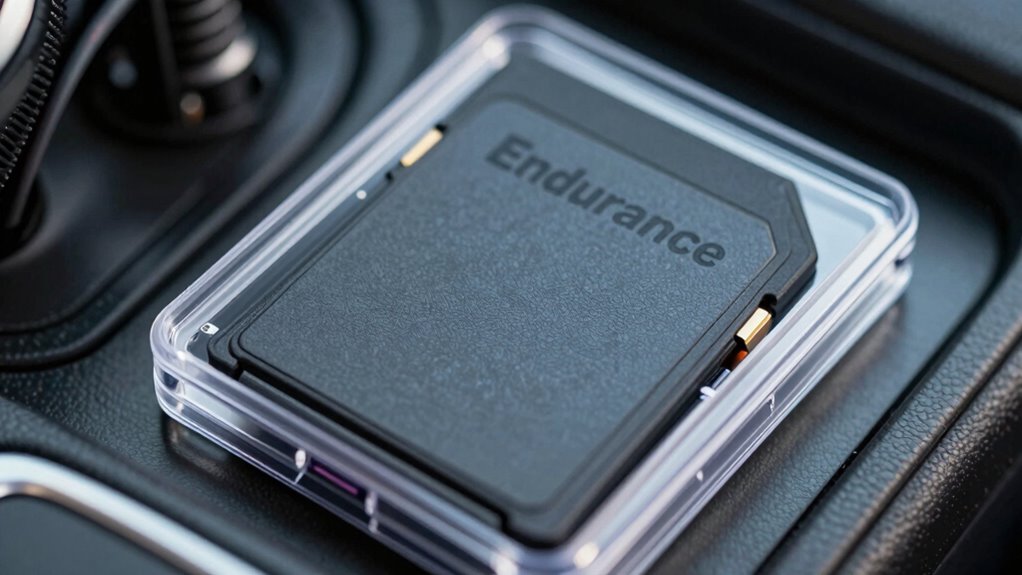
To extend your SD card’s lifespan and guarantee reliable recording, you should practice proper handling and maintenance. Regularly format the card using your dash cam’s menu to prevent corruption. Avoid removing the SD card while the camera is active to protect data integrity. Consider backing up footage to cloud storage, reducing reliance on the card and minimizing wear. Managing your dash cam’s battery life can also prevent power surges that damage the card. Keep the card away from extreme temperatures and moisture. Use the following table to visualize key ideas:
| Tip | Benefit |
|---|---|
| Format regularly | Prevents corruption |
| Backup to cloud storage | Extends card life, secures footage |
| Proper handling | Avoids physical damage |
| Manage battery life | Prevents power surges |
| Store in cool, dry place | Avoids temperature-related wear |
Frequently Asked Questions
How Does Continuous Recording Impact SD Card Lifespan?
Continuous recording can shorten your SD card’s lifespan because it causes constant writing and erasing cycles. Over time, this wear can lead to data recovery issues if the card fails. To protect your recordings, choose cards with strong endurance specs and encryption methods that safeguard your data. Regularly backing up footage also helps prevent data loss, ensuring your dash cam remains reliable even after extensive use.
Are Higher Endurance SD Cards Compatible With All Dash Cam Models?
Higher endurance SD cards are generally compatible with most dash cam models, but you should check your device’s specifications first. Keep in mind that higher video resolution recordings demand faster write speeds, so choose a card with the right class and endurance. Proper card formatting before installation helps guarantee compatibility and peak performance, especially for continuous recording. Always verify your dash cam’s recommended card types to avoid issues.
What Are the Signs of a Failing SD Card in a Dash Cam?
You’ll notice signs of a failing SD card in your dash cam if it shows data corruption, making videos unreadable or incomplete. Slow write speeds can also be a warning, causing lag or missed footage during recording. Additionally, frequent recording errors or the camera failing to save new footage indicate the card’s deteriorating condition. If you see these signs, it’s time to substitute the SD card to ensure reliable recording.
Can Temperature Affect the Endurance of SD Cards?
Extreme temperatures can definitely impact your SD card’s endurance. For example, imagine your dash cam exposed to scorching heat in summer; high storage temperature causes thermal stress, degrading memory cells faster. This can lead to data corruption or failure. Always choose SD cards rated for wide temperature ranges, and avoid leaving your dash cam in direct sunlight to prevent thermal stress, ensuring your card lasts longer and performs reliably.
How Often Should I Replace My Dash Cam SD Card for Reliability?
You should replace your dash cam SD card every 12 to 24 months for reliable storage maintenance and to prevent data recovery issues. Regularly check for signs of wear, like frequent errors or slow write speeds. Always back up important footage and consider using cards with high endurance ratings. This proactive approach guarantees your recordings stay safe and accessible, minimizing the risk of data loss or damage over time.
Conclusion
Think of your dash cam’s SD card as the steady heartbeat of your car’s safety system. Choosing an endurance-rated card is like planting roots that withstand life’s bumps and jolts, ensuring your footage stays safe through every journey. With the right card, your recordings flow smoothly, like a clear stream, even under constant use. Prioritize durability, and you’ll always have a reliable eye watching over your drives, no matter what road you take.
Halloween Picks
halloween
As an affiliate, we earn on qualifying purchases.