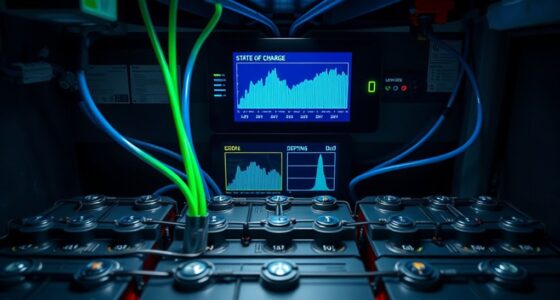
In the VW ID Buzz, regenerative braking activates when you lift off the accelerator or press the brake. It switches from traditional braking to generate electricity with the motor, capturing energy normally lost as heat. This energy is stored in the battery, extending your range and improving efficiency. It also creates smooth deceleration and less wear on brakes, making your drive more sustainable and comfortable. Keep exploring to discover how this smart system benefits your driving experience even more.
Key Takeaways
- Regenerative braking activates when pressing the brake or lifting the accelerator, converting kinetic energy into electrical energy.
- It stores recovered energy in the battery, boosting efficiency and extending the vehicle’s driving range.
- Provides smooth deceleration and enables “one-pedal drive,” improving driving comfort and fluidity.
- Manages battery health by preventing overcharging and adjusting braking based on charge levels.
- Enhances overall vehicle efficiency, reduces brake wear, and supports sustainable, smarter EV operation.
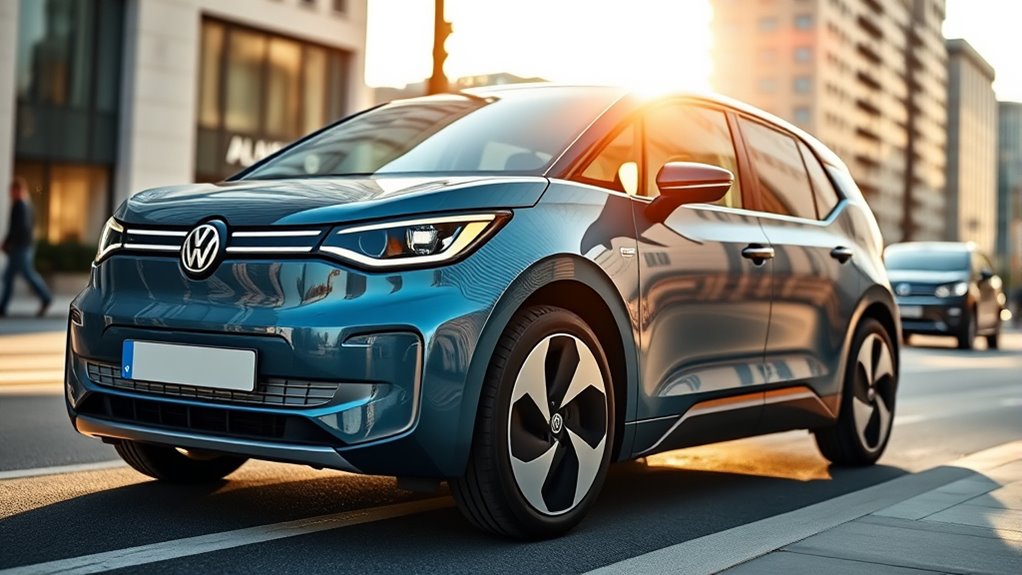
Have you ever wondered how electric vehicles recover energy during braking? In the case of the VW ID Buzz, regenerative braking plays a vital role in maximizing efficiency and enhancing your driving experience. When you press the brake pedal or lift off the accelerator, the system automatically switches from traditional friction braking to regenerative mode. Instead of wasting the energy as heat, the vehicle’s electric motor acts as a generator, converting kinetic energy into electrical energy. This recovered energy is then stored in the vehicle’s battery, boosting overall battery efficiency and extending your range. By recycling energy that would otherwise be lost, regenerative braking makes every trip more economical and sustainable.
Your driving dynamics are profoundly impacted by this system. Because regenerative braking engages smoothly and seamlessly, it creates a more fluid driving feel. As you slow down, you might notice a slight deceleration even without pressing the brake pedal, which can make city driving or stop-and-go traffic more comfortable. This system also allows you to control the level of regenerative braking through specific settings, giving you a more personalized driving experience. Some modes enable stronger regenerative effects, allowing you to “one-pedal drive” in many situations, where lifting off the accelerator alone can bring the vehicle to a gentle stop. This not only simplifies driving but also reduces wear on traditional brake components, since less friction braking is needed over time.
The efficiency of the battery is directly linked to how well the regenerative braking system works. The more effectively energy is recovered during deceleration, the less strain there is on your battery to provide power during acceleration. This balance helps maintain peak battery health and prolongs its lifespan. Plus, the system’s intelligence ensures that energy recovery is maximized without compromising safety or comfort. For example, if your battery is nearly full, the system intelligently reduces regenerative braking to prevent overcharging, ensuring your vehicle operates smoothly at all times.
In the VW ID Buzz, regenerative braking doesn’t just serve as a fuel-saving feature; it actively influences how you interact with the vehicle. It creates a more integrated driving experience that feels natural and intuitive, all while improving efficiency. By harnessing energy that would otherwise be lost, the system helps you get the most out of each charge and makes your journey more sustainable. So, whether you’re navigating city streets or cruising on the highway, understanding how regenerative braking works can help you appreciate the advanced engineering that makes your electric ride smarter, more efficient, and more enjoyable.
Being aware of the cookie categories used by the website can help you make informed choices about your privacy.
Frequently Asked Questions
How Does Regenerative Braking Affect Overall Vehicle Range?
Regenerative braking boosts your vehicle’s range by improving battery efficiency through energy recovery. When you brake or slow down, the system captures kinetic energy that would otherwise be lost as heat, converting it into electrical energy to recharge your battery. This process means you use less power during driving, extending your driving distance on a single charge. Overall, regenerative braking makes your VW ID Buzz more efficient and helps you go further each trip.
Can Regenerative Braking Be Turned off in the VW ID Buzz?
Imagine steering a boat through calm waters—you can choose to let the current guide you or paddle manually. Similarly, in the VW ID Buzz, you can turn regenerative braking off if you prefer traditional braking. This might help protect your battery’s longevity and reduce brake wear, especially if you favor consistent pedal feel. Check your vehicle settings to see if this option is available, as it varies by model and software.
How Does Regenerative Braking Differ From Traditional Braking Systems?
Regenerative braking differs from traditional brake systems by using your vehicle’s brake system to recover energy during deceleration. Instead of solely relying on friction to slow you down, it captures energy that would otherwise be lost as heat and converts it into electrical energy. This process enhances energy recovery, improves efficiency, and extends your driving range, making regenerative braking a smarter way to slow down while benefiting the environment.
What Maintenance Is Required for the Regenerative Braking System?
Think of your regenerative braking system as a finely tuned orchestra that needs regular tuning. You should check the brake fluid level and top it off if needed, ensuring smooth operation. Sensor calibration is equally important; it keeps the system responsive and accurate. Periodic inspections help catch any issues early, so your VW ID Buzz’s regenerative braking continues to work efficiently, saving energy and reducing wear on traditional brake components.
Does Regenerative Braking Impact Driver Comfort or Driving Experience?
Regenerative braking can enhance your driving experience by providing smooth deceleration, which often improves driver comfort. You might notice a slight change in how the vehicle responds, but many find it intuitive and seamless. It reduces brake wear and gives you a more efficient drive. Overall, regenerative braking positively impacts driver comfort and makes your driving experience more enjoyable without sacrificing control or responsiveness.
Conclusion
Understanding how regenerative braking works in the VW ID Buzz shows you how technology can turn stopping into saving. By recapturing energy, you’re not just extending your range—you’re helping the environment too. It’s a reminder that sometimes, slowing down and conserving can lead to moving forward more efficiently. As the saying goes, “A wise man learns when to let go,” and with regenerative braking, you’re making smarter choices that benefit both your journey and the planet.