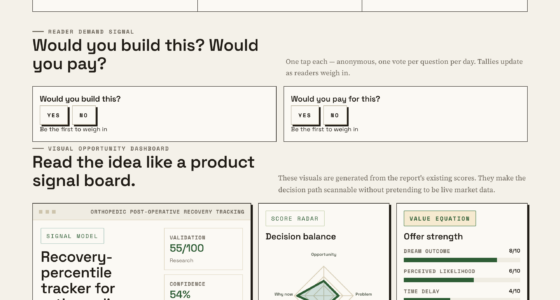
📊 Full opportunity report: The Advantages Of Cohort-Based Digital Wellness Programs on IdeaNavigator AI — validation score, market gap, and execution plan.

Get business pricing on monitors, keyboards and dev gear
- Business-only prices and quantity discounts
- Tax-exempt purchasing
- Multiple users, one account, clear invoices
TL;DR

A new approach to digital wellness involves cohort-based recovery programs for adults struggling with phone addiction. Pilot tests will evaluate effectiveness through screen-time reduction and alumni engagement, filling a gap in current market offerings.
IdeaNavigator AI reveals a new initiative to test cohort-based recovery programs aimed at adults with severe phone addiction who have previously failed app blockers. These structured, group-based programs seek to fill a market gap and leverage recent advances in digital health infrastructure to deliver measurable results.
The proposed program involves eight-week cohorts of ten adults each, with weekly facilitated sessions, daily check-ins, and personalized trigger maps designed to help participants understand and manage their phone use. The program also offers optional in-group screen-time sharing and graduates into ongoing alumni groups, creating a community of support and accountability.
This initiative responds to the market’s current shortcomings, where existing solutions are either too cheap and ineffective or too expensive and inaccessible. The $5 blockers are often overridden within days, while private coaching at $500 remains out of reach for most adults with hard phone habits. The new cohort model aims to bridge this gap with a structured, affordable alternative.
Validation will come from two paid pilot cohorts at a fee of $400 each. Success metrics include reductions in screen time at week 8 and week 16, as well as alumni group conversion rates. The program leverages recent technological developments, including screen-time APIs and digital group infrastructure, to deliver a scalable, community-based recovery process.
Potential Impact on Digital Wellness Market
This new cohort-based approach could significantly improve recovery outcomes for adults with entrenched phone habits, addressing a market segment that has been underserved by existing solutions. If successful, it could establish a scalable, community-driven model for behavioral change, reducing overuse and promoting healthier digital habits. The program’s emphasis on peer accountability and structured support aligns with emerging trends in behavioral health, potentially influencing broader digital wellness strategies and offerings.As an affiliate, we earn on qualifying purchases.
Growing Concern Over Phone Overuse and Market Gaps
Public awareness of phone overuse has increased, with concerns now reaching mainstream clinical discourse. Existing solutions include inexpensive app blockers, which are often quickly overridden, and high-cost private coaching, accessible only to a small minority. This leaves a significant portion of adults with severe habits without effective, affordable options. The development of structured, group-based recovery programs is a response to this gap, leveraging recent technological advances like screen-time APIs and digital community infrastructure to enable scalable solutions. Pilot programs are now being planned to test their efficacy and market viability.As an affiliate, we earn on qualifying purchases.
Effectiveness and Scalability of Cohort-Based Models
It is not yet clear how effective the cohort-based recovery programs will be in reducing screen time sustainably beyond the pilot period. The success of the model depends on participant engagement, the quality of facilitation, and the community dynamics. Additionally, scalability remains uncertain, particularly regarding how well these programs can be adapted to diverse populations and integrated into existing digital health infrastructure.
cohort-based digital wellness course
As an affiliate, we earn on qualifying purchases.
As an affiliate, we earn on qualifying purchases.
Upcoming Pilot Implementation and Measurement Metrics
The first step involves launching two paid pilot cohorts at a fee of $400 each. These cohorts will run over eight weeks, with success measured through changes in participants’ screen-time data at weeks 8 and 16. Post-program, tracking alumni engagement and conversion into ongoing membership groups will provide additional insights into long-term impact. Results from these pilots will inform potential broader rollout and refinement of the program structure.
peer accountability digital health
As an affiliate, we earn on qualifying purchases.
As an affiliate, we earn on qualifying purchases.
Key Questions
How does the cohort-based recovery program differ from existing solutions?
The program emphasizes structured group support, peer accountability, and personalized relapse plans, filling a gap between inexpensive blockers and private coaching, which are either ineffective or inaccessible.
What are the key components of the eight-week program?
Weekly facilitated sessions, daily check-ins, personal trigger maps, relapse plans, optional in-group screen-time sharing, and alumni groups for ongoing support.
How will success be measured in the pilot tests?
Primary metrics include reductions in screen time at weeks 8 and 16, along with alumni group conversion rates, tracked through participant data and engagement surveys.
What challenges might this model face in scaling?
Challenges include maintaining engagement, ensuring facilitator quality, adapting to diverse populations, and integrating with existing digital health infrastructure for broader reach.
When can we expect wider availability if the pilots succeed?
If pilot results are positive, scaling efforts could begin within the next year, with phased rollout depending on program refinement and infrastructure development.
Source: IdeaNavigator AI
Halloween Picks
halloween
As an affiliate, we earn on qualifying purchases.