

Choosing the right resource among today’s software testing automation tools comes down to three questions: which technology stack you test on, whether you want AI-driven capabilities, and how deep your existing QA knowledge runs. My top pick overall is Hands-On Automated Testing with Playwright, because it balances modern framework coverage, practical code, and career-relevant skills better than anything else in this lineup. Two standouts deserve early mention: Complete Guide to Test Automation for its framework-agnostic patterns that outlast any single tool, and Ultimate Selenium WebDriver for Test Automation for teams anchored to Java enterprise stacks. The biggest tradeoff you’ll face is tool-specific depth versus durable, transferable testing principles — and the growing split between traditional scripting and AI-augmented workflows. Keep reading for the full breakdown of all 14 options.

Get business pricing on monitors, keyboards and dev gear
- Business-only prices and quantity discounts
- Tax-exempt purchasing
- Multiple users, one account, clear invoices
Key Takeaways
- Playwright dominates this lineup: three dedicated titles plus AI-focused spinoffs make it the most future-proofed tool to learn in 2026, especially compared with only one dedicated Cypress book.
- Books that teach transferable architecture and design patterns consistently outvalue tool-specific tutorials once you move past your first automated suite.
- AI-assisted testing is no longer a novelty — four titles in this comparison integrate LLMs or agentic AI, but only the spec-driven approaches address the reliability problem AI-generated tests create.
- Selenium remains the right choice for Java-heavy enterprise environments, and its strongest title here covers industry-specific scenarios no Playwright book attempts.
- Career changers should start with a fundamentals-first title rather than a tool book; certification-track readers have exactly one ISTQB-aligned option in this set.
| All You Need to Know About Software Testing: From Beginner to Job-Ready QA Engineer |  | Best for Beginners | Format: Digital book (Kindle) | Category: Software testing / QA career guide | Topics covered: Manual testing, automation, API testing, Selenium, Playwright, CI/CD, AI-assisted QA | VIEW LATEST PRICE | See Our Full Breakdown |
| AI Testing with Python: Build Intelligent Test Automation Using Python, Selenium, APIs, PyTest, LLMs & AI-Powered Testing Tools |  | Best for AI-Powered Automation | Format: Digital book (Kindle) | Category: AI-powered test automation | Language: Python | VIEW LATEST PRICE | See Our Full Breakdown |
| Ultimate Web Automation Testing with Cypress: Master End-to-End Web Application Testing Automation to Accelerate Your QA Process with Cypress |  | Best Single-Tool Deep Dive | Format: Digital book (Kindle) | Category: End-to-end web test automation | Tool covered: Cypress | VIEW LATEST PRICE | See Our Full Breakdown |
| Guide to Test Automation Architecture: A Roadmap for Building Sustainable Test Automation Frameworks for Modern Software |  | Best for Framework Architecture | Format: Digital book (Kindle) | Category: Test automation architecture and design | Coverage: Framework design, best practices, architecture principles, strategy | VIEW LATEST PRICE | See Our Full Breakdown |
| Software Testing and Quality Assurance: Exploring Testing Levels, Test Tools, Automation, and Quality Metrics for Improved Software Quality |  | Best for Quality Metrics and Process | Format: Digital book (Kindle) | Category: Software testing and quality assurance | Topics covered: Testing levels, test tools, automation, quality metrics | VIEW LATEST PRICE | See Our Full Breakdown |
| Web Automation Testing Using Playwright: End-to-end, API, accessibility, and visual testing using Playwright |  | Best for Cross-Discipline Coverage | Format: Paperback / eBook (English Edition) | Primary Tool: Playwright | Topics Covered: End-to-end, API, accessibility, visual testing | VIEW LATEST PRICE | See Our Full Breakdown |
| Spec-Driven Software Testing with AI: Build Reliable Test Suites from Specifications with AI, Test Automation, TDD, API Testing, and CI/CD |  | Best for Modern AI-Driven Strategy | Format: eBook / Paperback | Primary Focus: Specification-based testing with AI | Topics Covered: AI testing, TDD, API testing, CI/CD, test automation | VIEW LATEST PRICE | See Our Full Breakdown |
| Ultimate Selenium WebDriver for Test Automation: Build and Implement Automated Web Testing Frameworks Using Java, Selenium WebDriver and Selenium Grid for E-Commerce, Healthcare, EdTech, Banking, and SaaS | 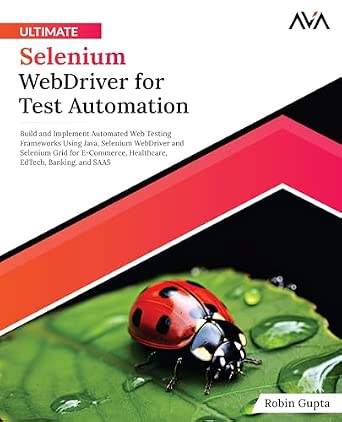 | Best for Enterprise Java Frameworks | Format: Paperback / eBook | Primary Tools: Selenium WebDriver, Selenium Grid, Java | Topics Covered: Automated web testing frameworks, distributed testing | VIEW LATEST PRICE | See Our Full Breakdown |
| Playwright Automation Testing: Complete Guide with TypeScript |  | Best for TypeScript Beginners | Format: eBook / Paperback | Primary Tools: Playwright, TypeScript | Topics Covered: Setup, best practices, advanced testing workflows | VIEW LATEST PRICE | See Our Full Breakdown |
| Hands-On Automated Testing with Playwright: Create fast, reliable, and scalable tests for modern web apps with Microsoft’s automation framework |  | Best Overall Playwright Pick | Format: Paperback / eBook | Primary Tool: Playwright (Microsoft) | Topics Covered: Automated testing, reliability, scalability for modern web apps | VIEW LATEST PRICE | See Our Full Breakdown |
| Complete Guide to Test Automation: Techniques, Practices, and Patterns for Building and Maintaining Effective Software Projects |  | Best Foundational Reference | Format: Book (print/ebook) | Topic: Test automation techniques, practices, and patterns | Coverage: Building and maintaining automated test processes | VIEW LATEST PRICE | See Our Full Breakdown |
| Intelligent Test Automation: Mastering Playwright with Agentic AI for Self-Healing, Adaptive Web Testing |  | Best for Cutting-Edge AI Testing | Format: Book (print/ebook) | Framework: Playwright | AI focus: Agentic AI, self-healing and adaptive testing | VIEW LATEST PRICE | See Our Full Breakdown |
| AI-Assisted QA and Software Testing with Claude Code |  | Best AI Workflow Integration | Format: Book (print/ebook) | AI platform: Claude Code (Anthropic) | Coverage: Unit, integration, and end-to-end testing | VIEW LATEST PRICE | See Our Full Breakdown |
| Test Automation Fundamentals: A Study Guide for the Certified Test Automation Engineer Exam, Advanced Level Specialist, ISTQB® Compliant |  | Best for Certification Prep | Format: Study guide (print/ebook) | Certification: ISTQB® Certified Test Automation Engineer | Level: Advanced Level Specialist | VIEW LATEST PRICE | See Our Full Breakdown |
| software testing automation tool | Format | Audience | Topics covered |
|---|---|---|---|
| All You Need to Know About Sof | Digital book (Kindle) | — | Manual testing, automation, API testing, Selenium, Playwright, CI/CD, AI-assisted QA |
| AI Testing with Python: Build | Digital book (Kindle) | — | — |
| Ultimate Web Automation Testin | Digital book (Kindle) | — | — |
| Guide to Test Automation Archi | Digital book (Kindle) | — | — |
| Software Testing and Quality A | Digital book (Kindle) | — | Testing levels, test tools, automation, quality metrics |
| Web Automation Testing Using P | Paperback / eBook (English Edition) | Developers and testers | End-to-end, API, accessibility, visual testing |
| Spec-Driven Software Testing w | eBook / Paperback | Intermediate to advanced engineers | AI testing, TDD, API testing, CI/CD, test automation |
| Ultimate Selenium WebDriver fo | Paperback / eBook | Java-proficient QA engineers | Automated web testing frameworks, distributed testing |
| Playwright Automation Testing: | eBook / Paperback | Beginners and experienced testers | Setup, best practices, advanced testing workflows |
| Hands-On Automated Testing wit | Paperback / eBook | Practicing developers and QA engineers | Automated testing, reliability, scalability for modern web apps |
| Complete Guide to Test Automat | Book (print/ebook) | Software developers and testers | — |
| Intelligent Test Automation: M | Book (print/ebook) | Advanced testers and developers | — |
| AI-Assisted QA and Software Te | Book (print/ebook) | QA engineers and developers | — |
| Test Automation Fundamentals: | Study guide (print/ebook) | Certification candidates and advanced specialists | — |
More Details on Our Top Picks
All You Need to Know About Software Testing: From Beginner to Job-Ready QA Engineer
This title earns its place as the starting point of the roundup because it treats testing as a career path rather than a single tool. Where Ultimate Web Automation Testing with Cypress assumes you already know what end-to-end testing means, this guide builds up from manual testing fundamentals before moving into Selenium, Playwright, CI/CD, and AI-assisted QA. That breadth is the selling point: a reader finishes with enough context to pick a specialization. The tradeoff is depth — anyone who already holds a QA role will find the early chapters familiar, and the coverage of any individual tool is lighter than in a dedicated volume like the AI Testing with Python book. Treat this as the on-ramp; the tool-specific picks below are the destinations.
Pros:- Covers the full testing spectrum from manual basics to modern automation
- Includes current-generation topics like Playwright and AI-assisted QA
- Structured around job readiness rather than a single tool
- Accessible enough for readers with no prior QA background
Cons:- Broad scope means limited depth on any one tool or framework
- No hands-on project structure or code repository mentioned
Best for: Career changers and students who want a single book to carry them from zero testing knowledge to job-ready QA fundamentals
Not ideal for: Working QA engineers who already know the fundamentals and need deep, tool-specific implementation detail
- Format:Digital book (Kindle)
- Category:Software testing / QA career guide
- Topics covered:Manual testing, automation, API testing, Selenium, Playwright, CI/CD, AI-assisted QA
- Experience level:Beginner to job-ready
- Primary tools:Selenium, Playwright
- Includes code examples:Yes, practical examples across topics
- Best suited format:Self-study or career transition
Our verdict“Buy this if you’re entering QA and want one foundation-level book before committing to a specialization.”
AI Testing with Python: Build Intelligent Test Automation Using Python, Selenium, APIs, PyTest, LLMs & AI-Powered Testing Tools
Of the AI-themed entries in this roundup — including Spec-Driven Software Testing with AI and AI-Assisted QA and Software Testing with Claude Code — this is the one built around working Python code rather than concepts. It stitches together PyTest, Selenium, API testing, and large language models into an automation framework you can actually assemble, which makes it the most practical choice for engineers who want AI woven into an existing Python stack. Compared with the beginner guide, it trades hand-holding for real engineering substance. The honest tradeoff: readers without prior Python and testing experience will struggle, and the AI landscape moves fast enough that some tool-specific chapters will age sooner than the fundamentals in the Test Automation Architecture guide.
Pros:- Combines AI tooling with a mainstream, employable Python stack
- Practical, build-along framework construction rather than theory
- Covers API and UI testing alongside AI techniques
- PyTest foundation transfers directly to real-world teams
Cons:- AI tool coverage may date quickly as the ecosystem evolves
- Steep learning curve for anyone new to Python or automation basics
Best for: Python-proficient QA engineers who want to integrate LLMs and AI tooling into a hands-on PyTest and Selenium framework
Not ideal for: Beginners without Python or prior testing experience — the code-heavy approach assumes both
- Format:Digital book (Kindle)
- Category:AI-powered test automation
- Language:Python
- Core tools:Selenium, PyTest, API frameworks, LLMs
- Experience level:Intermediate to advanced
- Approach:Hands-on framework building with code examples
- AI focus:LLM integration and AI-powered testing tools
Our verdict“The pick for developers who want AI-powered testing they can ship, not just read about.”
Ultimate Web Automation Testing with Cypress: Master End-to-End Web Application Testing Automation to Accelerate Your QA Process with Cypress
This is the roundup’s most focused pick: one tool, one job, done thoroughly. Where All You Need to Know About Software Testing gives Cypress a chapter, this volume devotes everything to end-to-end web testing — the architecture, the patterns, and the workflow habits that make Cypress genuinely fast to iterate with. Developers already committed to a JavaScript stack will get more value here than from the Playwright titles in this lineup, simply because Cypress’s runner and time-travel debugging reward deep familiarity. The flip side of that focus is rigidity: Cypress struggles with multi-tab, cross-browser edge cases, and native mobile contexts, so teams with those needs should look at Hands-On Automated Testing with Playwright instead. It’s a specialist’s book, and it behaves like one.
Pros:- Deep, single-tool coverage that goes well beyond tutorial-level content
- Focuses on accelerating real QA workflows, not just syntax
- Well matched to JavaScript-leaning development teams
- Cypress’s developer experience rewards the depth this book provides
Cons:- Locked to one tool — no transferable framework design guidance
- Doesn’t address Cypress’s known architectural limitations
Best for: Front-end developers and QA engineers on JavaScript teams who have standardized on Cypress for end-to-end testing
Not ideal for: Teams needing cross-browser breadth, multi-tab flows, or mobile testing — Cypress’s architecture limits these
- Format:Digital book (Kindle)
- Category:End-to-end web test automation
- Tool covered:Cypress
- Testing type:End-to-end web application testing
- Experience level:Intermediate
- Language ecosystem:JavaScript
- Focus:QA process acceleration and automation mastery
Our verdict“If Cypress is your team’s standard, this is the reference that makes you fluent in it.”
Guide to Test Automation Architecture: A Roadmap for Building Sustainable Test Automation Frameworks for Modern Software
Most books in this roundup teach you a tool; this one teaches you how to design around tools so they don’t rot. Its roadmap-oriented approach to sustainable framework architecture — layering, maintainability, strategy — fills the gap that tool-specific titles like Ultimate Selenium WebDriver for Test Automation leave open: those books show you the API, this one shows you the blueprint. For leads and senior engineers deciding how a suite should be structured, that perspective outlasts any framework version. Compared with Complete Guide to Test Automation, this pick leans more architectural and less technique-catalog. The cost is abstraction — there’s little copy-paste code here, so juniors expecting runnable examples will bounce off it, and it assumes you’ve already felt the pain of a brittle suite.
Pros:- Addresses framework sustainability, the most common failure point in automation
- Tool-agnostic principles that survive framework churn
- Strong fit for architects and leads making structural decisions
- Covers strategy and best practices, not just implementation mechanics
Cons:- Conceptual tone with limited runnable code examples
- Assumes prior experience with flaky, real-world test suites
Best for: QA leads and senior automation engineers designing or rescuing long-lived test frameworks at team or org scale
Not ideal for: Junior testers seeking step-by-step code — the conceptual, strategy-driven content assumes hard-won context
- Format:Digital book (Kindle)
- Category:Test automation architecture and design
- Coverage:Framework design, best practices, architecture principles, strategy
- Tool specificity:Tool-agnostic
- Experience level:Intermediate to advanced
- Focus:Sustainable, maintainable frameworks for modern software
- Includes code examples:Limited — conceptual and strategic focus
Our verdict“The blueprint book for anyone responsible for automation architecture rather than individual test scripts.”
Software Testing and Quality Assurance: Exploring Testing Levels, Test Tools, Automation, and Quality Metrics for Improved Software Quality
This pick earns its slot by covering what the others mostly skip: measurement. Its treatment of testing levels, tooling, and quality metrics makes it the strongest option here for readers who need to justify testing investment to stakeholders — a concern the Cypress and AI Testing with Python books never touch. Think of it as the process-and-accountability counterpart to the architecture guide: that one shapes how suites are built, this one shapes how quality is demonstrated. The tradeoff is that automation coverage is survey-level rather than implementational, so engineers wanting code will find it thin, and the unclear audience calibration means some chapters may read as review for experienced practitioners. For QA managers and process-focused roles, though, the metrics emphasis is genuinely differentiated.
Pros:- Rare focus on quality metrics and how to measure testing effectiveness
- Structured coverage of testing levels from unit to acceptance
- Balances tooling overview with process and governance perspective
- Useful for building stakeholder-facing quality reporting
Cons:- Automation chapters lack implementation depth
- Unclear audience calibration — parts may feel basic to seniors, dense to newcomers
Best for: QA managers and process-oriented professionals who need to define testing levels, select tools, and report quality metrics
Not ideal for: Hands-on automators seeking framework code — the automation content stays at the survey level
- Format:Digital book (Kindle)
- Category:Software testing and quality assurance
- Topics covered:Testing levels, test tools, automation, quality metrics
- Experience level:Broad — professional audience, level unspecified
- Focus:Process, measurement, and software quality improvement
- Tool specificity:Multi-tool overview
- Includes metrics guidance:Yes — dedicated quality metrics coverage
Our verdict“Choose this when your challenge is proving and managing quality, not writing the tests yourself.”
Web Automation Testing Using Playwright: End-to-end, API, accessibility, and visual testing using Playwright
Most Playwright resources stop at end-to-end flows, but this one pushes into API, accessibility, and visual testing — four disciplines under a single framework. That breadth is what earns it a spot here. Compared with Playwright Automation Testing: Complete Guide with TypeScript, which sticks to core workflow fundamentals, this option serves teams whose definition of “done” includes WCAG checks and pixel-diff reviews, not just green checkmarks. The tradeoff is depth: by spreading pages across four testing types, no single area gets exhaustive treatment, so readers chasing deep visual-testing expertise may still need supplementary material. It also assumes you already write code comfortably — there’s no ramp-up chapter for scripting basics. This pick makes the most sense for QA engineers on small teams who wear multiple hats and want one book instead of four.
Pros:- Covers four testing disciplines (end-to-end, API, accessibility, visual) in one volume
- Written for both developers and testers, bridging two audiences
- Accessibility and visual testing coverage is rare among Playwright books
- Reduces the need to buy multiple specialized titles
Cons:- Breadth comes at the cost of depth in each individual testing type
- No stated prerequisites, so beginners may struggle to gauge fit before buying
- No customer reviews available to validate quality
Best for: QA engineers and developers on small teams who need end-to-end, API, accessibility, and visual testing skills from one Playwright resource
Not ideal for: Complete beginners to programming — the book assumes prior coding comfort and skips foundational ramp-up material
- Format:Paperback / eBook (English Edition)
- Primary Tool:Playwright
- Topics Covered:End-to-end, API, accessibility, visual testing
- Audience:Developers and testers
- Skill Level:Intermediate
- Language:English
Our verdict“Buy this if one person on your team owns every layer of web testing quality and wants a single Playwright reference covering all of it.”
Spec-Driven Software Testing with AI: Build Reliable Test Suites from Specifications with AI, Test Automation, TDD, API Testing, and CI/CD
This is the most forward-looking entry in the lineup, pairing specification-based test design with AI tooling, TDD, API testing, and CI/CD pipelines. Where Ultimate Selenium WebDriver for Test Automation teaches a specific toolchain, this book is about methodology — deriving reliable test suites from specs rather than intuition — which makes it durable even as tools change. The pipeline integration chapters also give it a practical edge over theory-heavy QA titles in this roundup. The tradeoff is accessibility: the spec-plus-AI framing assumes you already understand test automation basics, so newcomers will find it dense. And with no reviews yet, you’re buying on premise rather than proven reader outcomes. This option stands out for experienced engineers retooling their test strategy for the AI era rather than learning a first framework.
Pros:- Combines spec-driven methodology with current AI tooling — rare pairing
- Covers the full delivery loop: TDD, API testing, and CI/CD integration
- Tool-agnostic principles outlast any single framework choice
- Directly addresses reliability of test suites, not just coverage
Cons:- Too technical for beginners without automation fundamentals
- No customer reviews or ratings to verify real-world value
- Less hands-on tool walkthrough than framework-specific titles
Best for: Experienced test engineers and tech leads modernizing test strategy with AI and spec-driven design integrated into CI/CD
Not ideal for: Junior testers or career-switchers — the material assumes existing automation knowledge and moves fast
- Format:eBook / Paperback
- Primary Focus:Specification-based testing with AI
- Topics Covered:AI testing, TDD, API testing, CI/CD, test automation
- Audience:Intermediate to advanced engineers
- Skill Level:Advanced
- Approach:Methodology-driven, tool-agnostic
Our verdict“Skip the beginner books and pick this one if you already automate tests and want a methodology upgrade for AI-era pipelines.”
Ultimate Selenium WebDriver for Test Automation: Build and Implement Automated Web Testing Frameworks Using Java, Selenium WebDriver and Selenium Grid for E-Commerce, Healthcare, EdTech, Banking, and SaaS
Selenium remains the lingua franca of enterprise QA, and this book doubles down on that world: Java, WebDriver, and Selenium Grid for distributed execution, illustrated through e-commerce, healthcare, EdTech, banking, and SaaS scenarios. The industry-specific framing is the differentiator — compared with Hands-On Automated Testing with Playwright, which targets modern single-page web apps, this option speaks directly to regulated, large-scale environments where Java stacks and Selenium investments already dominate. Building a reusable framework from scratch, not just scripting tests, is the core value here. The tradeoff is currency: Selenium requires more boilerplate and maintenance than Playwright or Cypress, and the Java requirement raises the barrier considerably. Teams starting fresh on greenfield JavaScript projects should look elsewhere in this roundup.
Pros:- Teaches full framework architecture, not just isolated test scripts
- Selenium Grid coverage prepares teams for parallel, distributed execution
- Industry-specific examples (banking, healthcare, e-commerce) map to real enterprise contexts
- Java focus aligns with the majority of corporate QA stacks
Cons:- Selenium demands more setup and maintenance than newer tools like Playwright
- Java proficiency is a hard prerequisite — not beginner-friendly
- No ratings or pricing data available to compare value against alternatives
Best for: QA engineers in Java-based enterprises, especially fintech, healthcare, and SaaS shops, who must build scalable Selenium frameworks
Not ideal for: JavaScript-first startups or greenfield projects — Playwright or Cypress titles in this lineup deliver faster results with less boilerplate
- Format:Paperback / eBook
- Primary Tools:Selenium WebDriver, Selenium Grid, Java
- Topics Covered:Automated web testing frameworks, distributed testing
- Industry Examples:E-commerce, healthcare, EdTech, banking, SaaS
- Audience:Java-proficient QA engineers
- Skill Level:Intermediate to advanced
Our verdict“This is the pick for enterprise Java teams locked into Selenium who need a serious framework-building reference, not a quick-start guide.”
Playwright Automation Testing: Complete Guide with TypeScript
Among the three Playwright books in this roundup, this one carves out the gentlest entry path. Where Web Automation Testing Using Playwright races through four testing disciplines and Hands-On Automated Testing with Playwright leans toward scalable production suites, this guide walks through setup, best practices, and progressive techniques with TypeScript as the backbone. That language choice matters: TypeScript catches errors before runtime, which quietly teaches better test discipline while you learn. The structure — from installation to advanced workflows — suits readers who want a linear path rather than a reference to dip into. The compromise is ambition: it won’t carry you into accessibility or visual testing territory like the multi-discipline title, and complete non-programmers may still stumble on type annotations. Still, for front-end developers moving into testing, this is the smoothest on-ramp here.
Pros:- Linear structure from setup through advanced techniques suits self-paced learning
- TypeScript-first approach catches errors early and builds maintainable habits
- Explicitly pitched at both beginners and experienced testers
- Practical examples and best practices throughout, not just API documentation
Cons:- Narrower scope than multi-discipline Playwright books in this roundup
- Still assumes basic programming literacy — true non-coders will struggle
- Sparse published specifications make depth hard to verify pre-purchase
Best for: Front-end developers and junior QA engineers with basic JavaScript who want a structured, TypeScript-first introduction to Playwright
Not ideal for: Teams needing specialized coverage like accessibility or visual testing — this stays focused on core automation fundamentals
- Format:eBook / Paperback
- Primary Tools:Playwright, TypeScript
- Topics Covered:Setup, best practices, advanced testing workflows
- Audience:Beginners and experienced testers
- Skill Level:Beginner to intermediate
- Language:TypeScript
Our verdict“Choose this as your first Playwright book if you know some JavaScript and want a clear, TypeScript-based path from zero to competent.”
Hands-On Automated Testing with Playwright: Create fast, reliable, and scalable tests for modern web apps with Microsoft’s automation framework
If the roundup crowns one Playwright book, this is it. The promise of fast, reliable, and scalable tests targets the actual pain point of test automation — flaky suites that erode trust — rather than just teaching syntax. Compared with Playwright Automation Testing: Complete Guide with TypeScript, which excels as an on-ramp, this title goes further into scalability and reliability engineering: keeping large suites maintainable as an app grows. Its Microsoft-framework pedigree also means the guidance reflects how Playwright is maintained in production toolchains. The tradeoff is the floor: with no stated prerequisites and an emphasis on building serious test infrastructure, absolute beginners may find early chapters steep — the TypeScript guide or a fundamentals title in this lineup would be a better first step. For working engineers who already test manually or with older tools, this is the upgrade path.
Pros:- Centers on reliability and scalability, the hardest parts of real test automation
- Backed by Microsoft’s framework ecosystem with production-oriented guidance
- Focused specifically on modern web app architectures
- Balanced depth without sprawling across unrelated testing disciplines
Cons:- Content skews advanced; early chapters can overwhelm newcomers
- No stated prerequisites make it hard to judge fit before committing
- Playwright-only scope limits value for teams on Selenium or Cypress stacks
Best for: Working QA engineers and developers scaling Playwright suites for production modern web apps where reliability matters more than syntax lessons
Not ideal for: First-time automators — the reliability-and-scale focus assumes comfort with code and testing concepts from the start
- Format:Paperback / eBook
- Primary Tool:Playwright (Microsoft)
- Topics Covered:Automated testing, reliability, scalability for modern web apps
- Audience:Practicing developers and QA engineers
- Skill Level:Intermediate
- Focus:Production-grade test suites
Our verdict“For engineers who already know how to test and want Playwright suites that stay fast and trustworthy at scale, this is the strongest all-around choice.”
Complete Guide to Test Automation: Techniques, Practices, and Patterns for Building and Maintaining Effective Software Projects
This title earns its spot as the anchor reference of the roundup because it treats test automation as an engineering discipline rather than a tool tutorial. While options like Ultimate Selenium WebDriver for Test Automation teach you one framework, this book focuses on the patterns and practices that survive tool churn — maintainability, design of test suites, and long-term sustainability. Compared with Intelligent Test Automation: Mastering Playwright with Agentic AI, it is deliberately tool-agnostic, which makes it a better companion volume than a standalone how-to. The tradeoff is real: readers who want copy-paste code for a specific stack will find it too abstract, and its lack of a stated skill level means beginners may need to pair it with something more hands-on. Still, for building judgment, nothing else in this lineup goes as deep.
Pros:- In-depth coverage of test automation techniques and patterns
- Practical strategies for maintaining suites long after they are written
- Framework-agnostic, so the knowledge outlives any single tool
- Useful to both developers and dedicated testers
Cons:- No stated edition, publication details, or target skill level
- Too abstract for readers who want tool-specific, hands-on exercises
Best for: Engineers and QA leads who already know a tool and want durable, framework-agnostic automation strategy
Not ideal for: Beginners seeking step-by-step framework tutorials with runnable code examples
- Format:Book (print/ebook)
- Topic:Test automation techniques, practices, and patterns
- Coverage:Building and maintaining automated test processes
- Tool focus:Tool-agnostic methodology
- Audience:Software developers and testers
- Skill level:Not specified; intermediate assumed
Our verdict“Buy this if you want the strategic depth to design automation that lasts, and skip it if you need a first tutorial.”
Intelligent Test Automation: Mastering Playwright with Agentic AI for Self-Healing, Adaptive Web Testing
Of all the AI-flavored entries in this roundup — and there are several, including AI Testing with Python and Spec-Driven Software Testing with AI — this one is the most forward-leaning. It pairs Playwright, arguably the most capable modern web automation framework, with agentic AI techniques for self-healing tests, meaning suites that adapt when UI selectors change instead of breaking. Compared with Hands-On Automated Testing with Playwright, which covers the framework conventionally, this book pushes into territory most teams have not yet adopted. That ambition is also its limitation: bleeding-edge patterns evolve fast, content can date quickly, and there is little hand-holding. Readers comfortable with advanced concepts will get genuinely differentiated material; anyone still learning Playwright basics should start with a conventional guide first and treat this as a second-stage investment.
Pros:- Combines Playwright mastery with agentic AI techniques in one place
- Self-healing test strategies directly reduce maintenance overhead
- Adaptive testing content is genuinely hard to find elsewhere
- Well matched to advanced practitioners pushing modern practices
Cons:- Fast-moving subject matter risks content aging quickly
- Steep technical demands make it inaccessible to beginners
- Sparse supporting details beyond methodology discussion
Best for: Senior testers and automation engineers experimenting with AI-augmented, resilient test suites
Not ideal for: Playwright newcomers — the book assumes you already know the framework and core testing concepts
- Format:Book (print/ebook)
- Framework:Playwright
- AI focus:Agentic AI, self-healing and adaptive testing
- Testing type:Web application automation
- Audience:Advanced testers and developers
- Prerequisites:Solid grounding in web automation fundamentals
Our verdict“This pick makes the most sense for experienced automation engineers who want to be early on self-healing AI testing rather than wait for it to become standard.”
AI-Assisted QA and Software Testing with Claude Code
Where Intelligent Test Automation teaches you to build AI into your test architecture, this title takes the opposite and arguably more practical path: it shows how to put an agentic coding assistant to work across your entire QA workflow. Coverage spans unit, integration, and end-to-end testing, which makes it broader in scope than single-framework books like Ultimate Web Automation Testing with Cypress. The appeal is efficiency — AI-accelerated test generation and execution across the pyramid, not just the UI layer. The tradeoffs deserve attention: the tooling landscape around Claude Code is young, detailed specifications are thin, and a learning curve around prompting and agentic workflows will slow teams expecting instant productivity. It also assumes you already understand what good tests look like; the AI amplifies your process rather than replacing judgment. For pragmatic adopters, though, it is the most immediately applicable AI entry here.
Pros:- Covers unit, integration, and end-to-end testing in one workflow
- Focused on a single widely used AI assistant rather than vague theory
- Directly targets testing efficiency and accuracy gains
- More immediately practical than architecture-first alternatives
Cons:- Limited detailed documentation of features and requirements
- Real learning curve for users new to agentic AI workflows
- Dependence on a commercial AI tool introduces cost and change risk
Best for: QA engineers and developers wanting to fold an AI coding assistant into daily testing workflows
Not ideal for: Teams with strict vendor-locked toolchains or those uncomfortable depending on a commercial AI service
- Format:Book (print/ebook)
- AI platform:Claude Code (Anthropic)
- Coverage:Unit, integration, and end-to-end testing
- Focus:AI-assisted test automation workflows
- Audience:QA engineers and developers
- Prerequisites:Basic software testing knowledge; comfort with AI tooling
Our verdict“Choose this if you want hands-on guidance on making an AI assistant part of your everyday QA process rather than building AI systems yourself.”
Test Automation Fundamentals: A Study Guide for the Certified Test Automation Engineer Exam, Advanced Level Specialist, ISTQB® Compliant
Every other entry in this roundup teaches skills; this one also certifies them. Structured around the ISTQB® Certified Test Automation Engineer syllabus at the advanced specialist level, it maps to a recognized credential that hiring managers actually screen for — something no general book like All You Need to Know About Software Testing can claim. The exam-aligned structure means terminology, taxonomy, and depth match the certification body’s expectations exactly, which is a genuine advantage for career-driven readers. The cost of that alignment is focus: it reads as a study guide, not a practitioner’s manual, so it will not teach you to build a Playwright or Selenium framework the way hands-on titles do. Beginners will find it dense and jargon-heavy. For professionals targeting the credential or needing a standardized vocabulary across a large QA organization, it is the only fitting option in this lineup.
Pros:- Directly aligned with the ISTQB® CTAE advanced-level exam
- Standardized vocabulary useful across enterprise QA teams
- Thorough coverage of automation fundamentals from a certification perspective
- Credible career credentialing path for specialists
Cons:- Exam-oriented structure limits hands-on, framework-building practice
- Dense and technical for readers without prior testing background
Best for: Experienced QA professionals preparing for the ISTQB® CTAE advanced-level certification exam
Not ideal for: Self-taught learners who want practical framework-building skills without certification goals
- Format:Study guide (print/ebook)
- Certification:ISTQB® Certified Test Automation Engineer
- Level:Advanced Level Specialist
- Compliance:ISTQB® compliant syllabus mapping
- Audience:Certification candidates and advanced specialists
- Focus:Test automation fundamentals and exam preparation
Our verdict“If passing the ISTQB® CTAE exam is the goal, this study guide is the clear pick; skip it if you want a build-along tutorial instead.”

How We Picked
I evaluated each title against five buyer-relevant criteria. Practical applicability carried the most weight: does the reader finish with working test suites, or just theory? I then scored technology relevance — how current the tool coverage is, and whether demand for that skill is rising or fading. Audience fit mattered too, because a career-switcher and a senior QA architect need entirely different books, even on the same tool. Finally, I weighed depth of coverage (does it go beyond basics into CI/CD, visual testing, and architecture?) and longevity — whether the lessons survive the next framework version.
The ranking order reflects a simple philosophy: books that teach durable skills rank above pure tool tutorials, and tools with strong market momentum rank above legacy options. That’s why a Playwright title sits at the top while a broader QA survey book, however solid, lands lower — it tells you about testing but doesn’t make you an automation engineer. Where two books cover the same tool, I favored the one with more modern practices and clearer buyer outcomes.
| software testing automation tool | Format |
|---|---|
| All You Need to Know About Sof | Digital book (Kindle) |
| AI Testing with Python: Build | Digital book (Kindle) |
| Ultimate Web Automation Testin | Digital book (Kindle) |
| Guide to Test Automation Archi | Digital book (Kindle) |
| Software Testing and Quality A | Digital book (Kindle) |
| Web Automation Testing Using P | Paperback / eBook (English Edition) |
| Spec-Driven Software Testing w | eBook / Paperback |
| Ultimate Selenium WebDriver fo | Paperback / eBook |
| Playwright Automation Testing: | eBook / Paperback |
| Hands-On Automated Testing wit | Paperback / eBook |
| Complete Guide to Test Automat | Book (print/ebook) |
| Intelligent Test Automation: M | Book (print/ebook) |
| AI-Assisted QA and Software Te | Book (print/ebook) |
| Test Automation Fundamentals: | Study guide (print/ebook) |
Factors to Consider When Choosing Software Testing Automation Tools
Before committing to any single title, step back and think about how you’ll actually use it. The right choice depends less on which tool is ‘best’ and more on your stack, your career stage, and how long you need the knowledge to stay relevant.Match the Tool to Your Tech Stack, Not the Hype Cycle
The single most common mistake buyers make is picking a book based on which tool is loudest on tech blogs rather than what their team actually ships with. If your employer runs Java microservices, a Selenium WebDriver book in Java will pay off immediately, and a TypeScript-based Playwright guide will sit unread. Conversely, greenfield web teams are overwhelmingly standardizing on Playwright, and Cypress remains entrenched in JavaScript-first shops that adopted it years ago. Before buying, check your job postings and your codebase — the tool already in your pipeline is usually the right one to master. Framework loyalty also affects hiring: Selenium experience transfers across languages, while Cypress and Playwright skills are strongest in specific JS ecosystems. Buy for the job you have or the job you can verify exists in your market.
Decide How Much AI You Actually Want
Four titles in this space now bake AI into the curriculum, but they do it at very different levels, and buyers routinely overestimate how much they need. If you can’t yet write a stable selector or structure a test suite, an AI-powered testing book will teach you to automate badly at higher speed. The right sequence for most people is fundamentals first, then a framework book, then AI augmentation once you understand what the AI is actually generating. That said, senior engineers should not skip this category: self-healing tests and spec-driven generation are genuinely changing maintenance economics, and being early here is a career advantage. The tradeoff is volatility — AI tooling changes every few months, so these books age faster than pattern-based ones. If you buy an AI testing book, plan to treat it as a two-year asset, not a shelf reference.
Tool Books Age — Architecture Books Compound
Every tool-specific tutorial carries an expiration date tied to framework versions, deprecations, and API changes. Books on test automation architecture, design patterns, and maintenance strategy hold value far longer because the problems they solve — flaky tests, brittle locators, unmanageable suite runtimes — never disappear. A smart approach is pairing one deep tool book with one architecture book; together they cover the ‘how’ and the ‘why’ that tool documentation never addresses. Buyers on a budget should prioritize the architecture title if they already know any framework, because the official docs can fill tool gaps for free. The reverse rarely works: docs will not teach you how to design a sustainable framework. This is also why framework-agnostic guides rank highly in this comparison despite covering less surface area.
Language Matters More Than Buyers Expect
Automation books are effectively programming books in disguise, and the language choice shapes everything: setup friction, CI integration, and which employers will value your skills. Python-based titles are the friendliest entry point for testers without a development background, and they open doors to the AI testing ecosystem. Java titles demand more upfront investment but remain the currency of banking, insurance, and healthcare QA teams. TypeScript is where modern web automation hiring is concentrated, though it assumes some JavaScript comfort. A common mistake is buying a book in a language you’ve never written — the testing concepts get lost in syntax struggles. If you’re learning both a language and automation at once, choose the language your target employers list, not the one the most popular book happens to use.
Certification Track or Practitioner Track
Some buyers need a credential; others need working code by Friday, and confusing the two paths wastes money. ISTQB-aligned study guides are structured for exam vocabulary, syllabus coverage, and mock questions — practical but dry, and weak on hands-on framework building. Practitioner books invert that: rich code, real scenarios, and no exam alignment whatsoever. European and Asian job markets still weight ISTQB certification heavily, so if you’re job-hunting there, the certification guide is not optional. Everywhere else, portfolios of working automation projects carry more interview weight than any certificate. Be honest about what your next employer is screening for before choosing a track, because no single book in this category serves both well.
Watch for Scope Creep in ‘Complete’ Titles
Books promising to cover everything — testing levels, tools, metrics, automation, quality processes — necessarily cover each topic thinly. For readers who want a survey of the QA landscape, that breadth is exactly right. For readers who specifically want automation skills, these broad titles deliver perhaps three useful chapters out of twenty. Read the table of contents before buying and count the pages actually devoted to writing automated tests versus describing them. The pattern across this comparison was consistent: the narrower the scope, the deeper and more actionable the content. One exception worth noting is when breadth is the point — managers and career changers genuinely benefit from a landscape view before committing to a specialty.
Frequently Asked Questions
Should I learn Playwright or Selenium in 2026?
For new learners targeting web application testing, Playwright is the stronger bet: it’s where hiring momentum is, and three dedicated books in this comparison reflect that demand. Selenium still wins in two situations — enterprise Java environments, where it’s deeply embedded in existing frameworks, and cross-language teams that need bindings beyond JavaScript, Python, and Java’s mainstream options. Selenium skills also transfer more broadly because the WebDriver concepts underpin Playwright too. If you already know one, learn the other second rather than switching; the concepts overlap heavily and the second framework takes a fraction of the time. The wrong move is agonizing over the choice — automation fundamentals matter far more than the framework logo on your résumé.
Do I need to know how to code before buying one of these books?
It depends on the title, and this is where buyers most often go wrong. Tool-focused books like the Selenium WebDriver and Playwright guides assume working programming knowledge — they teach automation, not variables and loops. Python-based titles are the gentlest on-ramp because Python itself reads almost like pseudocode, and the AI testing with Python book doubles as reasonably practical coding exposure. If you’ve never written code, start with the beginner-to-job-ready title that builds foundations before automation, then move to a framework book. Attempting a TypeScript or Java automation book without prior programming experience usually ends in an abandoned purchase within two chapters.
Are AI-powered testing books worth it, or just hype?
Worth it — with clear conditions. The AI titles that focus on concrete applications, like self-healing selectors, spec-driven test generation, and LLM-assisted test writing, teach skills that are already appearing in job requirements. The hype risk is real for books that treat AI as a buzzword bolted onto conventional content, so check whether the AI is central to the exercises or just mentioned in the marketing. The other honest caveat is volatility: AI tooling shifts fast enough that specific tool instructions can date within a year. The best-positioned buyers are engineers who already build test suites and want to cut maintenance costs — if that’s you, the spec-driven and agentic AI titles are legitimate investments rather than gambles.
Can one book cover web, API, and mobile automation well?
Rarely, and buyers should be skeptical of the promise. Web UI automation, API testing, and mobile testing use different tools, different strategies, and different failure modes, so most ‘complete’ books give you one solid layer and two shallow ones. The strongest multi-layer coverage in this comparison comes from the Playwright titles, which handle web UI, API, accessibility, and visual testing in one framework — that works because a single tool genuinely spans those layers. Mobile automation, by contrast, isn’t well served by any book here, and buyers needing Appium or mobile-first coverage should look outside this list. A smarter strategy is mastering web plus API in one framework first, then adding mobile with a dedicated resource later.
Is an ISTQB certification book worth buying if I just want practical automation skills?
Not as your primary resource — the two goals need different books. ISTQB-aligned study guides optimize for exam vocabulary, structured syllabus coverage, and theory recall, which is useful for passing a certification but produces little working code. Practitioner books do the opposite: you’ll build real suites but learn nothing about the exam’s formal terminology. Where the certification guide earns its price is in markets and employers that explicitly screen for ISTQB credentials, which is still common in Europe and parts of Asia. A practical compromise many readers take: buy the hands-on book for skills, then add the study guide only when a specific job posting requires the certificate. Buying the certification guide first, hoping it teaches automation, is the most common regret in this category.
Conclusion
After comparing all 14 titles, the right pick maps cleanly to buyer type. Best overall goes to Hands-On Automated Testing with Playwright — it delivers the most marketable skill set with the depth to back it up. Best value is Playwright Automation Testing: Complete Guide with TypeScript, which covers a nearly identical scope for learners already comfortable in TypeScript. Best premium pick is Spec-Driven Software Testing with AI, the strongest choice for senior engineers investing in the AI-driven direction of the field. Best for beginners is All You Need to Know About Software Testing, the only title here that properly builds foundations before asking you to automate anything. For specific needs: Java enterprise teams should grab the Ultimate Selenium WebDriver title, architecture-minded leads will get the most from the Complete Guide to Test Automation, and certification candidates have exactly one ISTQB-aligned option in Test Automation Fundamentals. Whatever you choose, pair one tool-specific book with one pattern-based book and your skills will outlast any framework.
Halloween Picks
halloween
As an affiliate, we earn on qualifying purchases.