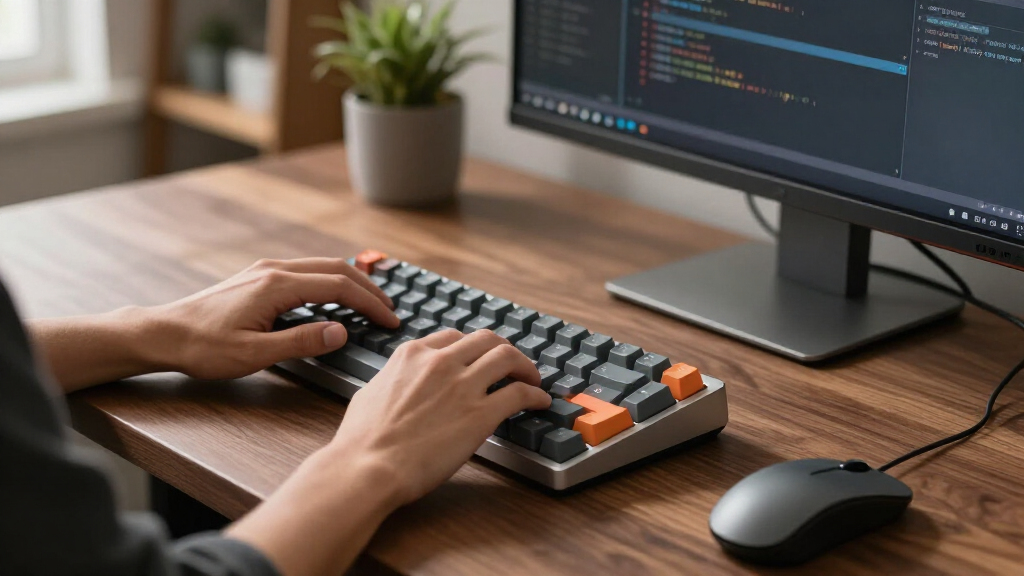

Mechanical keyboards for programmers vary most in layout, switch feel, connectivity, and how much control they offer over key behavior. My best overall pick is the Keychron V6 8K, which combines a full-size layout, hot-swappable switches, and programmable controls for a flexible desk setup. The ASUS ROG Strix Scope II 96 Wireless is a strong space-saving alternative, while the CHERRY KC 200 MX suits shared workspaces where quieter typing matters. The main tradeoff is between compactness and dedicated keys, with wireless convenience and customization adding more choices. Read on for the full comparison, including which options suit different programming habits and desk setups.

Get business pricing on monitors, keyboards and dev gear
- Business-only prices and quantity discounts
- Tax-exempt purchasing
- Multiple users, one account, clear invoices
Key Takeaways
The Keychron V6 8K leads for flexibility: its full-size layout, hot-swap support, and programmable knob serve programmers who want room to customize without giving up a number pad.
The ASUS ROG Strix Scope II 96 Wireless saves desk space while retaining many full-size functions, making it a more compact alternative to the V6 and conventional 104-key boards.
Quiet typing calls for a different shortlist: the CHERRY KC 200 MX uses Silent Red switches, while clicky models such as the Logitech G PRO are a poor fit for noise-sensitive shared rooms.
Hot-swap support matters more for switch experimentation than RGB: the Keychron V6 and Redragon K668 let buyers change switches more readily than fixed-switch office-focused options.
Layout and connection choices define the main tradeoffs: full-size boards preserve dedicated keys, compact options free desk space, and wireless models reduce cable clutter but add charging and connection decisions.
| Logitech G PRO Mechanical Tenkeyless Gaming Keyboard, GX Blue Clicky Switches, Black |  | Best Tenkeyless for Clicky Typing | Layout: Tenkeyless QWERTY, 90 keys | Switches: GX Blue clicky | Connectivity: Wired | VIEW LATEST PRICE | See Our Full Breakdown |
| Newmen GM325 Pro Full-Size Mechanical Gaming Keyboard with Linear Red Switches |  | Best Value-Style Full-Size Linear Pick | Layout: 104 keys; listing identifies QWERTY in the title and AZERTY in specifications | Switches: Linear red | Connectivity: Wired USB-C | VIEW LATEST PRICE | See Our Full Breakdown |
| ASUS ROG Strix Scope II 96 Wireless Mechanical Gaming Keyboard |  | Best Compact Wireless Board with a Number Pad | Layout: 96%, 96 keys; QWERTZ | Switches: Hot-swappable; description lists ROG NX Snow linear, specifications list ROG RX Red optical | Connectivity: Bluetooth, 2.4GHz wireless, and USB wired | VIEW LATEST PRICE | See Our Full Breakdown |
| Redragon K580 VATA Wired RGB Mechanical Gaming Keyboard |  | Best for Onboard Macros and Media Controls | Layout: QWERTY, 104 keys | Switches: Hot-swappable clicky Outemu Blue | Connectivity: Wired USB-C | VIEW LATEST PRICE | See Our Full Breakdown |
| Keychron V6 8K Full-Size Wired Mechanical Keyboard with Programmable Knob, RGB Backlighting, Hot-Swappable Brown Switches |  | Best for Programmable Customization | Layout: Full-size QWERTY, 104 keys | Switches: Tactile brown | Connectivity: Wired USB-C | VIEW LATEST PRICE | See Our Full Breakdown |
| Keychron C2 Full-Size Wired Mechanical Keyboard with Brown Switches, Retro Color |  | Best for a Straightforward Full-Size Mac and Windows Setup | Layout: Full-size QWERTY, 104 keys | Switches: Tactile Keychron Brown | Connection: Wired USB-C | VIEW LATEST PRICE | See Our Full Breakdown |
| Logitech MX Mechanical Wireless Illuminated Keyboard, Clicky | 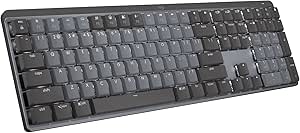 | Best for Multi-Device Wireless Work | Layout: Full-size QWERTY, 104 keys | Switches: Low-profile clicky mechanical | Connectivity: Bluetooth Low Energy, USB-C, or Logi Bolt receiver | VIEW LATEST PRICE | See Our Full Breakdown |
| CHERRY KC 200 MX Wired Mechanical Office Keyboard with Silent Red Switches |  | Best for Quiet Office Programming | Layout: American QWERTY, 104 keys | Switches: CHERRY MX2A Silent Red, linear | Connection: Wired USB-A | VIEW LATEST PRICE | See Our Full Breakdown |
| Keychron K2 HE 75% Wireless Magnetic Hall Effect Keyboard |  | Best Compact Keyboard for Programmable Actuation | Layout and keys: 75% QWERTY, 84 keys | Switches: Gateron Double-Rail Magnetic linear | Actuation: 0.2–3.8 mm range; 0.1 mm sensitivity | VIEW LATEST PRICE | See Our Full Breakdown |
| Redragon K668 108-Key Hot-Swap Wired RGB Gaming Keyboard |  | Best for Switch and Shortcut Customization | Layout and keys: QWERTY, 108 keys | Switches: Linear red | Hot-swap support: Compatible with 3-pin and 5-pin switches | VIEW LATEST PRICE | See Our Full Breakdown |
| Logitech G413 SE Full-Size Mechanical Gaming Keyboard |  | Best for a Straightforward Full-Size Setup | Layout: Full-size QWERTY, 108 keys | Connectivity: USB 2.0 wired | Switches: Tactile mechanical | VIEW LATEST PRICE | See Our Full Breakdown |
| SteelSeries Apex 5 Hybrid Mechanical Gaming Keyboard |  | Best for Clicky Feedback and On-Board Extras | Layout: 104-key AZERTY | Connectivity: USB | Switches: Hybrid Blue, tactile and clicky | VIEW LATEST PRICE | See Our Full Breakdown |
| AULA F99 Tri-Mode Wireless Mechanical Keyboard | 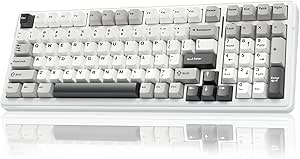 | Best for Multi-Device Wireless Setups | Layout: 96% compact, 99 keys | Connectivity: Bluetooth 5.0, 2.4 GHz wireless, USB-C wired | Multi-device support: Up to five devices | VIEW LATEST PRICE | See Our Full Breakdown |
| Redragon K556 Wired RGB Mechanical Gaming Keyboard, 104-Key Aluminum |  | Best for Switch Customization | Layout: 104 keys | Connection: Wired | Switches: Brown tactile | VIEW LATEST PRICE | See Our Full Breakdown |
| Logitech Alto Keys K98M Wireless Mechanical Keyboard, Graphite |  | Best Compact Wireless Board with a Numpad | Layout: 98-key compact 1800-style QWERTY with numpad | Connectivity: Bluetooth Low Energy and Logi Bolt USB receiver | Switches: Hot-swappable Marble mechanical switches | VIEW LATEST PRICE | See Our Full Breakdown |
| mechanical keyboards for programmer | Switches | Layout | Connectivity | Backlighting |
|---|---|---|---|---|
| Logitech G PRO Mechanical Tenk | GX Blue clicky | Tenkeyless QWERTY, 90 keys | Wired | LIGHTSYNC RGB with onboard memory |
| Newmen GM325 Pro Full-Size Mec | Linear red | 104 keys; listing identifies QWERTY in the title and AZERTY in specifications | Wired USB-C | — |
| ASUS ROG Strix Scope II 96 Wir | Hot-swappable; description lists ROG NX Snow linear, specifications list ROG RX Red optical | 96%, 96 keys; QWERTZ | Bluetooth, 2.4GHz wireless, and USB wired | Per-key RGB |
| Redragon K580 VATA Wired RGB M | Hot-swappable clicky Outemu Blue | QWERTY, 104 keys | Wired USB-C | RGB |
| Keychron V6 8K Full-Size Wired | Tactile brown | Full-size QWERTY, 104 keys | Wired USB-C | RGB with 22+ effects |
| Keychron C2 Full-Size Wired Me | Tactile Keychron Brown | Full-size QWERTY, 104 keys | — | None |
| Logitech MX Mechanical Wireles | Low-profile clicky mechanical | Full-size QWERTY, 104 keys | Bluetooth Low Energy, USB-C, or Logi Bolt receiver | Single-color smart illumination |
| CHERRY KC 200 MX Wired Mechani | CHERRY MX2A Silent Red, linear | American QWERTY, 104 keys | — | — |
| Keychron K2 HE 75% Wireless Ma | Gateron Double-Rail Magnetic linear | — | 2.4 GHz wireless, Bluetooth 5.2, or USB-C | — |
| Redragon K668 108-Key Hot-Swap | Linear red | — | — | RGB with 19 preset modes |
| Logitech G413 SE Full-Size Mec | Tactile mechanical | Full-size QWERTY, 108 keys | USB 2.0 wired | Single-color white LED |
| SteelSeries Apex 5 Hybrid Mech | Hybrid Blue, tactile and clicky | 104-key AZERTY | USB | Per-key RGB |
| AULA F99 Tri-Mode Wireless Mec | Pre-lubed linear; hot-swappable 3-pin and 5-pin | 96% compact, 99 keys | Bluetooth 5.0, 2.4 GHz wireless, USB-C wired | RGB with 16 lighting effects |
| Redragon K556 Wired RGB Mechan | Brown tactile | 104 keys | — | — |
| Logitech Alto Keys K98M Wirele | Hot-swappable Marble mechanical switches | 98-key compact 1800-style QWERTY with numpad | Bluetooth Low Energy and Logi Bolt USB receiver | Single-color white, non-RGB |
More Details on Our Top Picks
Logitech G PRO Mechanical Tenkeyless Gaming Keyboard, GX Blue Clicky Switches, Black
I’d choose the Logitech G PRO when desk space and distinct key feedback matter more than a quiet workspace. Its tenkeyless layout leaves more room for a mouse or notebook than the full-size Newmen GM325 Pro, while the GX Blue clicky switches provide an audible and tactile cue with each press. That feedback may suit programmers who like a pronounced typing rhythm, but it can distract coworkers or anyone sharing a room. LIGHTSYNC RGB patterns can be saved to onboard memory, and the detachable Micro USB cable makes the board easier to pack away. The tradeoff is a wired-only setup with an older Micro USB connector; F-key programming also depends on Logitech G HUB, and the keyboard has no water resistance. I’d skip it for quiet offices or buyers who need a number pad.
Pros:- Tenkeyless layout frees desk space compared with full-size boards such as the Newmen GM325 Pro.
- GX Blue switches deliver distinct audible and tactile feedback.
- LIGHTSYNC patterns can be saved to onboard memory.
- Detachable cable and adjustable feet support portability and a stable typing angle.
Cons:- Clicky switches can disturb nearby coworkers or household members.
- F-key programming requires Logitech G HUB software.
- Wired-only connectivity uses Micro USB, and the keyboard is not water resistant.
Best for: Programmers with limited desk space who prefer loud, tactile typing feedback and do not need a number pad.
Not ideal for: Shared offices, quiet rooms, and users who rely on a dedicated number pad or want wireless connectivity.
- Layout:Tenkeyless QWERTY, 90 keys
- Switches:GX Blue clicky
- Connectivity:Wired
- Backlighting:LIGHTSYNC RGB with onboard memory
- Cable:1.8 m detachable Micro USB
- Dimensions:14.96 × 6.3 × 1.97 in
- Compatibility:Windows 10 and PC
- Warranty:2 years
Our verdict“Choose the Logitech G PRO if you want a compact, wired board with pronounced clicky feedback and can work without a number pad.”
Newmen GM325 Pro Full-Size Mechanical Gaming Keyboard with Linear Red Switches
The Newmen GM325 Pro suits programmers who want a familiar full-size layout and smooth, linear key presses without giving up a number pad. Its 104 keys and full-key rollover offer a more conventional desktop setup than the compact Logitech G PRO, while the linear red switches avoid the pronounced clicks of that Logitech’s GX Blue switches. A metal top panel, detachable USB cable, and software for remapping and macros add flexibility for a desk-based workflow. The lighting is less customizable than the ASUS ROG Strix Scope II 96: key lighting uses preset rainbow effects, with RGB reserved for side lighting. I’d also verify the physical layout before ordering, since the listing conflicts between QWERTY and AZERTY. That ambiguity is a practical drawback for programmers who rely on familiar symbol placement.
Pros:- Full-size 104-key layout retains a dedicated number pad.
- Linear red switches provide a smooth press without clicky switch noise.
- Full-key rollover supports simultaneous key presses.
- Detachable cable and remapping software support easier setup and workflow changes.
Cons:- The listing conflicts on QWERTY versus AZERTY layout, so key placement needs verification.
- Key lighting uses preset rainbow effects rather than per-key RGB customization.
- Wired-only connectivity limits flexible desk placement.
Best for: Programmers who want a wired, full-size board with linear switches, a number pad, and software remapping.
Not ideal for: Buyers who need a confirmed QWERTY layout, wireless use, or individually customizable key lighting.
- Layout:104 keys; listing identifies QWERTY in the title and AZERTY in specifications
- Switches:Linear red
- Connectivity:Wired USB-C
- Key rollover:Full-key rollover
- Lighting:13 preset rainbow effects and RGB side lighting
- Cable:Detachable, 1.8 m
- Materials:Metal top panel and ABS keycaps
- Compatibility:Windows; laptop and PC
Our verdict“Pick the GM325 Pro if you want a straightforward full-size linear keyboard, but confirm the layout before buying.”
ASUS ROG Strix Scope II 96 Wireless Mechanical Gaming Keyboard
The ASUS ROG Strix Scope II 96 is the most flexible choice here for programmers who need a number pad but want to reclaim desk space. Its 96% layout packs 96 keys into a smaller footprint than a conventional full-size board such as the Keychron V6 8K, and it offers Bluetooth, 2.4GHz wireless, and USB connections. Hot-swappable switches, programmable keys, sound-dampening materials, and an included wrist rest make it easier to tailor the setup for long coding sessions. The stated battery life reaches up to 1,500 hours in 2.4GHz mode, though that figure is tied to that connection mode. One specification needs checking: the description names ROG NX Snow linear switches, while the specs list ROG RX Red optical switches. I’d confirm the exact switch variant before choosing it.
Pros:- 96% layout keeps a number pad while taking less space than a full-size board.
- Bluetooth, 2.4GHz wireless, and USB offer flexible connection options.
- Hot-swappable switches and programmable keys allow customization.
- Sound-dampening materials and a detachable wrist rest support a more considered desk setup.
Cons:- The switch details conflict between the description and specifications.
- The listed keyboard layout is QWERTZ, which may not suit QWERTY users.
- Not water resistant.
Best for: Programmers who want wireless flexibility, a compact footprint, and a number pad for data entry.
Not ideal for: Buyers who need an unambiguous switch specification, water resistance, or a standard QWERTY layout; this listing specifies QWERTZ.
- Layout:96%, 96 keys; QWERTZ
- Switches:Hot-swappable; description lists ROG NX Snow linear, specifications list ROG RX Red optical
- Connectivity:Bluetooth, 2.4GHz wireless, and USB wired
- Battery life:Up to 1,500 hours in 2.4GHz mode
- Backlighting:Per-key RGB
- Compatibility:PC and Mac
- Dimensions:14.84 × 5.16 × 1.57 in
- Enclosure materials:ABS and PBT
Our verdict“Choose the ASUS if you need a number pad in a smaller wireless setup, after confirming the switch type and QWERTZ layout suit you.”
Redragon K580 VATA Wired RGB Mechanical Gaming Keyboard
I’d put the Redragon K580 VATA on a programmer’s shortlist when repeatable shortcuts and desktop controls matter more than a quieter typing sound. Its five dedicated macro keys can record macros onboard, giving it a practical advantage over the Logitech G PRO, where F-key programming requires companion software. A volume roller and dedicated media controls also make common adjustments easy without leaving the keyboard. The 104-key layout retains a number pad, and hot-swappable Outemu Blue switches let owners change switches without soldering. That flexibility does not make the stock setup quiet: the clicky switches may be distracting in shared spaces. Advanced lighting effects and macro profiles also call for software, despite the onboard recording option. Compared with the tactile-brown Keychron V6 8K, the K580 leans harder into audible feedback and dedicated controls.
Pros:- Five dedicated onboard macro keys support recording without software.
- Hot-swappable switches can be changed without soldering.
- Full anti-ghosting supports simultaneous key presses.
- Dedicated media controls and a volume roller keep adjustments within reach.
Cons:- Stock Outemu Blue switches are loud and may bother nearby people.
- Advanced lighting effects and macro profiles require companion software.
- Wired-only connectivity offers less placement flexibility than the ASUS ROG Strix Scope II 96.
Best for: Programmers who use repeatable macros, want quick media controls, and prefer clicky switches on a full-size board.
Not ideal for: People working in shared or quiet rooms, or users who want advanced macro and lighting customization without companion software.
- Layout:QWERTY, 104 keys
- Switches:Hot-swappable clicky Outemu Blue
- Connectivity:Wired USB-C
- Backlighting:RGB
- Controls:Five dedicated macro keys, media controls, and volume roller
- Key rollover:Full anti-ghosting
- Keycaps and materials:Double-shot keycaps, ABS enclosure, aluminum plate
- Compatibility:Linux, macOS, and Windows
Our verdict“Choose the K580 VATA if onboard macros and direct media controls matter more to you than quiet typing.”
Keychron V6 8K Full-Size Wired Mechanical Keyboard with Programmable Knob, RGB Backlighting, Hot-Swappable Brown Switches
The Keychron V6 8K is the strongest fit for programmers who want a full-size board they can reconfigure around their workflow. Its QMK firmware and Keychron Launcher support programming, while hot-swappable sockets accept most 3-pin and 5-pin MX-style switches, so changing the feel does not require soldering. Brown switches offer tactile feedback without the sharp click of the Redragon K580 VATA’s Blue switches, a more office-friendly direction for many desks. Acoustic foam and screw-in stabilizers are intended to reduce unwanted sound and key wobble, and the 104-key layout keeps the number pad. The tradeoff is a wired-only connection and a plastic enclosure; the ASUS ROG Strix Scope II 96 is a better match if wireless use and a smaller footprint matter more than firmware flexibility.
Pros:- QMK firmware and Keychron Launcher support programmable controls.
- Hot-swappable sockets accept most 3-pin and 5-pin MX-style switches.
- Tactile brown switches avoid the pronounced click of the Redragon K580 VATA’s Blue switches.
- Acoustic foam, screw-in stabilizers, and double-shot PBT keycaps support a more considered typing setup.
Cons:- Wired-only USB-C connectivity limits flexible placement.
- Plastic enclosure lacks the metal construction some buyers may prefer.
- Full-size layout occupies more desk space than compact boards such as the ASUS ROG Strix Scope II 96.
Best for: Programmers who want QMK-based remapping, switch customization, and a full-size layout for a dedicated wired desk.
Not ideal for: People who need wireless connectivity, a compact layout, or a metal enclosure.
- Layout:Full-size QWERTY, 104 keys
- Switches:Tactile brown
- Connectivity:Wired USB-C
- Polling rate:8000 Hz
- Hot-swappable sockets:Supports most 3-pin and 5-pin MX-style switches
- Keycaps:Double-shot PBT
- Backlighting:RGB with 22+ effects
- Compatibility:macOS, Windows, and Linux
Our verdict“Choose the Keychron V6 8K if you want a programmable, hot-swappable full-size board and are happy to stay wired.”
Keychron C2 Full-Size Wired Mechanical Keyboard with Brown Switches, Retro Color
The Keychron C2 is a practical choice for programmers who want a number pad, familiar navigation keys, and a tactile typing feel without wireless or lighting features to manage. Its Brown switches provide feedback without the pronounced click of the Logitech MX Mechanical, making the C2 a more office-friendly fit for shared spaces. Mac and Windows keycaps are included, so switching operating systems does not mean living with mismatched legends. The tradeoff is a fixed wired setup and no backlighting; programmers who work in dim rooms or move between devices may prefer the Logitech’s illumination and multi-device pairing. Its ABS keycaps also feel less suited to long-term customization than the K2 HE’s PBT set. I’d choose the C2 for dependable, full-size desk use, not for portability or feature-rich control.
Pros:- Full-size 104-key layout includes a number pad and navigation cluster
- Tactile Brown switches provide feedback without clicky-switch noise
- Includes Mac and Windows keycaps for clearer OS-specific layouts
- Adjustable feet allow a choice of typing angle
Cons:- Wired USB-C connection limits placement and mobility
- No backlighting for low-light work
- ABS keycaps and lack of water resistance offer fewer durability and customization advantages
Best for: Programmers who use a number pad, switch between Mac and Windows, and prefer tactile feedback at a stationary desk.
Not ideal for: People who need wireless device switching, backlighting for dim workspaces, or water resistance.
- Layout:Full-size QWERTY, 104 keys
- Switches:Tactile Keychron Brown
- Connection:Wired USB-C
- Compatibility:macOS and Windows
- Backlighting:None
- Keycaps:ABS
- Switch lifespan:Up to 50 million keystrokes
- Dimensions and weight:17.1 × 5.1 × 1.5 in; 1.5 kg
Our verdict“Choose the C2 if you want a straightforward, tactile full-size keyboard for a Mac or Windows desk; skip it if wireless use or backlighting matters.”
Logitech MX Mechanical Wireless Illuminated Keyboard, Clicky
For programmers who split their day between a desktop, laptop, and tablet, the Logitech MX Mechanical earns its place through three-device pairing and a choice of Bluetooth, USB-C, or Logi Bolt connectivity. Its low-profile clicky switches give distinct audible feedback, unlike the quieter Brown-switch Keychron C2 or the linear CHERRY KC 200 MX. That clear click can suit someone who likes sound and confirmation with each press, but it is a poor match for shared offices or calls where keyboard noise carries. Smart illumination responds to room light and nearby hands, while the rechargeable battery trades the C2’s simple always-wired setup for charging and battery management. Some features depend on Logi Options+ software on Windows or macOS. I’d rank it ahead of wired office boards for flexible device use, but not for quiet typing.
Pros:- Pairs with up to three devices for quick workstation switching
- Bluetooth LE, USB-C, and Logi Bolt offer several connection options
- Smart backlighting adjusts to room conditions and nearby hands
- Supports Windows, macOS, Linux, Chrome OS, iOS, iPadOS, and Android
Cons:- Clicky switches can be disruptive in quiet offices and calls
- Battery needs charging, especially with backlighting enabled
- Some features require Logi Options+ on Windows or macOS
Best for: Programmers who regularly switch among up to three computers or mobile devices and want wireless connectivity with illuminated keys.
Not ideal for: People working in quiet shared offices, or anyone who wants a quiet switch, minimal software dependencies, or a permanently wired setup.
- Layout:Full-size QWERTY, 104 keys
- Switches:Low-profile clicky mechanical
- Connectivity:Bluetooth Low Energy, USB-C, or Logi Bolt receiver
- Device pairing:Up to 3 devices
- Backlighting:Single-color smart illumination
- Battery:Rechargeable 1500 mAh Li-Po; up to 15 days with backlighting or up to 10 months without
- Compatibility:Windows, macOS, Linux, Chrome OS, iOS, iPadOS, and Android
- Dimensions and weight:1.02 × 17.08 × 5.18 in; 828 g
Our verdict“Pick the MX Mechanical for wireless, multi-device programming with audible switch feedback, but choose a quieter board like the CHERRY KC 200 MX for shared spaces.”
CHERRY KC 200 MX Wired Mechanical Office Keyboard with Silent Red Switches
The CHERRY KC 200 MX suits programmers who want mechanical switches without making every keystroke a room-wide announcement. Its linear MX2A Silent Red switches are a sharper choice for quiet shared spaces than the clicky Logitech MX Mechanical, and they avoid the tactile bump of the Keychron C2’s Brown switches. Full N-key rollover and anti-ghosting help register simultaneous presses reliably, while dedicated calculator and volume keys add useful office controls without relying on software shortcuts. An aluminum plate gives the board a more substantial foundation than a basic office keyboard. The compromise is a USB-A wired connection and Windows-only compatibility in the supplied specifications; programmers using macOS or Linux should favor a model with broader listed support, such as the Keychron K2 HE. There is no wireless flexibility, but the focus here is quiet, full-size desk work.
Pros:- Quiet linear Silent Red switches suit shared workspaces
- Full N-key rollover and anti-ghosting support simultaneous inputs
- Aluminum plate and laser-etched keycaps provide a sturdy office-focused build
- Dedicated calculator and volume keys offer quick access to common controls
Cons:- Wired USB-A connection limits placement flexibility
- Windows is the only operating system listed as compatible
- Full-size layout takes more desk space than a 75% board such as the Keychron K2 HE
Best for: Windows programmers in shared offices who want a full-size keyboard with quiet linear switches and dedicated volume controls.
Not ideal for: Mac or Linux users who need explicitly listed OS support, or anyone seeking wireless connectivity or a compact layout.
- Layout:American QWERTY, 104 keys
- Switches:CHERRY MX2A Silent Red, linear
- Connection:Wired USB-A
- Plate:Aluminum
- Rollover:Full N-key rollover with anti-ghosting
- Compatibility:Windows
- Key durability:More than 50 million actuations per key
- Dimensions:16.93 × 4.76 × 1.54 in
Our verdict“Choose the KC 200 MX for quiet, full-size Windows desk work; look elsewhere if you need wireless use or specified Mac and Linux support.”
Keychron K2 HE 75% Wireless Magnetic Hall Effect Keyboard
The Keychron K2 HE is the most specialized programming pick here: its 75% layout keeps arrow and navigation keys while taking up less desk width than the full-size Keychron C2 or CHERRY KC 200 MX. Its adjustable magnetic actuation and rapid trigger let users tune key response, a level of control the other office-oriented boards in this group do not offer. That flexibility may appeal to programmers who also game, but it is more than many coding workflows need, and switch replacement is limited to compatible Gateron Double-Rail Magnetic models. Triple-mode connectivity and Linux, macOS, and Windows support make it more adaptable than the wired C2. Double-shot PBT keycaps and rosewood siding give it a distinct build, though non-shine-through legends can be hard to read in low light. It is not water resistant.
Pros:- 75% layout preserves arrow and navigation keys while saving desk width
- Adjustable magnetic actuation and rapid trigger allow fine control over key response
- 2.4 GHz, Bluetooth 5.2, and USB-C support wireless and wired setups
- Supports Linux, macOS, and Windows, with double-shot PBT keycaps
Cons:- Hot-swapping is limited to compatible Gateron Double-Rail Magnetic switches
- Non-shine-through keycap legends may be hard to see in low light
- Not water resistant
Best for: Programmers who want a smaller-than-full-size layout, work across Linux, macOS, or Windows, and value adjustable key response or gaming controls.
Not ideal for: People who want a simple office keyboard, need a number pad, expect broad magnetic-switch replacement options, or type in dim rooms.
- Layout and keys:75% QWERTY, 84 keys
- Switches:Gateron Double-Rail Magnetic linear
- Actuation:0.2–3.8 mm range; 0.1 mm sensitivity
- Connectivity:2.4 GHz wireless, Bluetooth 5.2, or USB-C
- Polling rate:1000 Hz
- Compatibility:Linux, macOS, and Windows
- Keycaps and lighting:Double-shot PBT; RGB backlighting
- Frame:Metal and wood with rosewood siding
Our verdict“Choose the K2 HE if you want a compact, highly adjustable keyboard with broad OS and connection support; skip it if a number pad or straightforward switch compatibility matters more.”
Redragon K668 108-Key Hot-Swap Wired RGB Gaming Keyboard
The Redragon K668 is a strong fit for programmers who want to customize a full-size board without soldering. Its hot-swappable 3-pin and 5-pin switches make experimenting with compatible switches easier than on the Keychron C2 or CHERRY KC 200 MX, while four dedicated shortcut keys and programmable macros can put frequent actions within reach. The 108-key layout adds those controls without giving up the number pad. RGB lighting has 19 preset modes, but the board’s Windows-listed software and wired-only connection make it less adaptable across devices than the Logitech MX Mechanical or Keychron K2 HE. Linear red switches suit smooth, direct key presses, though programmers looking for tactile confirmation may prefer the C2’s Brown switches. I’d choose this for hands-on customization, not for a quiet, software-free, or wireless setup.
Pros:- Hot-swappable sockets accept compatible 3-pin and 5-pin switches without soldering
- Four dedicated shortcut keys supplement programmable macros
- Full-size 108-key layout retains the number pad
- Includes two keycap sets, adjustable feet, and 19 RGB preset modes
Cons:- USB-C wired connection does not suit wireless setups
- Software compatibility is listed for Windows, limiting confidence for other operating systems
- Linear red switches lack the tactile bump available on the Keychron C2
Best for: Windows programmers who want to try compatible switches, assign macros, and keep a number pad and dedicated shortcuts on a full-size desk.
Not ideal for: People who need wireless connectivity, explicitly listed Mac or Linux software support, or tactile switch feedback.
- Layout and keys:QWERTY, 108 keys
- Switches:Linear red
- Hot-swap support:Compatible with 3-pin and 5-pin switches
- Connection:Wired USB-C
- Backlighting:RGB with 19 preset modes
- Compatibility:PC and laptop; Windows listed
- Included keycaps:Two sets
- Dimensions and weight:17.3 × 4.7 × 17.3 in; 880 g
Our verdict“Pick the K668 if you want a customizable, full-size Windows keyboard with hot-swap switches and shortcut controls; choose another model for wireless use or tactile typing.”
Logitech G413 SE Full-Size Mechanical Gaming Keyboard
I’d pick the Logitech G413 SE for a programmer who wants a conventional full-size board without wireless features or elaborate customization. Its tactile switches provide a noticeable response while typing, and the durable PBT keycaps suit a keyboard that may see long daily sessions. The number pad is useful for frequent numeric entry, though the 108-key layout takes more desk space than compact choices such as the Logitech Alto Keys K98M. The brushed aluminum-magnesium top case gives it a sturdier feel than a basic plastic shell, while white lighting keeps key legends visible without RGB effects. Compared with the hot-swappable Redragon K556, the G413 SE offers fewer ways to change its setup. Its appeal is simplicity, but the wired-only connection and single-color lighting are real limits.
Pros:- PBT keycaps are designed to resist wear and heat from daily typing.
- Tactile mechanical switches provide clear feedback while coding.
- Full-size layout includes a numpad and 12 function-key media controls.
- Aluminum-magnesium alloy top case adds structure to the keyboard.
Cons:- Wired USB connection offers no wireless device switching.
- Full-size footprint takes more desk space than compact layouts.
- White-only backlighting lacks per-key color customization.
Best for: Programmers who prefer a wired, full-size layout, use a numpad often, and want durable keycaps with tactile feedback.
Not ideal for: People with limited desk space, those who need wireless device switching, or programmers who want RGB customization or hot-swappable switches.
- Layout:Full-size QWERTY, 108 keys
- Connectivity:USB 2.0 wired
- Switches:Tactile mechanical
- Keycaps:PBT
- Backlighting:Single-color white LED
- Anti-ghosting:6-key rollover
- Top case:Aluminum-magnesium alloy
- Dimensions:17.13 × 1.97 × 1.43 in
Our verdict“Choose the G413 SE if you want a durable, no-frills wired board with tactile switches and a full-size numpad.”
SteelSeries Apex 5 Hybrid Mechanical Gaming Keyboard
The SteelSeries Apex 5 is the pick here for programmers who enjoy an audible, clicky keystroke and want more than basic lighting controls. Its hybrid switches combine tactile feedback with a click, which can make key presses feel distinct but may be distracting in shared offices or calls. The customizable OLED display gives this board a feature set the simpler Logitech G413 SE does not match, while per-key RGB lets users set visual cues across the layout. An aluminum frame, magnetic wrist rest, and IP32 water resistance add practical touches for a desk used throughout the day. The tradeoff is the supplied AZERTY layout, which may not fit a programmer accustomed to QWERTY or another arrangement. I’d choose it for its display and clicky character, not for a quiet workspace.
Pros:- Tactile, clicky hybrid switches offer pronounced keystroke feedback.
- Customizable OLED display adds at-a-glance information and controls.
- Per-key RGB lighting supports individualized visual layouts.
- Aluminum frame, magnetic wrist rest, and IP32 water resistance add desk-use features.
Cons:- Clicky switches can create distracting noise in shared workspaces.
- AZERTY layout may not suit programmers accustomed to QWERTY.
- Its extra display and lighting features may be unnecessary for buyers seeking a simple typing board.
Best for: Programmers who type in a clicky style, work at a personal desk, and value a customizable display and per-key lighting.
Not ideal for: People in shared offices or quiet rooms, and QWERTY users who do not want to adapt to the listed AZERTY layout.
- Layout:104-key AZERTY
- Connectivity:USB
- Switches:Hybrid Blue, tactile and clicky
- Switch durability:Rated for 20 million keypresses
- Display:Customizable OLED smart display
- Backlighting:Per-key RGB
- Frame:Aluminum alloy
- Water resistance:IP32
Our verdict“Pick the Apex 5 if you want clicky feedback and an OLED display, and your workspace can accommodate its noise and AZERTY layout.”
AULA F99 Tri-Mode Wireless Mechanical Keyboard
For a programmer moving between a desktop, laptop, and tablet, the AULA F99 offers the broadest connection flexibility in this group: Bluetooth, 2.4 GHz wireless, and USB-C, with support for up to five devices. Its 99-key compact layout keeps a number area and arrow keys while taking less room than the full-size Logitech G413 SE. Pre-lubed linear switches provide a smoother, less tactile feel than the G413 SE’s switches, and hot-swap sockets let owners change compatible switches without soldering. Double-shot PBT keycaps and an 8000 mAh battery round out a feature-rich setup. The key caveat is layout: the product data lists an AZERTY layout, so QWERTY users should confirm the arrangement suits their typing before buying. Its water-repellent description also falls short of a specified protection rating.
Pros:- Bluetooth, 2.4 GHz, and USB-C connections support varied desk setups.
- Can connect to as many as five devices.
- Compact 99-key layout retains a number area and arrow keys.
- Hot-swappable switches, double-shot PBT keycaps, and an 8000 mAh battery support customization and wireless use.
Cons:- Listed AZERTY layout may not match a programmer’s preferred key arrangement.
- Water resistance is described only as water repellent, without a stated rating.
- Linear switches offer less tactile feedback than the tactile G413 SE or Redragon K556.
Best for: Programmers who regularly switch among several compatible devices and want a compact board with a numpad, wireless options, and replaceable switches.
Not ideal for: QWERTY-dependent users who do not want an AZERTY layout, or buyers who need a clearly specified water-resistance rating.
- Layout:96% compact, 99 keys
- Connectivity:Bluetooth 5.0, 2.4 GHz wireless, USB-C wired
- Multi-device support:Up to five devices
- Switches:Pre-lubed linear; hot-swappable 3-pin and 5-pin
- Keycaps:Double-shot PBT
- Backlighting:RGB with 16 lighting effects
- Battery capacity:8000 mAh
- Water resistance:Water repellent
Our verdict“Choose the AULA F99 if multi-device wireless flexibility and a compact numpad matter more to you than a confirmed QWERTY layout.”
Redragon K556 Wired RGB Mechanical Gaming Keyboard, 104-Key Aluminum
The Redragon K556 is the strongest fit for programmers who want to adjust how their keyboard feels over time. Its hot-swappable sockets support most 3-pin and 5-pin switches, so changing the Brown tactile switches does not require soldering. That gives it a clear customization advantage over the Logitech G413 SE, whose appeal is a simpler fixed setup. The K556 also pairs its brushed aluminum frame with full anti-ghosting and 20 RGB modes, making it a capable wired board for both coding and general desktop use. The tradeoff is a 104-key footprint and a cable-only connection; the wireless AULA F99 is a better match for device hopping. Advanced lighting and macro changes depend on companion software, so this is less appealing if you want every adjustment handled directly on the keyboard.
Pros:- Hot-swappable sockets support most 3-pin and 5-pin switches.
- Brown tactile switches provide noticeable feedback for typing.
- Brushed aluminum frame gives the full-size board a sturdy structure.
- Full anti-ghosting and 20 adjustable RGB modes support varied desktop use.
Cons:- Wired-only connectivity does not support switching between devices wirelessly.
- Full-size 104-key layout uses more desk space than compact options.
- Advanced lighting effects and macros require companion software.
Best for: Programmers who want a full-size wired board now but value the option to swap compatible switches and customize macros later.
Not ideal for: People who need wireless connections, have little desk space, or prefer to make advanced lighting and macro changes without companion software.
- Layout:104 keys
- Connection:Wired
- Switches:Brown tactile
- Switch sockets:Hot-swappable; supports most 3-pin and 5-pin switches
- Frame:Brushed aluminum
- Lighting:20 RGB modes with adjustable brightness and flow speed
- Anti-ghosting:Full
- Compatibility:Windows and Mac
Our verdict“Pick the K556 if switch swapping and a full-size layout matter more to you than wireless use or software-free customization.”
Logitech Alto Keys K98M Wireless Mechanical Keyboard, Graphite
The Logitech Alto Keys K98M suits programmers who want a numpad but do not want the usual full-size footprint. Its 98-key layout keeps numeric entry available in a more compact arrangement than the Logitech G413 SE, and Bluetooth plus a Logi Bolt receiver provide wireless connection options. The UniCushion gasket mount is designed to absorb typing vibration, while hot-swappable Marble switches give buyers a way to change the switch feel later. That combination makes it a more work-focused choice than the RGB-heavy Redragon K556, but it has a more restrained feature set: backlighting is white only, and programmable Action Keys rely on the Logi Options+ app. Recycled plastic is used for both enclosure and plate, so buyers seeking a metal-bodied keyboard may prefer another option.
Pros:- Compact 98-key layout retains a numpad.
- Bluetooth and Logi Bolt provide wireless connection options.
- Gasket mount is designed to absorb typing vibration.
- Hot-swappable switches and USB-C charging while in use add flexibility.
Cons:- Single-color white backlighting offers no RGB customization.
- Programmable Action Keys require the Logi Options+ app.
- Enclosure and plate use recycled plastic rather than metal.
Best for: Programmers who need frequent numpad access, want a more compact wireless layout, and value a quieter-feeling gasket-mounted design.
Not ideal for: RGB enthusiasts, buyers who prefer a metal enclosure, or users who want programmable keys without installing the Logi Options+ app.
- Layout:98-key compact 1800-style QWERTY with numpad
- Connectivity:Bluetooth Low Energy and Logi Bolt USB receiver
- Switches:Hot-swappable Marble mechanical switches
- Mount:UniCushion gasket mount
- Backlighting:Single-color white, non-RGB
- Battery life:Up to 12 months
- Charging:USB-C
- Enclosure and plate:Recycled plastic
Our verdict“Choose the K98M if you want wireless convenience and a numpad in a smaller layout, and can live without RGB or a metal case.”
How We Picked
I compared the 15 keyboards through the needs of programming work: comfortable access to frequently used keys, suitability for long typing sessions, layout efficiency, switch noise and feel, build and connection choices, and the ability to adapt the board over time. I also weighed practical setup concerns such as whether a model is wired or wireless, whether switches can be changed, and whether its controls or layout offer a meaningful benefit beyond gaming-focused features.
The ranking gives priority to useful everyday flexibility and a clear fit for coding, rather than treating lighting or gaming branding as an advantage on its own. The Keychron V6 8K ranks first because it combines a familiar full-size layout with customization options; the ASUS Scope II 96 follows for buyers who want many keys in less space. Office-friendly and entry-level options rank well for their specific strengths, while specialist, louder, or less adaptable designs sit lower for buyers seeking a general-purpose programming keyboard.
Factors to Consider When Choosing Mechanical Keyboards For Programmers
Before choosing, I would match the keyboard to the work habits that matter after the novelty of a new board wears off. A programmer’s layout, workspace, sound tolerance, and appetite for customization can affect daily comfort more than gaming features or lighting.
Choose a layout around the keys you actually use
Full-size boards keep a dedicated number pad, navigation cluster, and function row, which can help with spreadsheets, data entry, and workflows that rely on separate navigation keys. Compact layouts reclaim desk space and can bring the mouse closer, but some compress or relocate keys that programmers use for editing and shortcuts. Before choosing a smaller board, check whether it has dedicated arrow keys and how it handles Home, End, Page Up, and Page Down. A 96% layout can be a middle ground, though closely packed keys may take adjustment. Do not assume a smaller keyboard is automatically more ergonomic; desk position and typing posture matter too. I would favor the layout that keeps your common commands easy to reach without requiring frequent function-layer combinations.
Match switch sound to your workspace
Switch labels are a starting point, not a guarantee of how a keyboard will sound in your room. Clicky switches provide an audible click that some typists enjoy, but that noise can carry through a shared office or a video call. Linear switches move without a tactile bump, while tactile switches provide a bump that can help mark a keypress; personal preference and typing technique both affect the result. Silent switches reduce some switch noise, but keycaps, case construction, and the desk surface also contribute to sound. A common mistake is choosing by a switch name alone without checking whether the board’s overall noise suits the people nearby. If possible, prioritize a return policy or a way to sample switches before committing to a sound profile.
Decide whether hot-swap support is worth prioritizing
Hot-swap sockets let you change compatible switches without soldering, which makes it easier to tune feel or replace a faulty switch later. That flexibility is valuable if you are still learning what you like, but it adds little if you already prefer a fixed switch and do not plan to modify the board. Check socket compatibility before buying switches; hot-swap does not mean every switch type will fit every keyboard. Also account for the time and cost of experimenting, rather than treating customization as a free upgrade. Programmers who want a dependable typing tool may get more practical value from a comfortable layout and suitable switches than from a long list of modding options. The V6 and K668 stand out in this roundup for switch flexibility, while several office-oriented models favor a more fixed setup.
Treat wireless as a workflow choice, not a performance upgrade
A wireless keyboard can clear cable clutter and move between devices or locations more easily, depending on its connection options. It also brings charging, battery management, and possible connection switching into the routine. For a keyboard that stays at one desk, wired operation can be simpler and removes battery upkeep from the decision. If you code across multiple computers, check how the keyboard pairs and switches between them instead of relying on the word wireless alone. Gaming-oriented wireless features may be useful to some buyers, but they do not automatically improve coding comfort. Choose the connection that suits your desk and device habits, and keep a wired option in mind if uninterrupted use matters most.
Pay for useful controls and durable construction, not visual extras
A programmable knob or customizable keys can save repeated steps if you assign them to actions you use often, but extra controls offer little value when they sit unused. Backlighting may help in dim rooms, while elaborate RGB effects are mostly a matter of taste and should not outweigh typing feel or layout. Consider how the board will be maintained: removable keycaps and replaceable switches can make cleaning or repairs easier, while a fixed design may be simpler to live with. Metal construction can add a solid feel, but it can also make a keyboard heavier to move. Spend more when a feature solves a real workflow problem or extends the board’s useful life. Avoid paying for gaming extras unless they match how you work or play.
Frequently Asked Questions
Should I choose a full-size keyboard or a compact layout for coding?
I would choose full-size if you use a number pad, dedicated navigation keys, or a familiar layout throughout the day. A compact board can free desk space and may let you position your mouse closer, but it can move commonly used keys behind a function layer. A 96% layout offers a compromise, though its tighter spacing may feel crowded at first. List the keys and shortcuts you use most before deciding. If you switch between workstations, a standard layout may also make your muscle memory easier to carry over.
Are clicky mechanical switches a bad choice for an office?
Not always, but audible clicks can distract coworkers or interrupt calls in shared rooms. The Logitech G PRO’s GX Blue switches make more sense for a private workspace than a quiet office. A silent-switch model such as the CHERRY KC 200 MX is a more suitable starting point when noise is a concern, though no keyboard is completely silent. Case, keycap, and desk sounds still contribute to the total noise. If you are unsure, choose a quieter option first rather than assuming you can easily adapt everyone around you to a clicky board.
Is hot-swap support worth it if I have never changed keyboard switches?
It can be useful if you want to explore different switch feels or replace an individual switch without soldering. You do not need switch-modifying experience to benefit, but the feature is only valuable if you expect to use it. Check which switch formats the keyboard supports before buying replacements, since hot-swap sockets are not universally compatible. A fixed-switch board may be a better match if you already know the feel you want and prefer a simpler purchase. For a first mechanical keyboard, hot-swap support offers flexibility, but it should not outrank layout and noise suitability.
Will a wireless mechanical keyboard work well for a programming desk?
Yes, particularly if you value a cleaner desk or move the keyboard between devices. For a stationary setup, a wired model can be more straightforward because it avoids charging and wireless connection management. Before choosing wireless, check how it connects to your computers and how easily you can switch between them. Also think about whether your desk has an easy charging routine. Wireless convenience is most useful when it addresses a real setup need, not simply because the feature is available.
Should I pay more for a premium keyboard if I type all day?
Paying more can make sense when the additional cost brings features you will use, such as a layout that fits your workflow, wireless connectivity, or switch customization. It is less compelling when the upgrade mainly adds lighting effects or gaming controls you do not need. A premium keyboard still cannot guarantee comfort if its size, switch feel, or sound does not suit you. Compare the board’s layout and switch type before judging it by its materials or feature count. If you are new to mechanical keyboards, a simpler model with a sensible layout can be a safer first choice.
Conclusion
For most programmers who want one adaptable board, I recommend the Keychron V6 8K as the best overall: its full-size layout and switch customization support a broad range of desk routines. The Redragon K668 is my best value pick for buyers who want a full-size hot-swap option without prioritizing wireless features. For a more feature-rich compact setup, the ASUS ROG Strix Scope II 96 Wireless is the best premium choice in this lineup. Beginners who want a straightforward full-size layout can start with the Keychron C2, while programmers in shared spaces should look closely at the CHERRY KC 200 MX for its Silent Red switches. Choose the Logitech G PRO only if you specifically want audible clicky feedback and have a workspace where that sound will not be a problem.