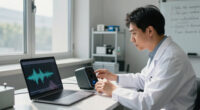
📊 Full opportunity report: Remote Work Wellness Testing: Strength And MSK Assessments Explained on IdeaNavigator AI — validation score, market gap, and execution plan.

Get business pricing on monitors, keyboards and dev gear
- Business-only prices and quantity discounts
- Tax-exempt purchasing
- Multiple users, one account, clear invoices
TL;DR

Employers and benefits providers are adopting new remote assessment tools that use smartphone cameras to evaluate employee strength and musculoskeletal health. These tests aim to detect early risks and prevent costly clinical episodes, with pilot programs underway. The approach could transform workplace wellness strategies for remote and hybrid teams.
Remote work wellness testing using smartphone camera-based strength and MSK assessments is entering pilot phases with select employers, offering a new approach to early detection of musculoskeletal risks. This development is significant for HR, benefits, and clinical partners seeking scalable, non-invasive tools to prevent costly health issues among distributed employees. The initiative aims to shift from reactive treatment to proactive prevention, addressing a key driver of rising employer healthcare costs.
Employers are increasingly concerned about the rise in neck, back, and posture-related musculoskeletal (MSK) problems among remote and hybrid workers, driven by reduced incidental movement and ergonomic challenges. Traditional programs tend to react after employees experience pain, but new digital assessments aim to identify early mobility and posture decline before clinical episodes occur.
These assessments leverage mature smartphone camera and pose estimation technology to guide employees through a 10-minute series of strength, mobility, and posture tests, such as sit-to-stand repetitions, shoulder and hip range-of-motion, and seated posture photos. The tests generate personalized MSK risk scores, along with tailored corrective routines and progress tracking. Employers can view aggregated, privacy-safe data on team-level MSK trends and engagement, with options to refer flagged employees to clinical MSK or physical therapy providers.
Initial pilot programs involve deploying these assessments over 60 to 90 days with one or two employers, measuring completion and retention rates, as well as validating camera-derived risk scores against established self-report questionnaires scored by physical therapists. The goal is to demonstrate meaningful engagement, score accuracy, and the potential to reduce future clinical costs through early intervention.
Why Early Detection of MSK Risks Matters for Employers
This new remote assessment approach could significantly impact how employers manage employee health, shifting from reactive treatment to preventative care. By identifying early signs of mobility decline, companies can reduce the incidence of costly MSK-related medical claims and lost workdays. For employees, this means better health outcomes and fewer disruptions caused by musculoskeletal issues. For benefits providers, it opens a scalable, privacy-safe way to enhance wellness programs and improve clinical referral pathways, especially for remote workforces where traditional ergonomic assessments are less feasible.
smartphone camera posture assessment tools
As an affiliate, we earn on qualifying purchases.
As an affiliate, we earn on qualifying purchases.
Background on Remote Work and Musculoskeletal Health Challenges
The shift to remote and hybrid work arrangements has led to a decline in incidental movement and ergonomic oversight, contributing to a surge in MSK problems among knowledge workers. These issues are now a leading driver of employer healthcare costs, with many cases going undetected until pain or injury occurs. Existing wellness programs often focus on reactive treatment, which is costly and less effective at preventing long-term disability.
Advances in smartphone camera and pose estimation technology have matured to the point where they can reliably guide self-assessments without sensors or clinical supervision. This technological evolution creates an opportunity for scalable, early screening tools that can be integrated into existing employee wellness initiatives, especially as employers seek more cost-effective, preventive solutions amid rising healthcare costs.
While pilot programs are still in early stages, the potential for these assessments to become a standard component of remote workforce wellness strategies is gaining interest among benefits brokers and HR leaders.
musculoskeletal health assessment devices
As an affiliate, we earn on qualifying purchases.
As an affiliate, we earn on qualifying purchases.
Uncertainties Around Assessment Validation and Adoption
It is not yet clear how accurately the camera-based risk scores will correlate with validated clinical assessments, or how willing employers and employees will be to adopt and consistently use these tools. The success of pilot programs will depend on engagement rates, data privacy acceptance, and the ability to demonstrate cost savings or health improvements. Further validation studies and real-world results are still pending, making widespread adoption uncertain at this stage.
remote employee wellness testing kits
As an affiliate, we earn on qualifying purchases.
As an affiliate, we earn on qualifying purchases.
Next Steps for Pilot Deployment and Validation
Over the coming 60 to 90 days, pilot programs with initial employer partners will evaluate assessment completion, user engagement, and score validity. If successful, broader rollout and integration into existing wellness platforms could follow. Additional validation studies comparing camera-derived scores with clinical assessments are planned to establish reliability. Benefits brokers and HR teams will monitor pilot outcomes to decide on wider adoption and potential integration with clinical referral networks.
As an affiliate, we earn on qualifying purchases.
Key Questions
How does the remote MSK assessment work?
The employee uses a smartphone camera to perform guided strength, mobility, and posture tests, which are analyzed via pose estimation algorithms to generate a personalized risk score and corrective recommendations.
What are the benefits of this approach for employers?
It enables early detection of mobility decline, potentially reducing costly MSK claims and work absences. It also provides scalable, privacy-safe data to inform wellness strategies and clinical referrals.
Are these assessments scientifically validated?
Validation is ongoing; pilot programs aim to compare camera-derived scores with established self-report questionnaires and clinical assessments. Final validation results are expected after the pilot period.
Will employees need special equipment to participate?
No, the assessments are designed to be completed using a standard smartphone camera, with no additional sensors required.
When might this technology become widely available?
If pilot results are positive, wider adoption could occur within the next 12 to 18 months, integrated into existing employee wellness platforms and benefits programs.
Source: IdeaNavigator AI
Columbus Day / Indigenous Peoples' Day Picks
long weekend sales
As an affiliate, we earn on qualifying purchases.