📊 Full opportunity report: From Practice Video To Form Grade For Young Athletes on IdeaNavigator AI — validation score, market gap, and execution plan.

Get business pricing on monitors, keyboards and dev gear
- Business-only prices and quantity discounts
- Tax-exempt purchasing
- Multiple users, one account, clear invoices
TL;DR
IdeaNavigator AI has outlined a product concept that would use phone video to compare young athletes’ movements with reference mechanics, grade selected checkpoints and recommend a drill. The proposal is not evidence that a product has been built or validated; it recommends a baseball pilot in which certified coaches review grades for 100 children.
IdeaNavigator AI has outlined a proposed app that would analyze practice video of young athletes, compare their movements with reference mechanics and recommend a drill for a technique gap. The concept targets parents whose children practice without a private coach, but no finished product, accuracy results or completed trial are reported; the suggested first test is a baseball-hitting pilot reviewed by certified coaches.
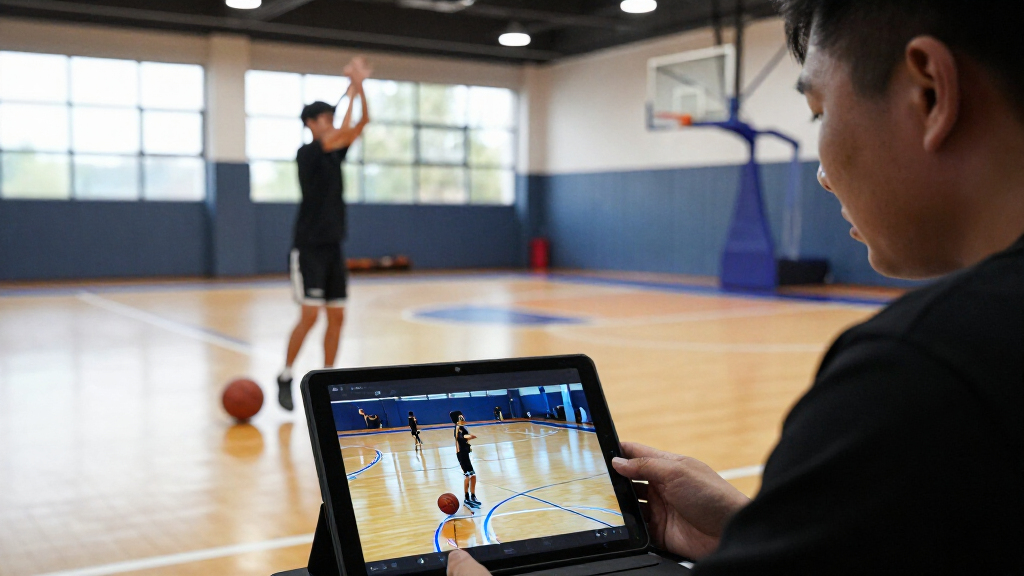
The proposed workflow is to film a repetition on a phone and receive an overlay comparing the athlete’s movement with a reference profile for the relevant skill. The app would grade selected checkpoints, with hip rotation, release angle and stride listed as examples, then prescribe one drill per session aimed at the largest identified gap. These are planned features, not confirmed capabilities of an available app.
The idea is framed around families without access to regular one-to-one coaching. The proposal says private sessions can cost $75 to $150, while children may repeat swings, throws or running strides without direct feedback. It argues that a phone-based option could make some form feedback more accessible, but does not provide research showing how often young athletes practice with unnoticed flaws or quantifying any resulting injury risk.
For an initial validation, the proposal recommends focusing on baseball hitting and asking certified coaches to compare the app’s grades with their own assessments across 100 children. The suggested business model is a family subscription for each sport, with a separate coach tier for team use. No subscription prices, participating coaches, development status or pilot timetable are specified.
A Lower-Cost Route to Form Feedback
If the concept works as intended, it could give families a way to get structured feedback between coaching sessions without paying for individual instruction each time. A targeted drill after a recorded repetition may also make practice more specific than simply repeating a movement, although the proposal provides no evidence yet that this approach improves performance or prevents injuries.
The distinction between a useful training aid and a dependable assessment tool matters. A grade that appears precise could influence how a child practices, what a parent worries about and whether a coach’s advice is followed. That makes agreement with qualified coaches an important early test, alongside whether the app can give clear, age-appropriate feedback rather than treating a professional reference as a universal ideal.
The proposed coach tier could extend the idea beyond households, but team use would bring different needs: coaches would have to review results across athletes and decide how much weight to give automated scores. Those possibilities remain business and product plans, not demonstrated outcomes.
youth sports training video analysis app
As an affiliate, we earn on qualifying purchases.
As an affiliate, we earn on qualifying purchases.
The Proposed Phone-Based Workflow
The concept rests on the claim that pose-estimation models can now run on phones with enough accuracy to compare a young athlete’s mechanics with reference motion profiles. That technical premise is presented as the reason a free tier might be practical. No model, benchmark, device range or independent performance study is identified, so the stated level of accuracy should be treated as an assertion behind the proposal rather than a verified result.
The workflow is deliberately narrow: record a movement, examine a few checkpoints, then recommend a single drill. Starting with one sport and one skill could make evaluation more manageable than trying to grade every sport at once. Baseball hitting is the named starting point, with the proposed coach review intended to compare automated grades against professional assessments before broader use.
The plan therefore describes an early product opportunity, not a report of a launch or a clinical assessment system. Its central question is whether phone video can support feedback that coaches find reliable and families can use appropriately.
baseball hitting form correction device
As an affiliate, we earn on qualifying purchases.
As an affiliate, we earn on qualifying purchases.
Accuracy and Child Safety Remain Untested
No validation results are reported. The proposed 100-child assessment is a future test in the concept, and there is no information about whether it has begun, how coaches would score movements or what level of agreement would count as acceptable. The reference profiles, age ranges and standards for each checkpoint are also unspecified.
It is not clear how the app would account for differences in growth, body proportions, mobility, experience, camera placement or recording conditions. Nor does the proposal explain how it would communicate uncertainty in a grade, handle a movement that differs from a pro reference for a sound individual reason, or prevent parents and young athletes from treating automated feedback as a diagnosis. The concept mentions injury risk as a concern, but provides no evidence that the app would measure or reduce that risk.
There is also no disclosed information about privacy protections for children’s video, how recordings would be stored or deleted, whether they would be used to train models, or who could access them. Product availability, pricing and any partner organizations are unconfirmed.
As an affiliate, we earn on qualifying purchases.
Coach Review Is the Proposed Test
The next evidence needed is a completed pilot that compares app grades with assessments from certified coaches, beginning with the proposed baseball-hitting group of 100 children. A useful report would describe the scoring method, coach agreement, recording conditions and cases where the system’s feedback was judged unsuitable—not just whether the app can produce a score.
Until those details are available, the idea remains a product proposal rather than a validated training service. Any future announcement would need to clarify whether a pilot has started, what the results show, how children’s video is handled and whether families or teams can actually access the app.
Source: IdeaNavigator AI
athlete movement analysis smartphone
As an affiliate, we earn on qualifying purchases.
As an affiliate, we earn on qualifying purchases.
Key Questions
Is the youth form-grading app available now?
No availability is reported. The material describes a product concept and proposed features, not a launched app or a confirmed release date.
How would the proposed app assess an athlete?
The planned workflow would use phone video to compare a movement with reference mechanics, grade checkpoints such as hip rotation or stride, and suggest one drill targeting a gap. These features have not been shown to work in a reported test.
Has the system been shown to grade form accurately?
No accuracy results are provided. The proposal recommends asking certified coaches to compare grades with their own assessments across 100 children in a baseball-hitting pilot.
What remains unknown for parents?
Availability, cost, privacy safeguards for children’s video, the reference standards and the system’s performance across ages and recording conditions are not specified. The proposal also does not show that its feedback improves performance or lowers injury risk.
Source: IdeaNavigator AI
Halloween Picks
halloween
As an affiliate, we earn on qualifying purchases.